How to Clean Quartz Worktops

How to Clean Quartz Worktops

The best way to clean quartz worktops is simple: use warm water, a soft cloth and a small amount of mild washing-up liquid. Wipe spills as soon as they happen, rinse away any soap residue and dry the surface with a clean microfibre cloth.

Quartz worktops are non-porous and easy to maintain, so you do not need an aggressive cleaning routine. However, you should avoid harsh chemicals, abrasive scourers and excessive heat because they can damage the resin or affect the finish.

Whether you have a white, black, grey or marble-effect quartz worktop, regular gentle cleaning will help keep your kitchen surface looking clean and attractive.

How to Clean Quartz Worktops Every Day

You can keep your quartz worktop clean with a quick daily routine.

Step 1: Wipe the Surface

Start by removing crumbs and loose food from the worktop.

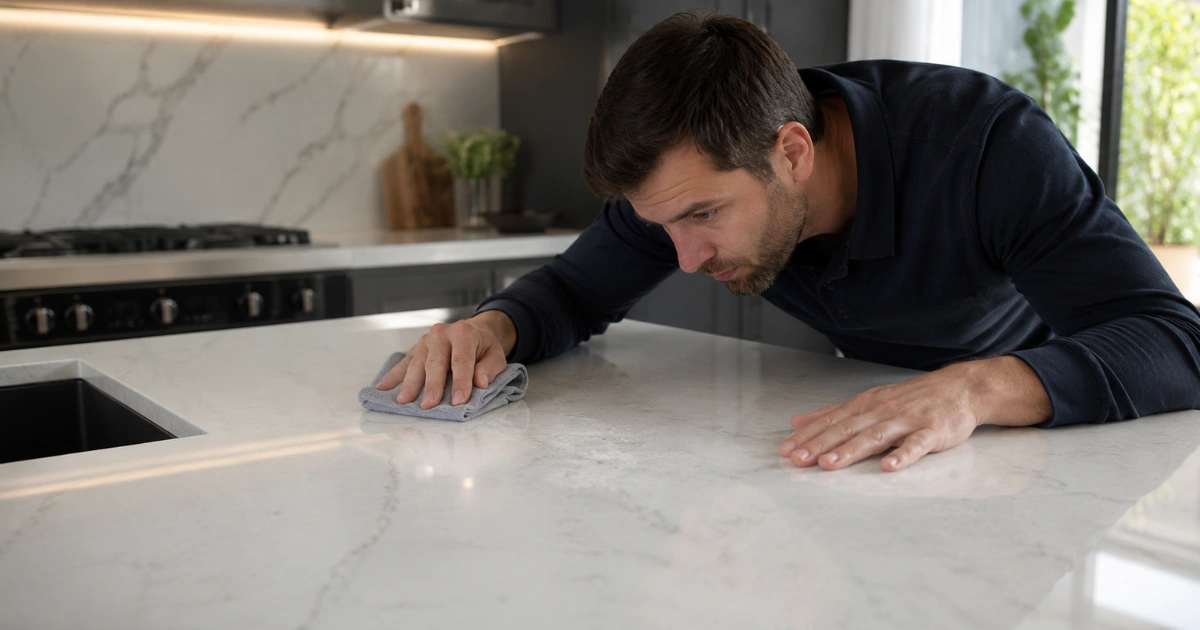
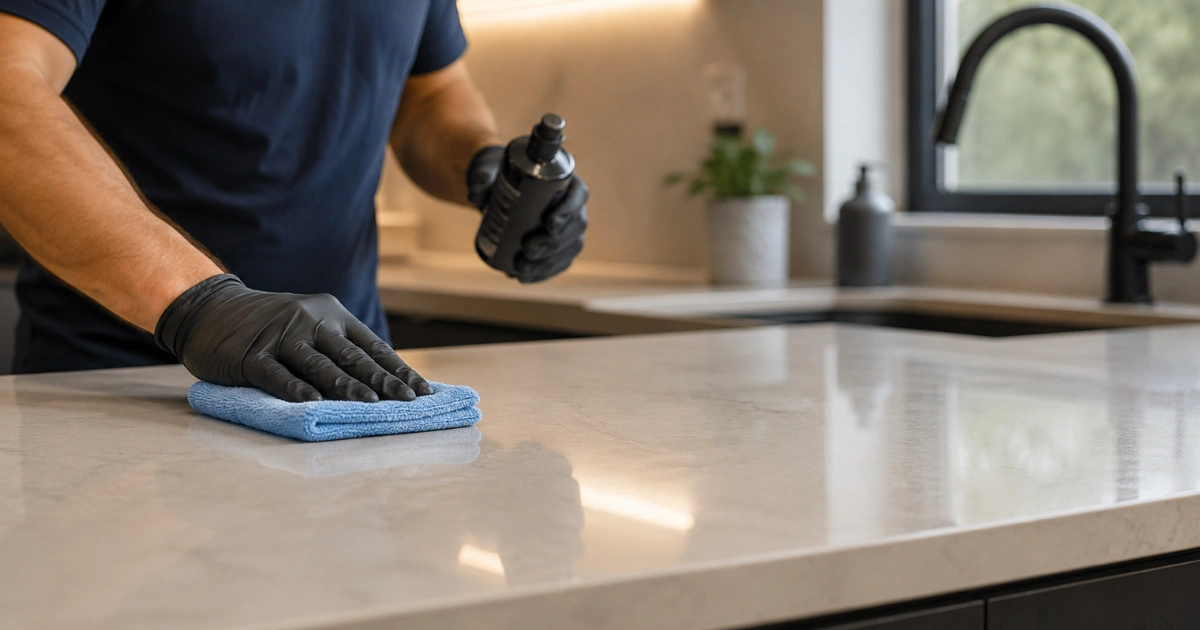
Dampen a soft microfibre cloth or non-abrasive sponge with warm water. Add a small amount of mild washing-up liquid and gently wipe the entire surface.

You do not need to scrub hard. Quartz does not require aggressive cleaning to remove normal food and drink marks.

Step 2: Rinse the Worktop

After cleaning, use a clean, damp cloth to wipe the surface again.

This removes any remaining washing-up liquid and prevents a layer of soap residue from building up.

Step 3: Dry the Surface

Finish by drying the worktop with a clean microfibre cloth.

Drying helps prevent water marks and streaks, particularly on darker quartz surfaces.

Clean Spills as Soon as Possible
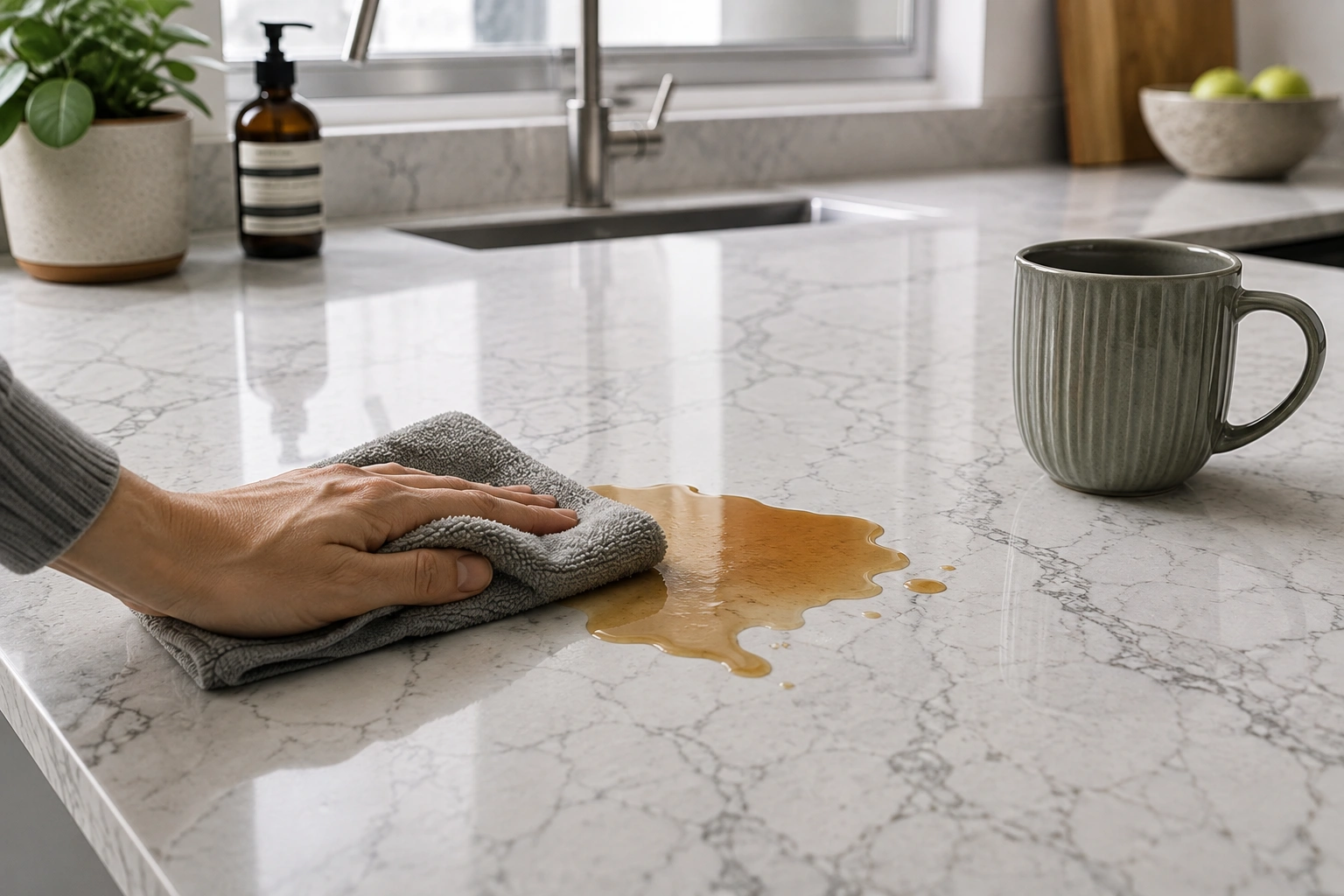
Although quartz has a non-porous surface and offers good stain resistance, you should still clean spills promptly.

Coffee, tea, wine, cooking oil, sauces and strongly coloured foods can leave marks if you allow them to sit on the surface for a long time.

If you spill something, simply:

  1. Wipe it up with a soft cloth.
  2. Clean the area with warm water and mild washing-up liquid.
  3. Rinse with a clean damp cloth.
  4. Dry with a microfibre cloth.

This simple habit can prevent most everyday marks.

How to Remove Stubborn Marks from Quartz

Sometimes warm water and washing-up liquid may not remove a dried or sticky mark. In that situation, use a gentle cleaning method rather than reaching immediately for a strong chemical.

Dried Food and Sticky Residue

If food has dried onto your quartz worktop, do not scrape it with a knife.

Instead, gently loosen it with a plastic scraper or spatula. You can then clean the remaining residue with a soft cloth and mild washing-up liquid.

Avoid metal scrapers because they can damage the surface.

Grease and Difficult Marks

For greasy marks, start with a quartz-safe surface cleaner or mild washing-up liquid.

Some quartz manufacturers may recommend products such as diluted isopropyl alcohol for particular marks. If you want to use 70% isopropyl alcohol, check your quartz manufacturer’s care instructions first and test it on an inconspicuous area if the manufacturer permits it.

Baking Soda for Tough Marks

You may find recommendations online for using baking soda and water to create a cleaning paste.

However, you should be careful with this method. Baking soda is mildly abrasive, and frequent or aggressive rubbing can affect some polished finishes.

If your quartz manufacturer approves its use, apply the paste gently, avoid vigorous scrubbing, and rinse the area thoroughly afterwards.

For a stubborn mark, a quartz-specific cleaner is usually the safer choice.

Can You Use Cif on Quartz Worktops?

Some cream cleaners, including certain Cif products, may be suitable for some quartz surfaces, but you should not assume that every Cif product is safe for every quartz worktop.

Always check the cleaner’s label and your quartz manufacturer’s care instructions before using it.

If the manufacturer approves the product, use a small amount with a non-abrasive sponge and avoid heavy scrubbing.

When in doubt, stick to warm water, mild washing-up liquid and a soft microfibre cloth.

What Should You Avoid When Cleaning Quartz Worktops?

Knowing what not to use is just as important as knowing how to clean quartz.

Avoid Bleach and Strong Chemicals

Do not routinely use strong bleach-based cleaners, oven cleaners, drain cleaners or other aggressive chemicals on your quartz worktop unless the manufacturer specifically states that they are suitable.

Harsh chemicals can affect the resin and may damage or dull the surface.

Be Careful with Vinegar

Vinegar is often promoted as a natural household cleaner, but it is not automatically suitable for quartz worktops.

Some manufacturers advise against acidic cleaners because they can affect the surface or finish with repeated use.

For this reason, use a quartz-approved cleaner instead of relying on vinegar.

Avoid Abrasive Scouring Pads

Never use steel wool, wire brushes or hard abrasive scourers on your quartz worktop.

They can create fine scratches and gradually reduce the appearance of a polished finish.

Use a soft microfibre cloth or non-abrasive sponge instead.

Avoid Harsh Ammonia-Based Cleaners

Strong ammonia-based products can also be unsuitable for quartz, depending on the product and manufacturer.

Always check the manufacturer’s care guide before using specialist cleaning chemicals.

How to Protect Your Quartz Worktop While Cleaning

Cleaning is only one part of looking after your quartz worktop. A few simple habits can help you protect it every day.

Always Use a Chopping Board

Do not cut food directly on your quartz worktop.

Although quartz is highly resistant to everyday scratches, sharp knives can still damage the surface or leave marks.

Use a chopping board for food preparation.

Use a Trivet for Hot Pans

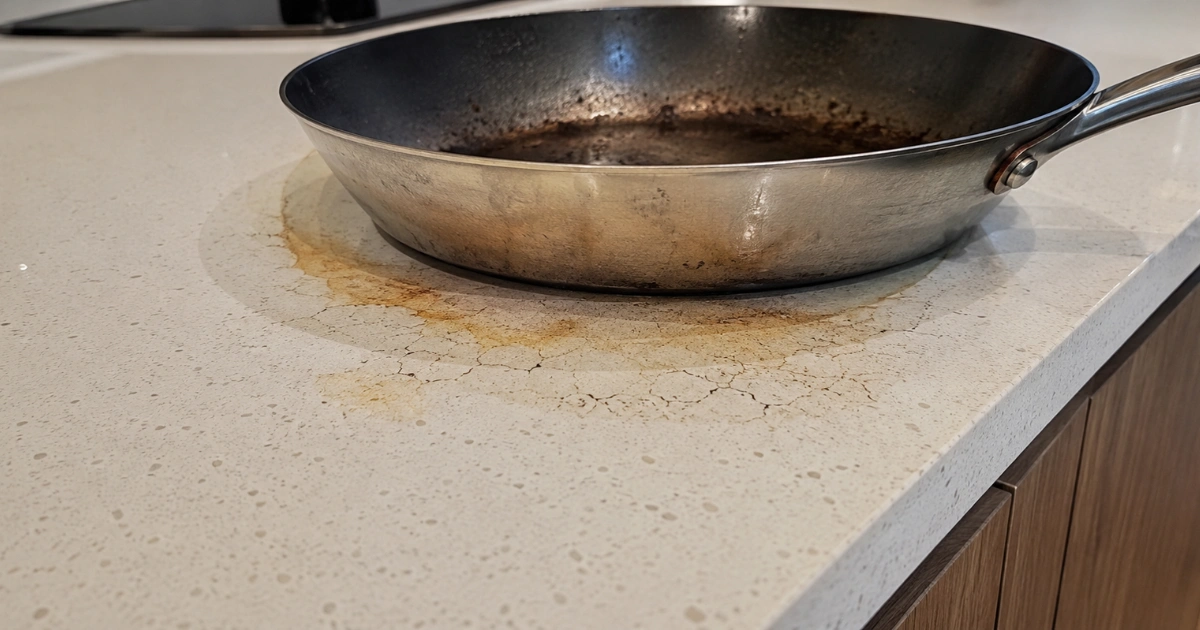
Never place extremely hot pans, roasting trays or baking dishes directly on your quartz worktop.

Quartz contains resin, and excessive heat can damage or discolour the surface.

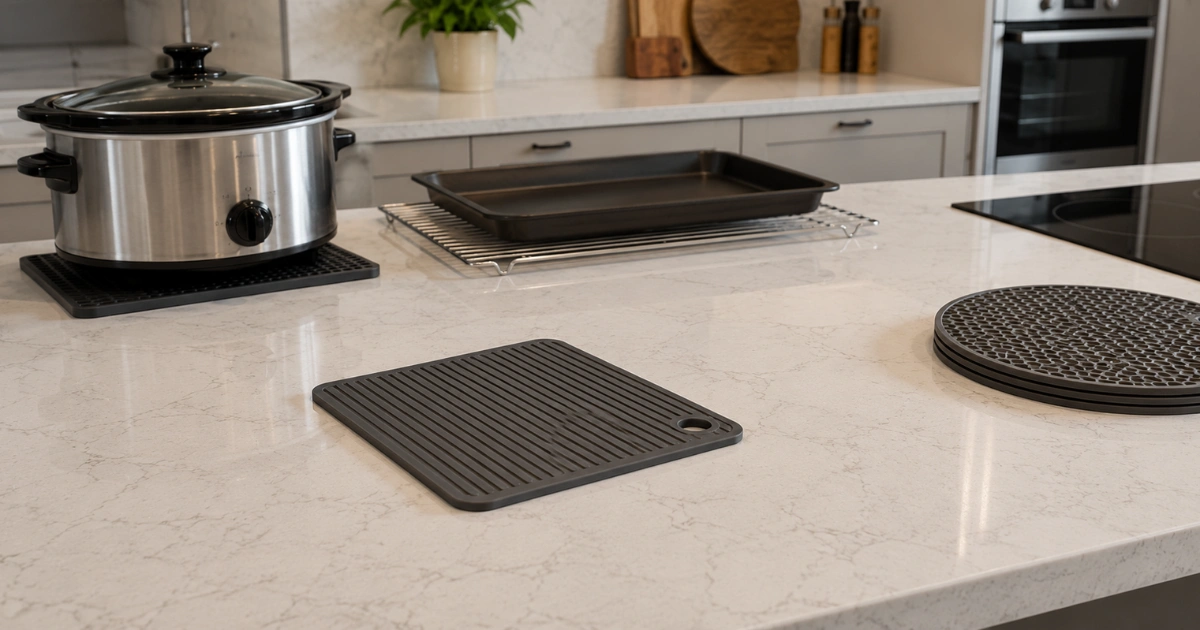
Always place hot cookware on a suitable heat-resistant mat or trivet.

Clean Around the Sink

Pay particular attention to the area around your sink.

Wipe away standing water and clean food residue around the sink edge. Regular cleaning helps keep this high-use area looking fresh.

How Often Should You Clean Quartz Worktops?

You should wipe your quartz worktop every day or whenever you use it, particularly after food preparation.

You do not need to carry out a deep clean every day. Your regular routine can remain simple:

Wipe → rinse → dry.

A deeper clean may be useful when you notice grease, dried food or other marks that your normal routine does not remove.

Can You Use Disinfectant on Quartz?

You can use a disinfectant only if it is approved as suitable for your particular quartz surface.

Do not assume that a strong disinfectant is better. Some chemicals can react with the resin or affect the finish.

If hygiene is your main concern, regular cleaning with a suitable mild cleaner is often enough for everyday kitchen use. For specialist disinfectants, follow your quartz manufacturer’s instructions.

How Do You Clean White Quartz Worktops?

White quartz worktops are easy to maintain, but they can make food marks and spills more noticeable.

Clean spills promptly and use warm water with mild washing-up liquid for everyday marks.

Avoid harsh bleaching products and abrasive scrubbing in an attempt to make the surface brighter. These can cause more problems than they solve.

For a stubborn stain, use a cleaner specifically approved for your quartz surface.

How Do You Clean Black Quartz Worktops?

Black quartz can show water marks, fingerprints and soap residue more easily than lighter colours.

After cleaning, always dry the surface with a clean microfibre cloth. This simple step can make a significant difference to the finished appearance.

If your black quartz has a polished finish, avoid abrasive products that could leave the surface looking dull.

How Do You Clean Marble-Effect Quartz?

Marble-effect quartz requires the same basic cleaning approach as other quartz worktops.

Use:

  • Warm water
  • Mild washing-up liquid
  • A soft microfibre cloth
  • A non-abrasive sponge when necessary

Avoid harsh chemicals and abrasive products, particularly if your quartz has a polished finish.

The detailed veining may make certain marks less noticeable, but you should still clean spills promptly.

Common Quartz Worktop Cleaning Mistakes
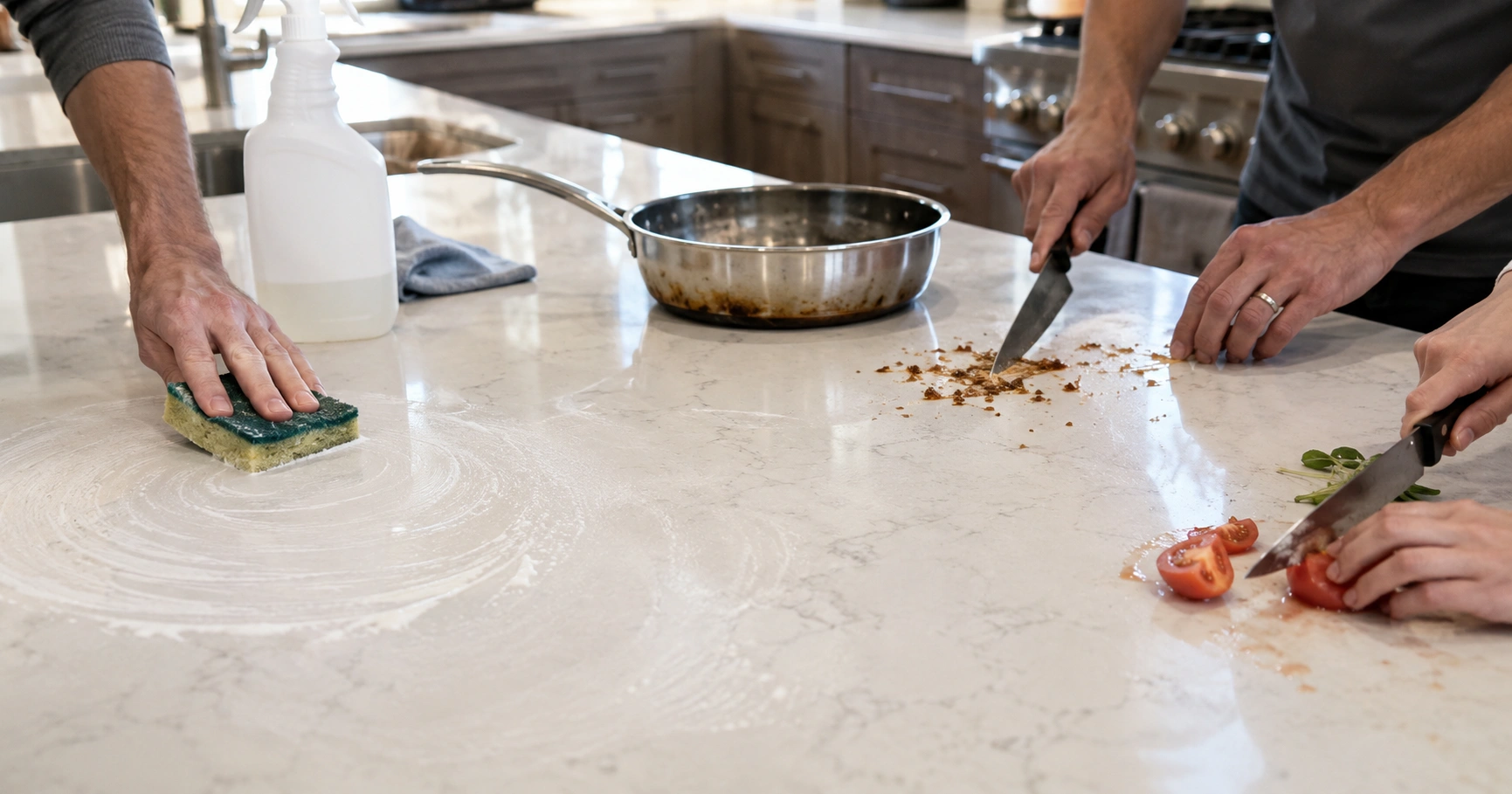
Avoid these common mistakes if you want to keep your worktop looking its best:

Using too much cleaning product: More cleaner does not mean a cleaner surface. Excess product can leave residue.

Scrubbing too hard: Aggressive scrubbing can affect the finish.

Using a knife to remove dried food: Use a plastic scraper instead.

Putting hot pans directly on the surface: Always use a trivet.

Cutting directly on the worktop: Always use a chopping board.

Using a cleaner without checking its suitability: Always follow the manufacturer’s care instructions.

Quartz Worktop Cleaning FAQs

What is the best way to clean a quartz worktop?

Use warm water, a small amount of mild washing-up liquid and a soft microfibre cloth. Wipe the surface, rinse with clean water and dry it afterwards.

Can I use washing-up liquid on quartz?

Yes. A small amount of mild washing-up liquid with warm water is suitable for everyday cleaning of many quartz worktops.

Can I use Cif on a quartz worktop?

Check the specific Cif product and your quartz manufacturer’s cleaning instructions first. Some products may be suitable, while abrasive or unsuitable formulations can damage the finish.

Can I use vinegar to clean quartz?

It is better to avoid vinegar unless your quartz manufacturer specifically approves it. Use a quartz-safe cleaner or mild washing-up liquid instead.

Can I use bleach on quartz worktops?

Avoid bleach unless the quartz manufacturer specifically recommends it for your particular surface. Strong chemicals can damage the resin or affect the finish.

Can I use baking soda on quartz?

Baking soda is mildly abrasive, so you should not use it aggressively. If your manufacturer approves it, use a small amount gently and rinse the surface thoroughly afterwards.

Can I use a magic eraser on quartz?

It is best to avoid abrasive cleaning products such as melamine sponges unless the manufacturer confirms that they are suitable. Repeated rubbing can affect the finish.

How do I remove dried food from a quartz worktop?

Soften the residue with warm water and gently lift it with a plastic scraper or spatula. Never use a knife or metal scraper.

How do I remove grease from quartz?

Start with warm water and mild washing-up liquid. For more difficult grease marks, use a cleaner approved for your quartz worktop and follow the manufacturer’s instructions.

How do I make my quartz worktop shine?

Clean the surface with a suitable mild cleaner, rinse it thoroughly and dry it with a clean microfibre cloth. Avoid waxes, polishes and abrasive products unless the manufacturer specifically recommends them.

Do quartz worktops need sealing?

No, quartz worktops generally do not need routine sealing because they have a non-porous engineered surface.

Can hot pans damage quartz?

Yes. Very high temperatures can damage the resin in quartz. Always use a heat-resistant trivet or mat under hot cookware.

Keep Your Quartz Worktop Looking Its Best with Solid Worktops

A quartz worktop does not need complicated maintenance. Clean spills promptly, use mild cleaning products, avoid abrasive materials and protect the surface from direct heat and sharp knives.

At Solid Worktops, we offer quartz worktops in a range of colours, patterns and finishes for UK kitchens. Whether you are looking for a modern plain surface or a marble-effect quartz worktop, we can help you find an option that suits your kitchen.

Always check the specific manufacturer’s care instructions for your chosen quartz because cleaning recommendations can vary between products.

With the right everyday care, your quartz worktop can continue to look clean, stylish and well maintained for years.
Unmasking the Truth About Quartz Overlay Worktops

Unmasking the Truth About Quartz Overlay Worktops

Thinking about updating your kitchen without removing your existing worktops? You may have heard about quartz overlay worktops.

A quartz overlay can give an old kitchen a fresh look without the mess and disruption of removing the existing worktop. It can sound like an easy and cheaper option.

But is it always the best choice?

Before you choose a quartz worktop overlay, it is worth understanding how it works, what it costs, what the benefits are and what problems you may face later.

At Solid Worktops, we want homeowners to understand their options before choosing a new kitchen worktop. So, here is what you need to know about quartz overlay worktops.

The Reality of Kitchen Worktop Replacement

When people renovate a kitchen, the worktop is often an important part of the project.

A new worktop can change the look of the whole kitchen. It can also give you the chance to change the layout, sink position, hob position and worktop style.

A worktop overlay takes a different approach. Instead of removing the existing surface, a new layer is fitted over it.

This can reduce the amount of work involved, but it also means you have to work with the existing worktop and kitchen layout.

So, before choosing an overlay, it is important to ask:

Is the existing worktop good enough to use as a base?

If it is damaged, uneven or affected by water, simply covering it may not solve the problem.

What Are Quartz Overlay Worktops?

Quartz overlay worktops are thin quartz or quartz-based surfaces that are fitted over an existing kitchen worktop.

They are usually thinner than standard quartz worktops. Some overlay products are around 6–8mm thick, although the exact thickness depends on the product.

The main idea is simple:

Existing worktop + thin overlay = new finished surface

This means the original worktop does not need to be removed in the same way as it would during a complete replacement.

Overlay worktops can also be made from other materials, including laminate. However, quartz overlays are popular with homeowners who want the appearance and properties associated with quartz.

Why Do Homeowners Consider Worktop Overlays?

There are several reasons why people search for worktop overlay solutions.

Lower Upfront Cost

An overlay can cost less than a complete worktop replacement in some kitchens.

However, the final price depends on the size and layout of the kitchen, cut-outs, joints, edges, fitting and other work.

So, do not compare only the price per square metre.

Always compare the complete installed cost.

Faster Installation

Because the existing worktop stays in place, an overlay can reduce the amount of removal and preparation required.

This can mean less disruption while the work takes place.

The actual fitting time depends on the kitchen and the overlay product.

Less Waste

Keeping the existing worktop means there may be less material to remove and dispose of.

For homeowners who want to reduce waste during a kitchen update, this can be an advantage.

A Quick Change of Appearance

A new surface can make an older kitchen look very different.

If you are happy with your cabinets and layout, a kitchen worktop overlay can provide a way to change the worktop appearance without carrying out a full kitchen renovation.

How Much Do Quartz Overlay Worktops Cost?

The cost of quartz overlay worktops can vary considerably.

The final price can depend on:

  • The size of the worktop.
  • The type of quartz overlay.
  • The number of sections and joints.
  • Sink cut-outs.
  • Hob cut-outs.
  • Edge finishing.
  • Upstands and splashbacks.
  • Installation requirements.
  • Plumbing adjustments.
  • Access to the kitchen.

Some suppliers quote quartz overlay worktops cost by square metre.

This can be useful for comparing materials, but it does not always tell you what the complete project will cost.

A small kitchen with a simple layout may be easier to fit than a large kitchen with several corners, joints, sinks and appliances.

If you are comparing an overlay with a new quartz worktop, ask for a full quotation for both options.

The Benefits of Quartz Overlay Worktops

A quartz overlay can offer some useful benefits when the existing kitchen is suitable.

Quick Kitchen Update

You can change the appearance of your kitchen without removing the whole worktop.

Less Disruption

Keeping the existing surface can reduce demolition and removal work.

Can Work With Existing Cabinets

If your cabinets are in good condition, an overlay may allow you to keep them.

Quartz Appearance

Quartz can give the kitchen a clean and modern appearance.

Low Maintenance

Quartz surfaces are generally easy to maintain. However, always follow the care instructions provided for the particular product.

The Problems You Need to Consider

A quartz overlay worktop is not suitable for every kitchen.

Before choosing one, you should understand the possible problems.

Water Can Get Into Joints

This is one of the most important things to consider.

Kitchen worktops are exposed to water every day, especially around:

  • Sinks
  • Taps
  • Dishwashers
  • Drainers
  • Joints

Overlay worktops are fitted in sections, which means joints may be present.

If water gets through an unprotected joint or edge, it can reach the original worktop underneath.

This can be a serious issue if the existing worktop contains materials that can swell when exposed to moisture.

Water damage can lead to swelling, movement and damage to the original surface.

Good fitting and proper protection around wet areas are therefore very important.

An Overlay Makes the Worktop Higher

When you add a new surface over an existing worktop, the finished worktop becomes higher.

This may seem like a small change, but it can affect other parts of the kitchen.

For example, it may affect:

  • Sink fitting
  • Tap position
  • Hob fitting
  • Appliance clearance
  • Splashbacks
  • Wall units

These measurements should be checked before the overlay is installed.

Existing Problems Stay Underneath

One of the biggest limitations of an overlay is simple:

It covers the existing worktop; it does not remove it.

If the original worktop has:

  • Water damage
  • Swelling
  • Movement
  • Uneven areas
  • Structural problems

an overlay may not be the right solution.

The installer should check the existing surface first.

Fewer Edge Options

A thin overlay can limit the edge styles you can use.

A standard full-depth quartz worktop gives you more freedom when choosing the edge finish.

If you want a thicker appearance or a particular edge profile, a full replacement may give you a better result.

The Cost Saving May Be Smaller Than Expected

Many people search for:

“How much do quartz overlay worktops cost?”

because they expect an overlay to be much cheaper.

Sometimes it can be.

But the total price can increase when you add:

  • Cut-outs
  • Joints
  • Edge work
  • Installation
  • Plumbing changes
  • Splashbacks
  • Upstands
  • Difficult access

This means the difference between an overlay and a full quartz worktop replacement may not always be as large as you expect.

What About Existing Laminate Worktops?

Some homeowners search for laminate worktop overlay or ask whether they can put quartz over an existing laminate worktop.

This may be possible with some overlay systems.

However, the existing laminate worktop needs to be in good condition and suitable for the installation.

If the laminate has swelling, loose areas or water damage, covering it may not be the best option.

Always have the existing surface checked before choosing an overlay.

Quartz Overlay vs Full Worktop Replacement

Both options can work, but they suit different situations.

Feature Full Worktop Replacement Overlay Worktops
Existing worktop Removed Usually stays
Installation More work involved Often quicker
Kitchen layout Can be changed Usually stays the same
Edge options More choice More limited
Existing damage Removed with old worktop Remains underneath
Finished height Can be planned from the start Increases
Design flexibility Greater More limited
Waste Old worktop needs removal Less removal
Best suited to Full renovation Suitable existing worktops

The best option depends on your kitchen.

If your existing worktop is strong and you simply want a new look, an overlay may work well.

If the existing worktop has problems or you want to make major changes, replacement may be the better choice.

When Does a Quartz Overlay Make Sense?

A quartz overlay worktop may be suitable if:

  • Your existing worktop is in good condition.
  • Your cabinets are stable.
  • You want to keep the current layout.
  • You want a new appearance.
  • You want less disruption.
  • You are happy with the available overlay thickness and edge options.
  • The additional height will not cause problems.

In this situation, an overlay can be a practical way to update the kitchen.

When Is Full Worktop Replacement Better?

A full replacement may make more sense if:

  • Your existing worktop has water damage.
  • The surface is swollen or unstable.
  • You want to change the layout.
  • You want new sink or hob positions.
  • You want more edge choices.
  • You want a standard full-depth quartz worktop.
  • You are already renovating other parts of the kitchen.
  • You want to start with a completely new surface.

Replacing the worktop also removes the old surface, rather than leaving it underneath the new one.

How Many People Choose Worktop Overlays?

There is no widely reported figure that shows exactly how many UK homeowners choose overlay worktops.

However, full worktop replacement remains a common choice during larger kitchen renovations.

Overlays are more likely to appeal to homeowners who:

  • Want a quick cosmetic update.
  • Are happy with their existing kitchen layout.
  • Have a sound existing worktop.
  • Want to reduce disruption.
  • Are looking for a lower-cost option where possible.

The important point is not how many people choose an overlay.

It is whether an overlay is suitable for your kitchen.

Are Quartz Overlay Worktops Worth It?

They can be.

A quartz overlay may be a good choice if your existing worktop is in good condition and your main aim is to refresh the kitchen without major work.

But if the existing surface has water damage, swelling or structural problems, an overlay may simply hide an issue rather than fix it.

You should also consider the finished height, available edge styles, joints, cut-outs and total installation cost.

For some kitchens, a full quartz worktop replacement will provide a better long-term solution.

Frequently Asked Questions

What are quartz overlay worktops?

Quartz overlay worktops are thin quartz or quartz-based surfaces fitted over an existing kitchen worktop instead of removing the original worktop.

How much do quartz overlay worktops cost?

The price depends on the material, kitchen size, joints, cut-outs, edges and installation. Get a complete quotation before comparing the cost with a new worktop.

Can you put quartz over an existing worktop?

Some quartz overlay systems can be installed over existing worktops. The original surface must be stable, level and suitable for the chosen system.

Are quartz overlay worktops cheaper?

They can be cheaper in some kitchens, but the final saving depends on the full installation cost.

Do overlay worktops increase the height?

Yes. An overlay adds another layer over the existing worktop, so the finished surface will be higher.

Can you put a quartz overlay over laminate?

Some systems may allow this, but the existing laminate worktop needs to be in good condition and suitable for the overlay.

Are quartz overlay worktops durable?

Quartz is a durable worktop material, but the condition of the surface underneath and the quality of installation also matter.

What is the difference between a quartz overlay and a quartz worktop?

A quartz overlay is fitted over an existing worktop. A standard quartz worktop replaces the existing surface and normally provides more freedom with thickness, layout and edge options.

Choosing the Right Worktop for Your Kitchen

A quartz overlay can be a useful way to refresh a kitchen when the existing worktop and cabinets are in good condition.

But it is important to look beyond the initial price.

Think about the condition of the existing worktop, the extra height, sink and hob positions, joints, edge options and the total installation cost.

At Solid Worktops, we can help you compare your options and find the right worktop solution for your kitchen.

Whether you are considering quartz overlay worktops, a new quartz worktop or another worktop material, speak to Solid Worktops about your project and find the option that works best for your kitchen.

Granite Worktops

Top Granite Styles to Transform Your Kitchen in 2026

The top granite worktop trends for 2026 include high-contrast white stone, honed black finishes, and exotic granite with warm gold veining. Popular varieties such as Viscount White, Alaska White, Absolute Black, Orinoco, and Magma Gold offer distinctive natural patterns. These styles bring texture, depth, and character to modern kitchens while providing durability and strong heat resistance.

Top 3 Granite Worktop Trends for 2026

1. High-Contrast White Granite

White granite with dramatic grey and charcoal patterns creates a bright appearance without looking plain.

  • Viscount White: Features flowing white, grey, and charcoal patterns that create striking movement.

  • Alaska White: Combines a light background with grey, black, and warm mineral variations.

  • Best for: Modern kitchens, two-tone cabinetry, and statement islands.

  • Design tip: Pair with navy, charcoal, or natural oak cabinets to highlight the stone’s patterns.

2. Honed and Leathered Black Granite

Dark granite with matte or textured finishes offers a sophisticated alternative to traditional polished stone.

  • Absolute Black: Provides a deep, understated appearance, particularly with a honed finish.

  • Black Forest: Features dark tones with distinctive light mineral patterns.

  • Best for: Minimalist, industrial, and contemporary kitchens.

  • Design tip: Combine with timber cabinets, brushed brass fittings, or light-coloured splashbacks.

3. Exotic Granite With Gold Veining

Dark granite with golden, copper, and amber patterns creates a distinctive feature in luxury kitchens.

  • Orinoco Granite: Displays dramatic flowing patterns with contrasting gold, cream, and dark tones.

  • Magma Gold: Features rich golden movement across a darker natural stone background.

  • Best for: Luxury kitchens, waterfall islands, and statement worktops.

  • Design tip: Use simple cabinetry to allow the natural stone patterns to remain the focal point.

Best Trending Granite Worktop Colours Compared

Granite VarietyMain FeaturesBest Kitchen Style
Viscount WhiteFlowing white, grey, and charcoal patternsModern and contemporary
Alaska WhiteLight stone with contrasting mineral patternsMinimalist and transitional
Absolute BlackDeep black with understated textureModern and industrial
Black ForestDark background with natural light veiningContemporary and luxury
OrinocoDramatic gold, cream, and dark patternsLuxury and statement kitchens
Magma GoldRich golden movement on a dark basePremium and traditional

Polished vs Honed vs Leathered Granite Finishes

FinishAppearanceBest For
PolishedGlossy, reflective surfaceClassic and luxury kitchens
HonedSmooth, matte appearanceModern and minimalist kitchens
LeatheredSubtle texture and reduced shineRustic and industrial kitchens

How to Match Granite Worktops With Kitchen Cabinets

  • White cabinets: Choose Absolute Black, Black Forest, or Orinoco granite for contrast.

  • Navy cabinets: Pair with Viscount White or Alaska White for a bright, balanced appearance.

  • Oak cabinets: Combine with honed black granite or lighter natural stone patterns.

  • Charcoal cabinets: Use Alaska White or gold-veined granite to introduce contrast.

  • Walnut cabinets: Pair with warm gold granite or subtle light stone finishes.

  • Cream cabinets: Choose Viscount White, Magma Gold, or dark textured granite.

How to Use Trending Granite in Kitchen Designs

  1. Create a statement island: Use dramatic natural veining on a central island to establish a focal point.

  2. Choose a suitable finish: Compare polished, honed, and leathered surfaces under your kitchen lighting.

  3. Match your splashbacks: Extend suitable granite onto the wall for a coordinated appearance.

  4. Consider waterfall edges: Continue the stone pattern down the sides of an island for a striking design.

  5. Balance bold patterns: Pair expressive granite with simpler cabinet colours and finishes.

  6. Check slab availability: Natural stone varies, so inspect full slabs before confirming your design.

What Should You Consider Before Choosing Granite Worktops?

  • Natural variation: Each granite slab has unique patterns, colour differences, and mineral details.

  • Kitchen lighting: Dark finishes may appear heavier in rooms with limited natural light.

  • Maintenance: Some granite varieties require sealing, depending on stone porosity and finish.

  • Surface texture: Honed and leathered finishes may have different cleaning requirements from polished stone.

  • Worktop thickness: Check suitable slab thickness, support, and edge profiles for your kitchen layout.

  • Installation costs: Include templating, fabrication, sink cut-outs, delivery, and professional fitting.

Which Granite Worktop Trend Is Best for 2026?

Viscount White and Alaska White are versatile choices for bright modern kitchens, while honed Absolute Black suits minimalist interiors. Orinoco and Magma Gold offer more dramatic patterns for luxury kitchens and statement islands.

The best granite worktop depends on your cabinet colours, kitchen lighting, preferred finish, and overall design. Choose a natural stone that complements your home while providing practical durability and manageable long-term maintenance.

Standard Thickness Options

Quartz worktops are usually 20mm, 30mm, or 40mm thick. Each thickness has advantages and suits various styles and uses:

  • 20mm Thickness: Ideal for sleek, modern kitchens. This thinner profile is lighter and ideal for wall-mounted surfaces and smaller spaces.
  • 30mm Thickness: The most popular choice, offering a balance of strength and aesthetics. It’s robust enough for heavy-use areas and works well with various kitchen designs.
  • 40mm Thickness: Perfect for a statement piece. This thicker option provides a chunky look often used in larger, open-plan kitchens. It offers high durability and a luxurious
    feel.

Factors to Consider

  1. Visual appeal: Consider your kitchen’s style. In a bigger, conventional kitchen, a thicker countertop may appear nicer, while a narrower one may suit a minimalist design.
  2. Usage: Think about the level of use your kitchen gets. A thicker quartz worktop might be better if you do a lot of cooking and use heavy pots and pans.
  3. Cabinetry Support: Ensure that your cabinets can support the weight of the thicker quartz if you opt for a 30mm or 40mm option. Heavier thicknesses will need sturdy
    cabinet construction.
  4. Cost: Thicker quartz worktops usually cost more due to the increased material used. Consider your budget and how much you are willing to invest in your worktop.
  5. Edge Profile: The thickness of your worktop will affect the available edge profile options. Thicker worktops offer more edge design choices, which can enhance the style of your kitchen.

Installation Considerations

Hiring a professional is essential when installing quartz worktops. During the installation, measurements have to be taken, and the worktop has to be fitted to ensure it is as level as possible and fits nicely into place. Only if the worksurface is installed well will it last many years, as every client desires.

Final Thoughts

Deciding on the thickness of the quartz worktop is done through an understanding of the kitchen’s appearance, efficiency, cost and design. Think about the position of the worktop relative to the rest of the interior of your kitchen and its ability to withstand your cooking practises.

At Solid Worktops, we know only too well the significance of selecting that specific quartz worktop for your kitchen. Our consultants can help you make the right choices, and you can be out on a beautiful work surface that can stand the rigour to which it will be subjected in a kitchen.

Conclusion:

Choosing the proper kitchen and bathroom worktops influences performance and attractiveness. Understanding each material’s advantages and drawbacks and your lifestyle and design preferences can help you select a material for your dream kitchen and bathroom. There is no “best” worktop—it depends on your price, upkeep, and style.

This comprehensive guide has given you the information and considerations to buy worktops to design your kitchen and bath! Experts at Solid Worktops can provide a flawless finish, a perfect fit, peace of mind, time savings, and guidance. Working with a professional, you can design your dream kitchen and bath with stunning worktops that will be the focal point of your home for many years. See Solid Worktops Google review.

Can Scratched Quartz Be Repaired_

Can Scratched Quartz Be Repaired?

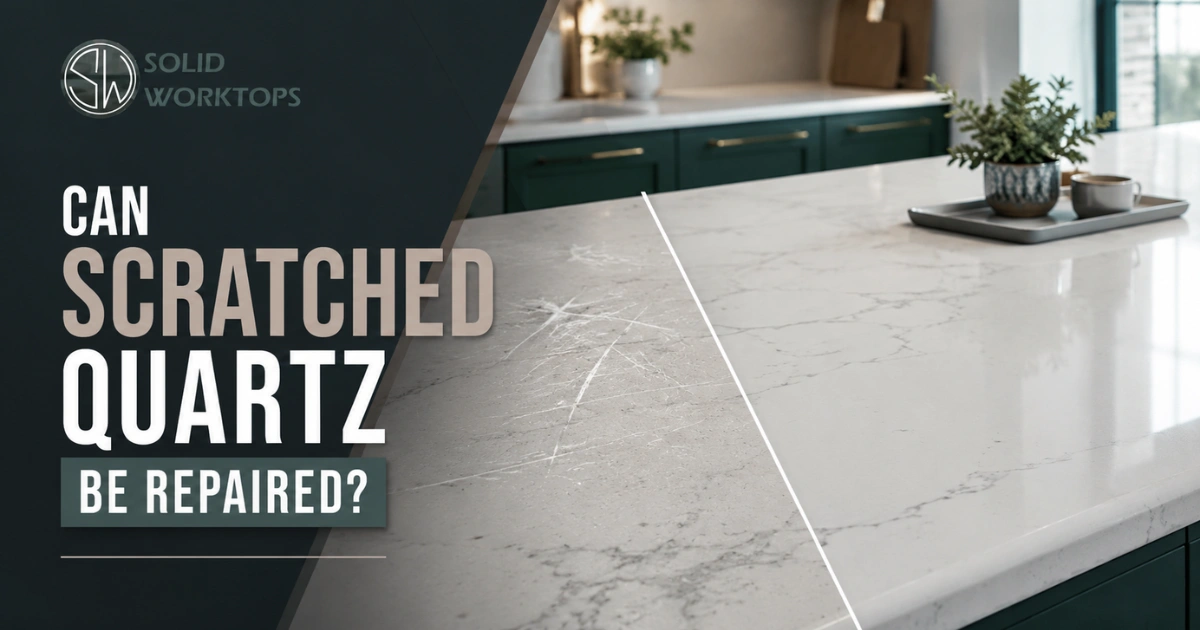
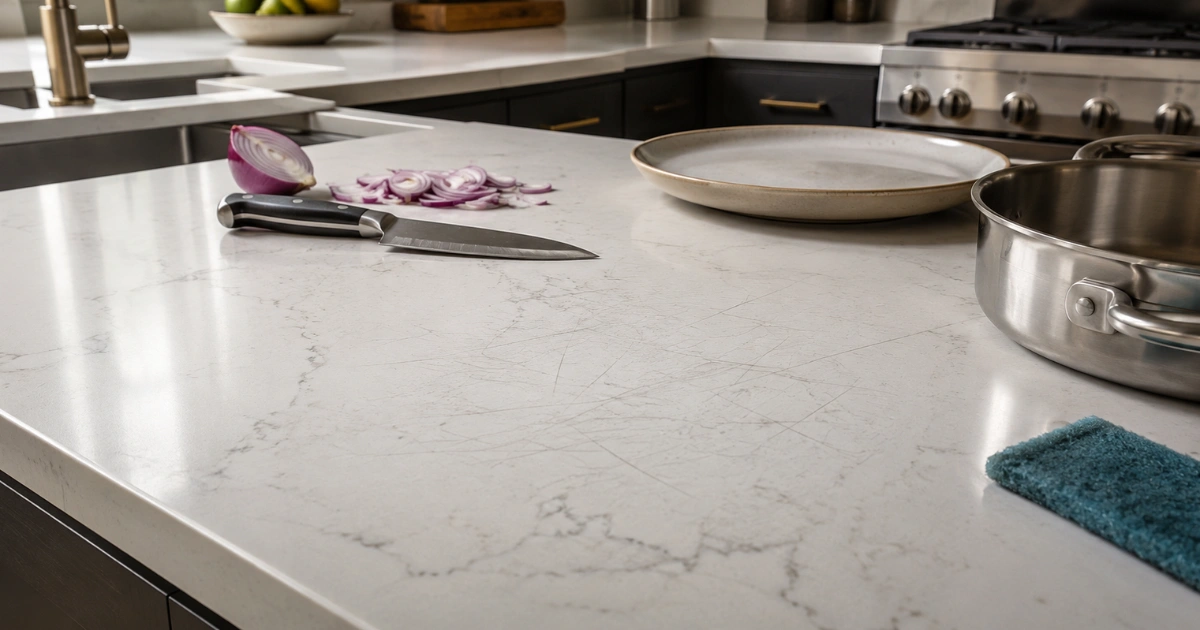
Quartz worktops are popular because they resist scratches better than many other kitchen surfaces. However, they are not completely scratch-proof. Dragging heavy cookware, cutting directly on the surface, or using abrasive cleaning products can leave marks that spoil the appearance of your worktop.

The good news is that many scratches and surface marks can be repaired without replacing the entire worktop. The right solution depends on whether the damage is a genuine scratch, a metal mark, or a deeper chip.

Can Quartz Worktops Really Be Repaired?

Yes, many scratches can be repaired, but not all damage is the same.

Light surface marks, metal transfer, and minor scratches can often be removed or significantly improved by a professional. Deep scratches or chipped edges may require specialist stone repair techniques, while severe damage may mean replacing a section of the worktop.

The earlier you deal with the damage, the better the final result is likely to be.

How Do Quartz Worktops Get Scratched?

Although quartz is one of the hardest kitchen worktop materials, everyday use can still cause damage.

Common causes include:

  • Cutting food directly on the surface instead of using a chopping board.
  • Sliding heavy pots, pans, or kitchen appliances across the worktop.
  • Dropping sharp or heavy objects.
  • Using abrasive cleaning pads or harsh chemicals.
  • Accidentally dragging ceramic plates or stoneware across the surface.

Most scratches happen gradually through everyday kitchen use rather than one major accident.

Is It Really a Scratch?

Many homeowners think their quartz worktop has been scratched when the mark is actually something else.

Common surface marks include:

  • Metal marks left by pots or kitchen utensils.
  • Rubber marks from appliance feet.
  • Hard water stains.
  • Grease build-up.
  • Cleaning product residue.

These marks often sit on the surface and can usually be removed without repairing the quartz itself.

Can You Repair Light Scratches?

Yes. Minor scratches are often the easiest to deal with.

A quartz repair specialist can assess the damage and use specialist techniques to reduce or remove the scratch while protecting the surrounding finish.

Attempting DIY repairs without the correct products can sometimes make the scratch more noticeable.

What About Deep Scratches?

Deep scratches require professional repair.

Depending on the damage, a specialist may:

  • Fill the scratch using a colour-matched resin.
  • Blend the repaired area with the surrounding surface.
  • Polish the repaired section where appropriate.
  • Restore the appearance without replacing the whole worktop.

Not every deep scratch can be made completely invisible, but many repairs produce excellent results.

Can You Polish Scratched Quartz?

Quartz should not be polished in the same way as natural stone such as granite or marble.

Most quartz worktops have a factory-finished surface. Using polishing compounds or mechanical polishers incorrectly can leave dull patches or uneven shine.

If your worktop has lost its finish after a scratch or incorrect cleaning, a professional can recommend the safest restoration method.

Should You Repair Quartz Yourself?

Small surface marks may simply need proper cleaning.

However, avoid using:

  • Sandpaper.
  • Steel wool.
  • Abrasive powders.
  • Diamond polishing pads.
  • Household polishing compounds.
  • Bleach or strong solvents.

These products can permanently damage the surface and may void the manufacturer’s warranty.

If you are unsure, seek professional advice before attempting any repair.

When Should You Call a Professional?

Professional repair is usually the best option if you notice:

  • Deep scratches you can feel with your fingernail.
  • Chipped edges or corners.
  • Cracks.
  • Dull patches caused by incorrect cleaning.
  • Damage near sinks, joints, or cut-outs.

An experienced quartz specialist can determine whether the worktop can be repaired or whether replacement is the better long-term solution.

Can a Scratched Quartz Worktop Be Restored to Look New?

In many cases, yes.

Professional repairs can often restore the appearance of the worktop so that scratches become difficult to notice. The success of the repair depends on:

  • The depth of the scratch.
  • The colour and pattern of the quartz.
  • The location of the damage.
  • How quickly the repair is carried out.

Early repairs usually produce the best results.

How to Prevent Quartz Worktop Scratches

A few simple habits can help keep your worktop looking its best.

  • Always use a chopping board.
  • Lift heavy appliances instead of dragging them.
  • Use trivets and protective mats.
  • Clean with a soft cloth and pH-neutral cleaner.
  • Avoid abrasive cleaning products.
  • Wipe up spills promptly.

Good maintenance helps preserve both the appearance and lifespan of your quartz worktop.

Repair or Replace?

Replacement is rarely the first solution.

Many scratches, chips, and surface marks can be repaired professionally, saving you the cost and disruption of installing a new worktop.

If the damage is extensive or affects the structural integrity of the worktop, replacing the damaged section may be the most practical option.

A professional inspection will help you decide which solution offers the best value.

Frequently Asked Questions

Can all quartz scratches be repaired?

No. Light scratches and surface marks can often be repaired, while very deep damage may require more extensive restoration or replacement.

Can I remove scratches with toothpaste or baking soda?

No. These DIY methods may damage the finish and make the problem worse.

Does quartz scratch easily?

Quartz is highly scratch-resistant but not scratch-proof. Sharp objects and abrasive materials can still damage the surface.

Will a repaired scratch be visible?

A professional repair can often make the damage difficult to notice, although the final result depends on the depth and location of the scratch.

Is repairing quartz cheaper than replacing it?

In most cases, yes. Repairing a localised scratch is usually far more affordable than replacing the entire worktop.

Need Professional Quartz Worktop Repairs?

If your quartz worktop has scratches, chips, or dull areas, professional repair may restore its appearance without the expense of a full replacement. An experienced specialist can assess the damage, recommend the most suitable solution, and help extend the life of your worktop, keeping your kitchen looking its best for years to come.

Why Has My Quartz Worktop Lost Its Shine_

Why Has My Quartz Worktop Lost Its Shine?

Quartz worktops are known for their beautiful finish and long-lasting durability. However, if your worktop no longer looks as glossy as it once did, you are not alone. Many homeowners notice dull patches, cloudy marks, or a faded appearance after years of everyday use.

The good news is that quartz rarely loses its shine because the material itself has worn out. In most cases, the problem is caused by surface residue, incorrect cleaning products, hard water deposits, or everyday wear. Understanding the cause is the first step towards restoring your worktop’s appearance.

Does Quartz Naturally Lose Its Shine?

No. Quartz does not naturally become dull over time.

Unlike natural stone, quartz is engineered with a factory-applied finish that is designed to last for many years. If your worktop looks less shiny than before, there is usually an underlying reason rather than normal ageing.

Identifying the cause will help you choose the right solution and avoid making the problem worse.

Common Reasons Your Quartz Worktop Looks Dull

Several factors can affect the appearance of your worktop.

Cleaning Product Build-up

One of the most common causes is residue left behind by cleaning sprays, soaps, disinfectants, or polish.

Over time, these products create a thin film that reduces the natural shine of the surface.

Signs include:

  • Cloudy patches
  • Smears that never disappear
  • Uneven shine
  • Sticky residue

Using a cleaner recommended for quartz can often solve this problem.

Hard Water Stains

If you live in a hard water area, mineral deposits can build up around sinks, taps, and draining boards.

These white or cloudy marks can make the surface appear dull even though the quartz underneath is still in excellent condition.

Regular cleaning helps prevent mineral build-up.

Incorrect Cleaning Products

Some household cleaners are simply too harsh for quartz.

Avoid products containing:

  • Bleach
  • Strong acids
  • Oven cleaners
  • Paint removers
  • Abrasive powders
  • Solvents

Repeated use of unsuitable products can affect the finish and leave the surface looking lifeless.

Always follow the manufacturer’s care instructions.

Grease and Food Residue

Cooking oils, grease, and food spills may not always be visible.

Over time, they can leave a thin layer across the surface that reduces its shine.

Daily cleaning with warm water and a soft microfibre cloth helps prevent this build-up.

Abrasive Cleaning Pads

Scouring pads and abrasive sponges can damage the factory finish of quartz.

Although quartz is highly scratch-resistant, repeated abrasion can create fine surface marks that reduce the overall gloss.

Always use soft cloths or non-abrasive cleaning pads.

Is It Really the Quartz That Has Lost Its Shine?

Not always.

Many homeowners believe the quartz has faded when the issue is actually on the surface.

The dull appearance may simply be caused by:

  • Cleaning residue
  • Hard water deposits
  • Soap film
  • Grease build-up
  • Metal marks
  • Surface contamination

A professional inspection can quickly identify the real cause.

Can You Restore the Shine?

In many cases, yes.

The correct restoration method depends on what is causing the dull appearance.

A specialist may recommend:

  • Deep cleaning to remove residue.
  • Removing hard water deposits safely.
  • Treating chemical stains.
  • Repairing surface damage.
  • Restoring the finish where possible.

The sooner the problem is identified, the easier it is to restore the worktop.

Should You Polish Quartz Yourself?

Unlike marble or granite, quartz should not be polished using standard stone polishing products.

Many DIY polishing compounds are designed for natural stone and may damage engineered quartz surfaces.

Avoid using:

  • Car polish
  • Wax
  • Furniture polish
  • Sandpaper
  • Diamond polishing pads
  • Abrasive compounds

These products often leave the worktop looking worse rather than better.

When Should You Contact a Professional?

Professional advice is worthwhile if:

  • The dull patches do not disappear after cleaning.
  • The surface has become uneven.
  • The worktop has chemical stains.
  • There are scratches alongside the dull areas.
  • You are unsure which cleaning products have been used.

An experienced quartz specialist can assess whether the problem is cosmetic, repairable, or related to accidental damage.

How to Keep Your Quartz Worktop Looking Shiny

Simple maintenance goes a long way.

To protect the finish:

  • Clean daily with warm water and a soft cloth.
  • Use a pH-neutral cleaner made for quartz.
  • Wipe away spills as soon as possible.
  • Dry the surface after cleaning.
  • Avoid harsh chemicals.
  • Never use abrasive pads or powders.
  • Use chopping boards instead of cutting directly on the worktop.

Good habits help preserve the original finish for many years.

Can a Dull Quartz Worktop Look New Again?

In many situations, yes.

If the dullness is caused by residue, staining, or incorrect cleaning products, the original appearance can often be restored without replacing the worktop.

However, if the factory finish has been damaged through abrasion or harsh chemicals, professional restoration may be required. A specialist can advise on the best course of action and explain what results are realistically achievable.

Frequently Asked Questions

Why does my quartz worktop look cloudy?

Cloudiness is usually caused by cleaning product residue, hard water deposits, or grease build-up rather than damage to the quartz itself.

Can I use vinegar to restore the shine?

No. Vinegar is acidic and is not recommended for routine cleaning of quartz worktops.

Does quartz need polishing?

No. Quartz does not require regular polishing like natural stone. Proper cleaning is usually enough to maintain its appearance.

Can bleach make quartz look dull?

Yes. Repeated use of bleach and other harsh chemicals may damage the surface and affect the finish.

Is it cheaper to restore dull quartz than replace it?

In most cases, yes. Professional cleaning or restoration is usually far more affordable than replacing the entire worktop.

Need Help Restoring Your Quartz Worktop?

If your quartz worktop has lost its shine, professional advice can help identify the cause and recommend the most suitable solution. Whether the problem is residue, hard water staining, minor surface damage, or incorrect cleaning products, early intervention can often restore your worktop’s appearance without the cost of a full replacement. An experienced quartz specialist can assess the surface, provide honest advice, and help keep your kitchen looking its best for years to come.

Can You Put Hot Pans on Quartz

Can You Put Hot Pans on Quartz?

Quartz worktops are one of the most durable choices for modern kitchens, but many homeowners ask the same question before using them every day: Can you put a hot pan directly on a quartz worktop?

The short answer is no. Although quartz is highly heat-resistant, it is not completely heat-proof. Placing hot pans, baking trays, or cookware straight from the oven or hob onto the surface can damage the resin that binds the quartz together, leading to permanent marks or cracks.

Fortunately, preventing heat damage is simple with the right care.

Is Quartz Heat-Resistant?

Yes, quartz is heat-resistant, but every worktop has its limits.

Engineered quartz is made from around 90–95% natural quartz combined with resins and pigments. While the quartz itself can withstand high temperatures, the resin is more sensitive to extreme heat.

This means your worktop can cope with normal kitchen use but should not be treated as a surface for placing extremely hot cookware.

Can You Put Hot Pans Directly on Quartz?

No.

You should never place a hot pan, roasting tray, casserole dish, or baking tray directly onto a quartz worktop.

Cookware taken straight from:

  • An oven
  • A hob
  • An air fryer
  • A barbecue
  • A microwave with a hot dish

can be much hotter than the worktop is designed to handle.

Using a trivet or heat-resistant mat is the safest option.

What Happens If You Put a Hot Pan on Quartz?

Excessive heat can cause permanent damage.

Possible problems include:

  • Discolouration.
  • Dull or faded patches.
  • Burn marks.
  • Resin damage.
  • Surface cracking.
  • Thermal shock.
  • Loss of the original finish.

In many cases, the damage cannot be reversed completely.

Why Does Heat Damage Quartz?

Unlike natural granite, quartz contains polymer resins that hold the material together.

When exposed to very high temperatures, these resins may:

  • Expand.
  • Soften.
  • Discolour.
  • Crack.
  • Separate from the quartz particles.

Sudden temperature changes can also place stress on the surface, increasing the risk of damage.

What Is Thermal Shock?

Thermal shock happens when the worktop experiences a sudden and extreme change in temperature.

For example:

  • Placing a red-hot pan onto a cool worktop.
  • Putting an extremely hot roasting tray onto the surface immediately after removing it from the oven.

Although quartz is very strong, repeated thermal shock can weaken the surface over time.

Are Some Quartz Worktops More Heat-Resistant Than Others?

Different manufacturers use different resin formulas and production methods.

While some premium quartz brands may perform better than others, no quartz manufacturer recommends placing hot cookware directly on the surface.

Following the manufacturer’s care instructions helps protect both your worktop and its warranty.

How Can You Protect Your Quartz Worktop?

Preventing heat damage is quick and easy.

Follow these simple habits:

  • Always use a heat-resistant trivet.
  • Place hot baking trays on a cooling rack.
  • Keep heat mats close to the hob.
  • Never rest slow cookers directly on the surface if they generate significant heat underneath.
  • Avoid placing portable appliances on the worktop without adequate ventilation.

These small precautions can help your worktop stay in excellent condition for many years.

Can Heat Damage Be Repaired?

It depends on the extent of the damage.

Minor marks may sometimes be improved by a professional, but severe heat damage is often permanent.

If the resin has discoloured or cracked, repairing the affected area can be difficult. In some cases, replacing the damaged section may be the only practical solution.

Early assessment by a quartz specialist gives you the best chance of a successful repair.

Is Quartz Still a Good Choice for Busy Kitchens?

Absolutely.

Quartz remains one of the most popular kitchen worktop materials because it offers:

  • Excellent durability.
  • High scratch resistance.
  • Low maintenance.
  • Stain resistance.
  • Hygienic, non-porous surfaces.
  • A wide choice of colours and finishes.

As long as you avoid placing hot cookware directly on the surface, quartz performs exceptionally well in everyday family kitchens.

Quartz vs Granite for Heat Resistance

Granite generally tolerates higher temperatures because it is a natural stone without resin binders.

Quartz offers other advantages, including:

  • More consistent colours.
  • Lower maintenance.
  • Better stain resistance.
  • No sealing requirements.

If heat resistance is your highest priority, discuss your cooking habits with a worktop specialist before choosing a material.

Frequently Asked Questions

Can I put a pan straight from the hob onto quartz?

No. Always place it on a trivet or heat-resistant mat.

Can quartz crack from heat?

Yes. Extreme temperatures or thermal shock can sometimes cause cracking or damage to the resin.

Will one hot pan ruin my quartz worktop?

Not always, but a single very hot pan can cause permanent discolouration or surface damage.

Can I put an air fryer on a quartz worktop?

Yes, provided the appliance has adequate ventilation and the manufacturer’s instructions allow it. Using a protective mat underneath is also a sensible precaution.

Does heat damage void the warranty?

It can. Many manufacturers exclude damage caused by excessive heat or misuse, so always follow the care guidelines provided with your worktop.

Kitchen Trends for 2026-27

Kitchen Trends for 2026-27

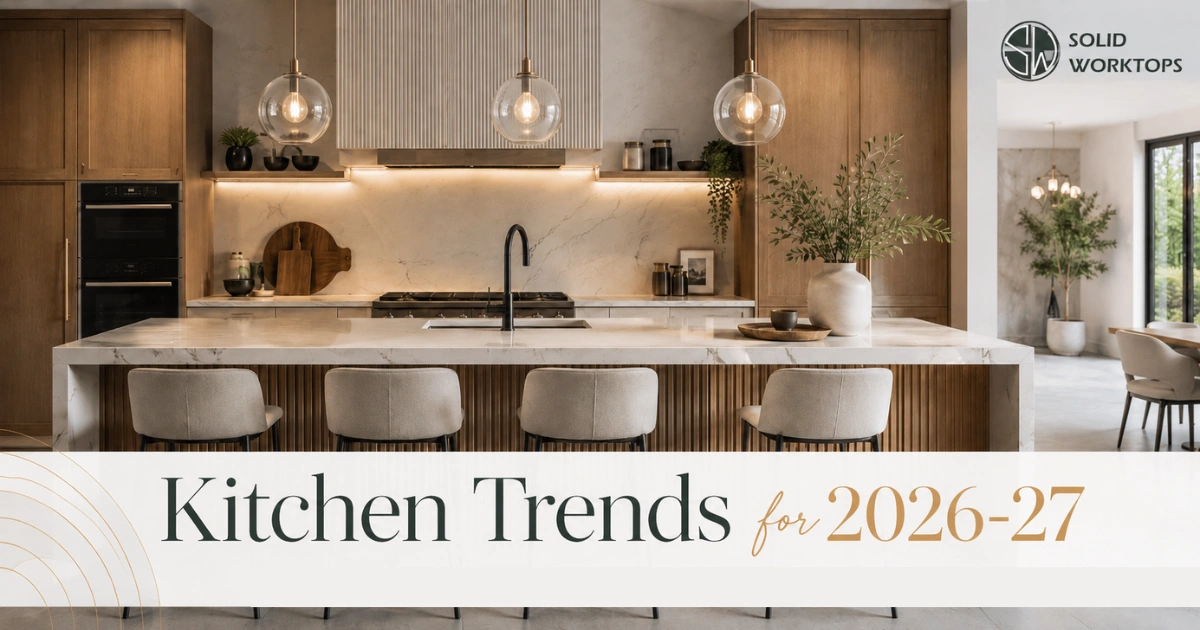
In 2026, kitchen design is moving towards a balance between style, comfort, practicality, and long-term value. Homeowners are moving away from short-lived trends and choosing designs that feel timeless while still adding modern features.

From warm colour palettes and luxury quartz worktops to smarter storage and better lighting, these are the kitchen trends that are expected to shape UK homes in 2026-27.

Warm and Natural Kitchen Colours

Kitchen colours in 2026 are becoming warmer and more welcoming. Many homeowners are moving away from cold, clinical white kitchens and choosing softer tones that create a comfortable living space.

Popular colour choices include:

  • Homeowners are choosing warm whites, beige, and cashmere shades because these colours create a bright kitchen while adding a softer and more relaxing feel.
  • Green tones such as sage and olive are becoming popular because they bring a natural element into modern kitchen designs.
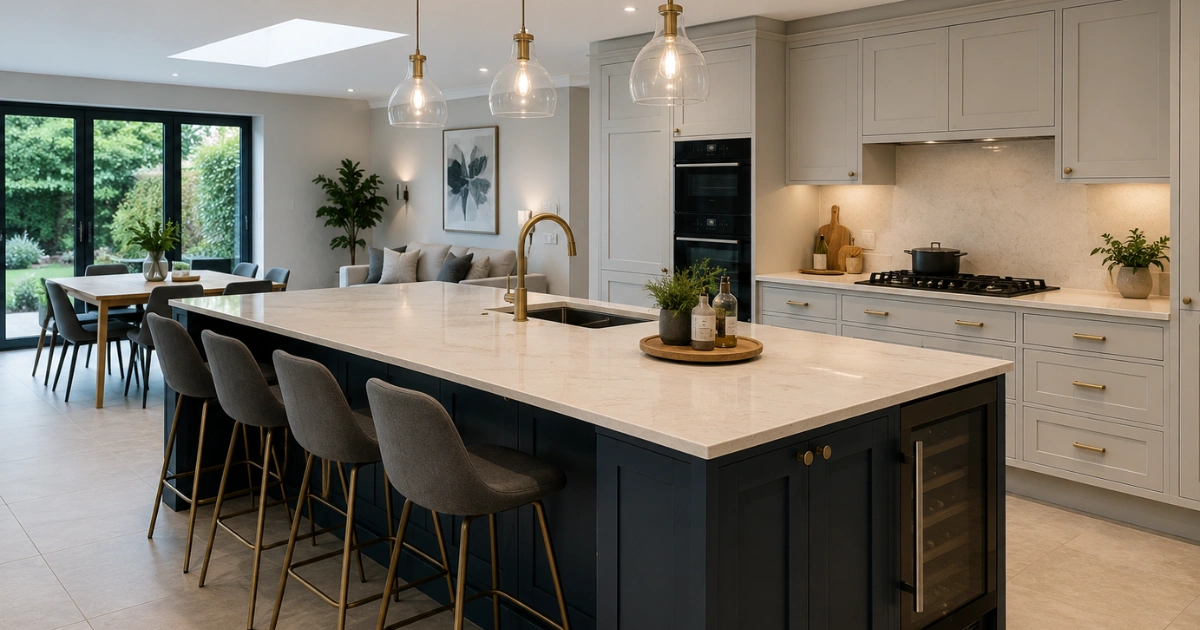
  • Darker colours such as navy blue and charcoal are being used for feature cabinets or kitchen islands to create contrast and a premium appearance.
  • Earth-inspired colours are helping homeowners create kitchens that feel timeless rather than influenced by short-term trends.

These colours work particularly well with natural materials such as wood, stone, and quartz surfaces.

Quartz Worktops Remain a Popular Choice

Quartz worktops continue to be one of the most requested choices for modern kitchen renovations.

Homeowners are choosing quartz because it combines a luxury appearance with everyday practicality.

The benefits of quartz worktops include:

  • Quartz provides a durable surface that can handle everyday kitchen activities while maintaining its appearance for many years.
  • The non-porous surface makes quartz easier to clean because it does not absorb spills, oils, or stains like some natural materials.
  • Modern quartz designs replicate the appearance of marble and natural stone while offering consistent patterns and colours.
  • Quartz requires less maintenance compared with materials that need regular sealing.

In 2026, marble-effect quartz with soft veining is expected to remain popular, while darker quartz colours will also appeal to homeowners wanting a bold modern look.

Larger Kitchen Islands for Social Spaces

Kitchen islands continue to be one of the most desirable features in modern homes.

A kitchen island is no longer only a preparation area. Many homeowners now use it as a central space for cooking, dining, working, and spending time together.

Modern kitchen islands are being designed to:

  • Provide extra preparation space for busy family kitchens.
  • Include additional drawers and cupboards to improve storage.
  • Create seating areas where family members can eat or socialise.
  • Include features such as sinks, hobs, or built-in appliances.

A well-planned island can improve both the appearance and functionality of a kitchen.

Handleless Kitchen Designs

Minimalist kitchens remain popular in 2026, with many homeowners choosing handleless cabinets for a clean and modern appearance.

Handleless designs create a smooth finish by removing unnecessary visual details.

Homeowners like this style because:

  • Handleless cabinets create a simple and uncluttered kitchen appearance.
  • Smooth surfaces are easier to clean because there are fewer areas where dust and grease can collect.
  • The minimalist design works well in both modern and open-plan homes.
  • Neutral cabinets can be combined with statement worktops or splashbacks to add personality.

Smarter Storage Solutions

Kitchen storage is becoming a bigger priority as homeowners want attractive kitchens that remain practical.

Modern storage solutions help maximise space while keeping everyday items organised.

Popular storage ideas include:

  • Pull-out pantry units allow homeowners to store food items neatly while making them easier to access.
  • Deep drawers provide better storage for cookware, plates, and kitchen equipment.
  • Internal cabinet organisers help create a more organised cooking space.
  • Hidden recycling and waste systems help maintain a cleaner kitchen appearance.
  • Appliance storage solutions help keep worktops clear and reduce clutter.

A well-designed kitchen should look good while making daily tasks easier.

Statement Splashbacks and Matching Surfaces

Splashbacks are becoming more than just a practical feature. Many homeowners are now using them as a design element.

Popular splashback choices for 2026 include:

  • Full-height quartz splashbacks create a seamless luxury look when matched with the worktop.
  • Large porcelain panels provide a modern appearance with fewer grout lines.
  • Textured tiles add character and create a stronger design feature.
  • Natural stone-inspired finishes bring warmth and depth to contemporary kitchens.

Matching the splashback with the worktop can create a high-end appearance often seen in luxury kitchen designs.

Layered Kitchen Lighting

Lighting plays an important role in creating a practical and comfortable kitchen.

Instead of relying on one main ceiling light, homeowners are combining different lighting options.

Modern lighting trends include:

  • Under-cabinet lighting helps illuminate preparation areas and improves visibility while cooking.
  • Pendant lights above kitchen islands create a stylish focal point.
  • Dimmable lighting allows homeowners to change the atmosphere depending on the time of day.
  • Integrated LED lighting adds a modern touch to shelves, cabinets, and display areas.

Good lighting improves both the functionality and appearance of a kitchen.

Sustainable Kitchen Choices

More homeowners are considering sustainability when planning kitchen renovations.

Instead of replacing kitchens frequently, people are investing in durable materials that last longer.

Sustainable kitchen trends include:

  • Choosing long-lasting worktops reduces the need for future replacements.
  • Energy-efficient appliances help reduce household energy consumption.
  • Sustainable materials allow homeowners to create attractive kitchens with a lower environmental impact.
  • Quality craftsmanship helps extend the lifespan of kitchen furniture and surfaces.

Smart Kitchen Technology

Technology continues to influence kitchen design.

Modern homeowners want convenience without sacrificing style.

Popular smart kitchen features include:

  • Smart ovens allow homeowners to control cooking settings more easily.
  • Boiling water taps provide instant hot water and reduce the need for kettles.
  • Integrated charging points make it easier to use phones and tablets in the kitchen.
  • Smart lighting systems allow homeowners to control brightness and create different moods.

Technology is becoming a practical addition rather than just a luxury feature.

Mixing Different Materials and Textures

One of the biggest design trends for 2026 is combining different materials to create a more interesting kitchen.

Instead of matching every surface, homeowners are mixing complementary finishes.

Examples include:

  • Combining quartz worktops with natural wood creates a balance between modern and traditional styles.
  • Pairing matte cabinets with polished surfaces adds contrast and depth.
  • Using metal finishes such as brass or black fixtures creates a luxury appearance.
  • Adding textured materials prevents kitchens from looking flat or repetitive.

Curved Kitchen Features

Curved designs are becoming increasingly popular as homeowners look for softer and more welcoming spaces.

Curved elements can include:

  • Rounded kitchen islands create a smoother flow and improve movement around the room.
  • Curved breakfast bars provide a more comfortable seating area.
  • Rounded shelving and cabinet details add a softer design style.

These features help create kitchens that feel less rigid and more inviting.

Choosing Timeless Trends Over Short-Term Styles

While trends provide inspiration, homeowners should focus on choices that will continue to look good in the future.

The best kitchen investments usually include:

  • Choosing durable worktops that can handle everyday family use.
  • Selecting colours that complement the rest of the home.
  • Creating practical layouts that improve movement and storage.
  • Investing in quality materials rather than following every passing trend.

A beautiful kitchen should not only look impressive when installed but should continue working well for many years.

Frequently Asked Questions

What kitchen colours will be popular in 2027?

Warm neutral colours, soft greens, earthy tones, and darker feature shades are expected to be popular because they create comfortable and timeless kitchen designs.

Are quartz worktops still popular?

Yes. Quartz remains a popular choice because it offers durability, low maintenance, and a wide range of modern designs suitable for different kitchen styles.

What kitchen features add value to a home?

High-quality worktops, practical storage, modern appliances, and a well-planned layout can help improve the appeal and value of a property.

Are kitchen islands still trending?

Yes. Kitchen islands continue to be popular because they provide extra workspace, storage, and a social area for family and guests.

Should I choose trends or timeless kitchen designs?

The best approach is to combine modern features with timeless materials and colours. This helps your kitchen remain attractive and practical for many years.

Top Trends in Kitchen Worktops for 2023

Top Trends in Kitchen Worktops for 2026–2027

The latest kitchen worktop trends for 2026–2027 focus on warm earthy colours, dramatic stone veining, slim and chunky edge profiles, matte finishes, curved designs, and mixed materials. Homeowners are increasingly choosing natural textures and practical surfaces that combine modern style with everyday durability. Quartz, porcelain, granite, and natural stone remain popular choices for creating contemporary kitchens with distinctive features.

Top Kitchen Worktop Trends for 2026–2027

  1. Warm earthy colours: Cream, taupe, cashmere, warm grey, and sandy beige create welcoming kitchens that complement wooden cabinetry.
  2. Bold stone veining: Marble-effect quartz and natural stone with gold, charcoal, or rust-coloured veins create striking kitchen islands and worktops.
  3. Slim worktop profiles: Thin 12–20mm porcelain and suitable engineered stone surfaces offer a minimalist appearance.
  4. Chunky mitred edges: Built-up 40–60mm edge profiles create the appearance of thicker stone without requiring a solid slab of that thickness.
  5. Matte and honed finishes: Low-sheen, brushed, and leathered surfaces provide subtle texture and reduce reflections.
  6. Curved kitchen worktops: Rounded corners, bullnose edges, and curved island ends soften kitchen layouts and improve movement around furniture.
  7. Mixed worktop materials: Combining timber breakfast bars with quartz, granite, or porcelain preparation areas adds warmth and visual contrast.

Popular Kitchen Worktop Colours for 2026–2027

Colour Trend Best Kitchen Style
Cream and Warm White Minimalist and contemporary kitchens
Taupe and Cashmere Modern and traditional kitchens
Sandy Beige and Greige Natural and Scandinavian kitchens
Gold-Veined Stone Luxury kitchens and statement islands
Dark Brown and Charcoal Contemporary and industrial kitchens
Deep Burgundy and Earthy Tones Bold, character-led kitchen designs

Best Worktop Materials for Upcoming Kitchen Trends

  • Quartz: Suitable for warm neutral colours, marble-effect veining, and low-maintenance kitchens.
  • Porcelain: Ideal for slim worktops, modern profiles, and durable preparation surfaces.
  • Granite: Provides distinctive natural patterns and a choice of polished, honed, or leathered finishes.
  • Marble: Creates luxurious worktops with expressive veining but requires careful maintenance.
  • Solid Wood: Adds warmth to breakfast bars, kitchen islands, and traditional interiors.
  • Quartzite: Offers natural veining and durability, although sealing requirements vary by stone.

Kitchen Worktop Design Trends: What’s Changing?

Earlier Design Preferences 2026–2027 Design Directions
Cool whites and grey tones Warm neutrals and earthy colours
Uniform stone patterns Bold, expressive veining
Predominantly polished surfaces Matte, honed, and textured finishes
Standard square edges Curved corners and slim profiles
Single-material kitchen surfaces Mixed stone and timber finishes
Conventional rectangular islands Rounded islands and sculptural edges

How to Choose the Right Kitchen Worktop Trend

  • Consider your kitchen style: Choose colours and textures that complement cabinetry, flooring, and wall finishes.
  • Compare material durability: Quartz and porcelain offer practical options for frequently used kitchens.
  • Select a suitable finish: Test polished, matte, and textured samples under natural and artificial lighting.
  • Plan worktop edges: Rounded profiles suit softer designs, while mitred edges create a bold appearance.
  • Balance contrasting materials: Combine timber and stone carefully to maintain a coordinated kitchen design.
  • Check installation requirements: Curved worktops, thin slabs, and decorative edges may require specialist fabrication.

Which Kitchen Worktop Trend Is Best for 2026–2027?

Warm neutral quartz with natural-looking veining is a versatile choice for kitchens designed around 2026–2027 trends. It offers durability, stain resistance, and easy maintenance while complementing timber cabinetry and earthy interior colours.

For homeowners seeking a more distinctive appearance, curved porcelain worktops, textured granite, and mixed-material islands offer attractive alternatives.

The best kitchen worktop combines contemporary design with practical performance, suitable maintenance requirements, and long-term appeal. Choose materials and finishes that suit your cooking habits, budget, and overall kitchen layout.

Worktops in Colchester

Colchester is a historic town in the east of England known for its rich heritage and cultural significance. With its growing popularity as a tourist destination, Colchester has recently seen a surge in new home builds and renovations. This has led to an increase in demand for high-quality kitchen worktops, with homeowners looking for both class and durability in their kitchen surfaces.

Kitchen Worktops Shop

When shopping for kitchen worktops in Colchester, choosing a reputable kitchen worktop shop that can offer a wide range of options to suit your needs and budget is important. No matter if you’re looking for a classic, traditional look or a more modern and contemporary style, a good kitchen worktop shop will be able to provide you with a wide range of options to choose from.

The Top Materials to Consider for Your Kitchen Worktop in 2026–2027:

The material is one of the most important decisions you’ll make when choosing a kitchen worktop. With diverse options to choose from, including natural stone, engineered stone, and laminate, it can be difficult to decide which material is best for your kitchen.

Quartz

Quartz is an engineered stone that is quickly becoming one of the most popular choices for kitchen worktops. This material is made from a mixture of natural stone and resin, making it extremely durable and resistant to scratches and stains. Quartz worktops come in various colors and patterns, making it easy to find a design that suits your style and kitchen decor.

Granite

Granite is a natural stone that has been popular for kitchen worktops for many years. This material is extremely durable and resistant to scratches, stains, and heat, making it a great choice for a busy kitchen.

Granite worktops are available in various shades, styles, and patterns, with unique veins and patterns that add character and style to any kitchen.

Laminate

Laminate worktops are a more affordable option for kitchen worktops, made from a combination of high-density paper and resin. This material is long-lasting and easy to maintain, with a wide range of styles and colors available. Laminate worktops are also resistant to stains and heat, making them a practical option for any kitchen.

Solid Wood

Solid wood worktops are a classic and timeless choice for Kitchen Worktops in Colchester. Made from a single piece of hardwood, this material is enduring and will last many years with proper maintenance. Solid wood worktops are obtainable in numerous kinds of wood, including oak, beech, and cherry – each wood with its unique character and grain patterns.

Design Trends in 2027

When it comes to kitchen worktop design, there are a few key trends to consider in 2027.

Bold Colors

Bold colors are becoming increasingly popular in kitchen worktops, with homeowners opting for bright, statement-making worktops to add a pop of color to their kitchens. Whether you choose a bright red, blue, or green worktop, a bold color can impact your kitchen and add a personality to the space.

Mixed Materials

Mixed materials are a growing trend in kitchen worktops, with homeowners combining different materials to create a unique and personalized look. You can choose to mix and match different types of stone, such as granite and quartz, or mix materials like wood and metal – a mixed material worktop can add character and interest to your kitchen.

Textured Surfaces

Textured surfaces are becoming more popular in Kitchen Worktops in Colchester, with homeowners opting for surfaces with an exceptional feel and touch. A textured stone, such as honed granite or rough-cut marble, or a textured laminate worktop, all surfaces can bring depth and dimension.

Minimalism

Minimalism is a growing trend in kitchen design – clean, simple lines and a more understated look. A minimal kitchen worktop can be achieved with a solid color, such as white or black, or by choosing a worktop with a subtle pattern or texture.

Natural Stone

Natural stone worktops, such as granite, marble, and soapstone, are becoming increasingly famous in kitchen design, with homeowners opting for these materials’ extraordinary beauty and reliability. Natural stone worktops are available in various colors and patterns and can add a touch of opulence and refinement.

Final Words

When it comes to choosing a kitchen worktop, there are a variety of options to consider, including material, color, and design. With the latest trends in kitchen worktops for 2027, it’s easy to find the perfect worktop to suit your style and budget.

Whether you choose a bold color, mixed materials, or a textured surface, a well-designed kitchen worktop can add both luxury and functionality to your kitchen.

Top Kitchen Worktop Design Trends for 2026-2027

The latest kitchen worktop trends for 2026–2027 focus on natural quartzite, porcelain, low-silica engineered surfaces, warm earthy colours, matte finishes, and curved designs. Homeowners are increasingly choosing textured materials, expressive stone patterns, and practical surfaces that combine durability with modern style. Slim worktop profiles, statement islands, and matching splashbacks are also shaping contemporary kitchen designs.

Top Kitchen Worktop Trends for 2026–2027

  1. Natural quartzite worktops: Quartzite offers distinctive natural veining, good scratch resistance, and strong heat tolerance for premium kitchens.

  2. Low-silica engineered surfaces: Newer mineral-based materials offer alternatives to traditional high-silica engineered stone, with compositions varying by manufacturer.

  3. Large-format porcelain: Porcelain and sintered stone provide low water absorption, excellent heat resistance, and slim modern profiles.

  4. Warm earthy colours: Cream, sand, mushroom, taupe, and warm greige create inviting kitchens that complement natural timber.

  5. Bold stone veining: Gold, bronze, charcoal, and flowing marble-effect patterns make kitchen islands attractive focal points.

  6. Matte and textured finishes: Honed, brushed, and leathered surfaces create softer appearances with reduced reflections.

  7. Curved kitchen islands: Rounded corners, curved breakfast bars, and softer worktop edges add character to contemporary layouts.

  8. Full-height stone splashbacks: Matching worktops and splashbacks create coordinated designs with fewer grout lines.

  9. Statement edge profiles: Slim 12–20mm surfaces and chunky mitred edges offer contrasting architectural styles.

Popular Kitchen Worktop Materials for 2026–2027

Material Main Benefits Best For
Quartzite Natural veining, good heat and scratch resistance Luxury kitchens
Low-Silica Engineered Stone Alternative engineered compositions and varied designs Modern kitchens
Porcelain Heat-resistant, low water absorption, low maintenance Contemporary kitchens
Quartz Stain-resistant, durable, easy to clean Busy family kitchens
Granite Unique natural patterns and good heat resistance Traditional and premium kitchens
Solid Wood Natural warmth and repairable finish Rustic kitchens and breakfast bars

Trending Kitchen Worktop Colours

  • Cream and Warm White: Create bright, welcoming kitchens without a stark appearance.

  • Taupe and Mushroom: Complement oak cabinetry, neutral walls, and natural textures.

  • Gold and Bronze Veining: Add warmth and distinctive patterns to marble-effect surfaces.

  • Forest Green: Create statement islands and coordinate with earthy kitchen interiors.

  • Terracotta and Warm Brown: Introduce rich natural tones to contemporary designs.

  • Charcoal and Dark Stone: Provide contrast against lighter cabinetry and warm timber finishes.

Matte vs Polished Kitchen Worktops

Finish Appearance Main Consideration
Matte Soft, low-sheen finish May show oils or handling marks
Honed Smooth, understated appearance Cleaning needs vary by material
Leathered Subtle natural texture Textured areas may need careful cleaning
Polished Glossy and reflective Can highlight fingerprints and watermarks

Kitchen Worktop Edge and Layout Trends

  • Slim worktop profiles: Thin porcelain and compact laminate designs suit minimalist interiors.

  • Chunky mitred edges: Built-up edges create the appearance of thick stone on kitchen islands.

  • Rounded corners: Softer edges reduce sharp projections in frequently used areas.

  • Curved island ends: Rounded worktops create smoother transitions around open-plan kitchens.

  • Waterfall edges: Extend the worktop material vertically down an island’s sides.

  • Matching splashbacks: Continue the stone pattern onto walls for a coordinated appearance.

Kitchen Worktop Trends: What’s Changing?

Established Designs Growing 2026–2027 Trends
Cool grey and stark white Warm cream, taupe, and earthy neutrals
Uniform stone patterns Expressive natural veining
Primarily high-gloss finishes Matte, honed, and textured surfaces
Conventional square islands Curved and sculptural islands
Standard edge profiles Slim surfaces and chunky mitred edges
Contrasting tiled splashbacks Matching full-height slab splashbacks
Traditional engineered quartz More low-silica material options

How to Choose the Right Kitchen Worktop Trend

  1. Consider daily kitchen use: Choose stain-resistant, durable materials for frequently used preparation areas.

  2. Match your cabinetry: Pair warm stone finishes with oak, walnut, cream, or muted green cabinets.

  3. Compare maintenance requirements: Quartz and porcelain require little upkeep, while some natural stones need sealing.

  4. Choose suitable thickness: Check slab support requirements before selecting thin or built-up worktop profiles.

  5. Consider kitchen size: Light colours and restrained patterns can help compact kitchens feel more open.

  6. Check fabrication requirements: Curved islands, specialist edges, and large slabs may increase installation costs.

  7. Review material safety: Ask suppliers about crystalline silica content, responsible fabrication, and appropriate workplace dust controls.

Which Kitchen Worktop Trend Is Best for 2026–2027?

Warm neutral quartz and porcelain worktops are practical choices for modern kitchens because they combine attractive designs with easy maintenance. Quartzite is particularly appealing for homeowners who prefer distinctive natural stone patterns, while low-silica engineered surfaces provide additional material options.

For statement designs, curved islands, bold veining, and matching splashbacks create visual interest without changing the entire kitchen layout.

The best kitchen worktop combines modern design, durability, suitable maintenance, and long-term value. Choose a material and finish that complement your kitchen, lifestyle, and renovation budget rather than following trends alone.

Natural Stone Revival

The second trend for 2026 is the natural stone. Natural stones such as marbles, granites, and choirs repeatedly return to the market because of their flavour and extended durability. People are fascinated by its veining and patterns, which reveal the character of most kitchens it is fixed in. This year, worktops are taking the next step, giving dramatic veining prominence and becoming a feature of modern kitchens. It comes naturally, and these exude elegance more so that the heat and scratch-resistant surfaces make it suitable for use.

Sustainable Surfaces

In terms of conceptual approach, sustainability remains to be a significant consideration in kitchen layout. The trend is towards sustainable work surfaces, for example, recycled glass, composite stone, and bamboo. These surfaces satisfy the green homeowners searching for durable and stylish green surfaces. For example, worktops from recycled glass are beautiful and offered in stunning colours and textures. The dramatic effect of bringing together small waste materials is that one can get artificial composites as strong and decorative as natural stones but with less negative environmental impact.

Matte Finishes

The shine is set to disappear from kitchens’ worktops, and in 2026, those who prefer a more minimalist look will be able to enjoy all sorts of matt Effect options. These surfaces have a stylish and modern appearance that is less apparent than on glossy ones, but at the same time, are more elegant. Textured worktops are available in Quartz, Concrete and Solid surfaces – ready with a non-slip surface – and easy to clean.

Bold Colour Choices

Typically, it was only a couple of years ago that kitchen worktops were a very conservative colour; therefore, 2026 is likely to be richer and more intense. Tones of deep green, rich blue, and terracotta are returning to popularity for those who feel like their kitchen could use a bit of colour. These shades are perfect when combined with light and dark cabinetry, making the contrast look warm and introducing character into the kitchen.

Textured Surfaces

We have had flat worktops for years, while a rough worktop will be in demand in 2026. Choices such as honed or leathered finish are evidence of this as they feel pleasing to the touch, and the appearance is phenomenal. These textured surfaces give the product depth and do not show marks or finger smudges, which is perfect for families with children.

Thin Profiles and Sleek Edges

The simplicity of line is evident in today’s kitchen, which also applies to worktops. Integrated plains with slim line edges are very popular in modern kitchens. This style’s design appears very continuous, adding order and space in the room and making kitchens clean. Compact laminate and ultra-thin Quartz give this look beautifully and are also hard-wearing.

Mixing Materials

The best design trend of 2027 is blending the materials in a single kitchen and creatingcreating a harmonious environment. For instance, the kitchen installation may incorporate an opulent marble countertop on what is known as a kitchen island, and other counters may be made from such as wood or Quartz. This not only breaks up the design and adds more differentiation but also makes it easier for homeowners to put their personal touch into the room they are using to create their masterpieces in the kitchen.

Smart Worktops

However, the influence of innovation and technology can be seen creeping into kitchen concepts. Mobile worktops and wireless charging worktop integrated work surfaces are the new products being developed in the market. These high-tech surfaces render the kitchen solution more usable and fit contemporary standards where connectivity is paramount. In addition, some of the high-end worktops also feature heating systems, making food preparation and serving easier.

Conclusion

The kitchen worktop trends for 2026 bring a perfect mix of style, practicality, and sustainability. From natural stones and eco-friendly options to bold colours and high-tech surfaces, there are numerous ways to elevate your kitchen’s design. Whether you prefer a modern minimalist look or a kitchen full of character, the right worktop can be a game-changer in aesthetics and functionality. Choose a trend that resonates with your style and meets the demands of your daily life to make your kitchen the heart of your home.

Quartz worktop

From Rustic to Modern: Matching Your Worktop to Your Kitchen Style

How to Match Kitchen Worktops to Rustic, Traditional, Industrial and Modern Styles

Matching kitchen worktops to your interior style requires choosing the right material, colour, surface finish, and edge profile. Solid wood and natural stone suit rustic kitchens, while marble and granite complement traditional Shaker designs. Concrete and stainless steel work well in industrial spaces, whereas quartz, porcelain, and Corian suit modern minimalist interiors.

The best worktop should complement your cabinets while meeting your everyday cooking and maintenance needs.

Best Worktop Materials for Different Kitchen Styles

Kitchen StyleBest Worktop MaterialsRecommended FinishIdeal Edge Profile
Rustic / FarmhouseOak, walnut, soapstone, limestoneOiled, brushed, honedBullnose, pencil round, live edge
Traditional / ShakerMarble, granite, marble-effect quartzPolished, honed, satinOgee, bevelled, bullnose
Industrial / UrbanConcrete, stainless steel, dark slateMatte, brushed, texturedSquare, raw cast
Modern / MinimalistQuartz, porcelain, sintered stone, CorianMatte, satin, polishedSlim square, eased, mitred

1. Best Worktops for Rustic and Farmhouse Kitchens

Rustic kitchens look best with natural materials, warm colours, and textured surfaces. Timber and softly finished stone complement painted cabinets, Belfast sinks, and exposed brickwork.

Solid Oak and Walnut Worktops

Solid timber brings warmth and natural grain patterns to farmhouse kitchens.

  • Oak: Offers warm tones that complement cream, sage green, and white cabinets.

  • Walnut: Creates deeper contrast against light cabinetry.

  • Reclaimed wood: Adds distinctive grain, marks, and natural character.

  • Butcher block: Provides a traditional timber appearance suitable for farmhouse interiors.

Wooden worktops require suitable moisture protection and regular maintenance of their protective finish.

Honed Natural Stone Worktops

Soapstone, limestone, and honed granite provide understated alternatives to polished stone.

  • Soapstone: Offers soft grey and charcoal colours with natural variation.

  • Limestone: Creates a warm, earthy appearance but requires careful protection from staining and acidic spills.

  • Honed granite: Provides a softer finish while retaining granite’s natural patterns.

Best Colours and Edge Profiles

Design ElementRecommended Choice
Cabinet ColoursCream, sage green, warm white
Worktop ColoursNatural oak, walnut, beige, charcoal
Surface FinishOiled, honed, brushed
Edge ProfilePencil round, eased, bullnose, live edge

Best combination: Natural oak worktops with sage green Shaker cabinets and a Belfast sink.

2. Best Worktops for Traditional and Classic Shaker Kitchens

Traditional kitchens suit worktops with elegant patterns, balanced colours, and decorative edge details. Marble, granite, and marble-effect quartz complement framed cabinetry and classic fittings.

Carrara and Calacatta Marble Worktops

Marble offers natural veining that suits traditional kitchen designs.

  • Carrara marble: Features softer grey veining on a generally light background.

  • Calacatta marble: Often has bolder veining and stronger visual contrast.

  • Honed marble: Creates a softer, less reflective appearance.

  • Polished marble: Highlights the stone’s colour and natural patterns.

Marble requires careful maintenance because acidic spills can cause etching.

Granite Worktops

Granite provides natural variation and strong everyday durability.

Dark and speckled granite can create contrast against cream, white, or muted green cabinets.

Polished and leathered finishes offer different appearances, allowing homeowners to match the stone to their preferred kitchen style.

Marble-Effect Quartz Worktops

Marble-effect quartz provides a classic stone-inspired appearance with lower maintenance requirements.

Its non-porous construction resists everyday stains and eliminates the need for regular sealing.

However, hot cookware should always be placed on suitable trivets.

Best Colours and Edge Profiles

Design ElementRecommended Choice
Cabinet ColoursWhite, cream, navy, sage green
Worktop ColoursWhite marble, grey granite, beige quartz
Surface FinishPolished, honed, satin
Edge ProfileOgee, bevelled, bullnose, chamfered

Best combination: White marble-effect quartz with navy Shaker cabinets and brass handles.

3. Best Worktops for Industrial and Urban Kitchens

Industrial kitchens benefit from raw materials, darker surfaces, and simple worktop shapes. Concrete, stainless steel, and textured natural stone complement black metal fittings and exposed brickwork.

Concrete and Microcement Worktops

Concrete offers a distinctive architectural appearance.

  • Cast concrete: Creates substantial worktops with natural tonal variation.

  • Microcement: Provides a thin decorative finish over suitable prepared surfaces.

  • Grey finishes: Complement black cabinetry, exposed brick, and timber shelving.

  • Textured surfaces: Reinforce the raw appearance associated with industrial kitchens.

Concrete and microcement require appropriate protective treatments to resist stains and moisture.

Stainless Steel Worktops

Stainless steel creates the practical appearance associated with professional kitchens.

  • Non-porous and easy to clean.

  • Highly resistant to heat.

  • Compatible with selected integrated sink designs.

  • Suitable for industrial and contemporary interiors.

However, scratches and fingerprints can become visible during everyday use. Brushed finishes can help make minor marks less noticeable.

Dark Slate and Textured Stone

Dark slate and selected sintered stone finishes offer an alternative to concrete and stainless steel.

These materials complement industrial kitchens with black cabinetry, metal fixtures, and natural timber details.

Best Colours and Edge Profiles

Design ElementRecommended Choice
Cabinet ColoursBlack, charcoal, dark grey, natural timber
Worktop ColoursConcrete grey, black, dark slate
Surface FinishMatte, brushed, textured
Edge ProfileStraight square, raw cast, bevelled

Best combination: Concrete-effect worktops with charcoal cabinets and black metal fittings.

4. Best Worktops for Modern and Minimalist Kitchens

Modern kitchens suit smooth surfaces, clean lines, and carefully coordinated colours. Quartz, porcelain, and Corian complement handleless cabinets and open-plan kitchen layouts.

Engineered Quartz Worktops

Quartz provides a refined appearance with strong resistance to everyday scratches and stains.

  • Available in white, grey, beige, and marble-effect finishes.

  • Suitable for large islands and contemporary layouts.

  • Requires no periodic sealing.

  • Complements matte and handleless kitchen cabinets.

Quartz is particularly practical for busy family kitchens seeking minimal maintenance.

Porcelain and Sintered Stone Worktops

Porcelain and sintered stone provide slim-profile options with excellent heat resistance.

  • Available in contemporary stone and concrete-effect finishes.

  • Suitable for waterfall island designs.

  • Resistant to everyday stains and scratches.

  • Requires specialist fabrication and appropriate structural support.

Corian Solid Surface Worktops

Corian is suitable for homeowners who want continuous-looking surfaces and custom designs.

  • Nearly invisible bonded joints.

  • Compatible integrated sinks.

  • Curved edges and bespoke worktop shapes.

  • Repairable scratches and surface marks.

Corian scratches more easily than quartz and needs protection against direct heat.

Waterfall Kitchen Islands

A waterfall design extends the worktop vertically down one or both sides of an island.

This creates a continuous visual feature that complements minimalist cabinetry.

Quartz, porcelain, and selected solid surface materials can all be used, depending on fabrication requirements.

Best Colours and Edge Profiles

Design ElementRecommended Choice
Cabinet ColoursWhite, light grey, black, natural oak
Worktop ColoursWhite, concrete grey, beige, marble-effect
Surface FinishMatte, satin, polished
Edge ProfileSlim square, eased, mitred waterfall

Best combination: White quartz worktops with handleless grey cabinets and a waterfall island.

How to Match Kitchen Worktops With Cabinet Colours

Cabinet ColourRecommended WorktopSuitable Style
WhiteWalnut, grey quartz, marbleModern or traditional
CreamOak, beige granite, marble-effect quartzRustic or country
Sage GreenNatural oak, white quartz, Carrara marbleFarmhouse or Shaker
Navy BlueWhite marble-effect quartz, pale graniteTraditional or contemporary
CharcoalConcrete, stainless steel, light quartzIndustrial or modern
Natural OakCream quartz, soapstone, porcelainRustic or minimalist
BlackWhite quartz, stainless steel, dark stoneIndustrial or modern

How to Choose the Right Worktop Edge Profile

Worktop edge profiles influence the overall kitchen design and how the surface feels during everyday use.

  • Bullnose: Rounded edges that suit rustic and traditional kitchens.

  • Pencil round: A subtle rounded profile suitable for timber and stone.

  • Ogee: Decorative curved edges that complement traditional cabinetry.

  • Bevelled: Angled edges suitable for classic and contemporary kitchens.

  • Square: Clean lines that work well in industrial and minimalist designs.

  • Mitred: Creates a thicker or continuous-looking edge, commonly used for waterfall islands.

  • Live edge: Retains the natural contour of suitable timber slabs.

How to Choose the Right Worktop Thickness

Kitchen StyleRecommended Visual Profile
RusticMedium to thick timber appearance
TraditionalClassic, substantial stone profile
IndustrialBold, thick slab appearance
ModernSlim or medium profile
MinimalistThin, streamlined profile

Actual thickness options depend on the material and manufacturer. Built-up edges can create a thicker appearance without requiring a full-depth slab.

Common Mistakes When Matching Worktops to Kitchen Styles

  1. Choosing materials based only on appearance: Consider heat resistance, scratches, and cleaning requirements.

  2. Ignoring cabinet colours: Worktops should complement the cabinetry, flooring, and surrounding finishes.

  3. Choosing unsuitable edge profiles: Decorative edges may conflict with minimalist designs.

  4. Overlooking maintenance: Marble, wood, and concrete may need more care than quartz.

  5. Ignoring surface texture: Polished, matte, and textured finishes create different visual effects.

  6. Skipping physical samples: Colours and patterns can appear different under kitchen lighting.

Which Kitchen Worktop Best Matches Your Style?

Solid wood and honed natural stone are ideal for rustic kitchens where warmth and texture matter. Marble, granite, and marble-effect quartz suit traditional Shaker interiors with decorative detailing.

Concrete and stainless steel complement industrial kitchens, while quartz, porcelain, and Corian provide clean finishes for modern minimalist designs.

The best worktop should match your kitchen’s cabinetry, colours, and overall design without compromising everyday practicality. Compare material samples, surface finishes, edge profiles, and maintenance needs before making your final decision.

Conclusion

When the granite worktops are included in the kitchen layout, they make the area utilitarian, and the beauty increases many folds. In 2026, there is nothing easier than choosing the suitable granite for any interior and turning your kitchen into an attractive and functional room with the help of different styles. For professional consultation and superior quality granite, visit Solid Worktops since we know the importance of marrying style with permanence in kitchens.