Top 10 Trending Quartz Worktops with Colours for Modern Kitchens

Top 10 Trending Quartz Worktops with Colours for Modern Kitchens

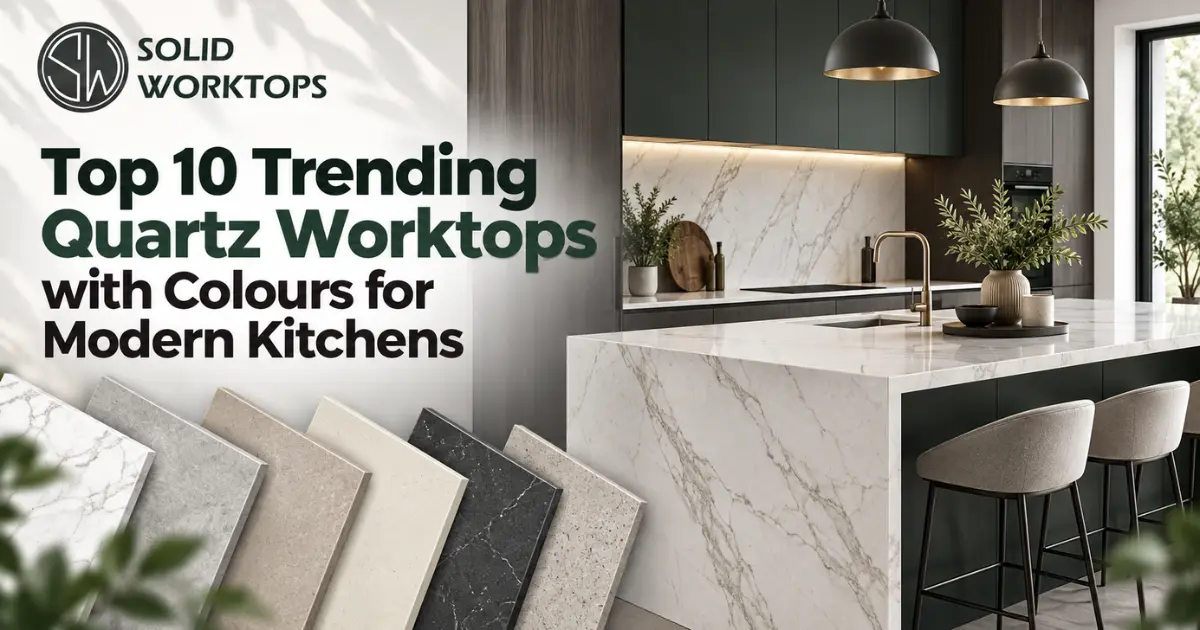
Choosing a quartz worktop is not only about durability. Colour has a big impact on how your kitchen looks and feels, especially when the worktop covers a large island or runs across several cabinets.

From clean white quartz to darker grey and dramatic marble-effect surfaces, there are plenty of options. After working with different kitchen styles, I find that the best colour is usually the one that works with your cabinets, flooring and natural light rather than simply following a trend.

Best-Selling Quartz Worktops 
Best-Selling Quartz Worktops Other Quartz Worktop Colours to Consider

Here are 10 quartz worktops to consider.

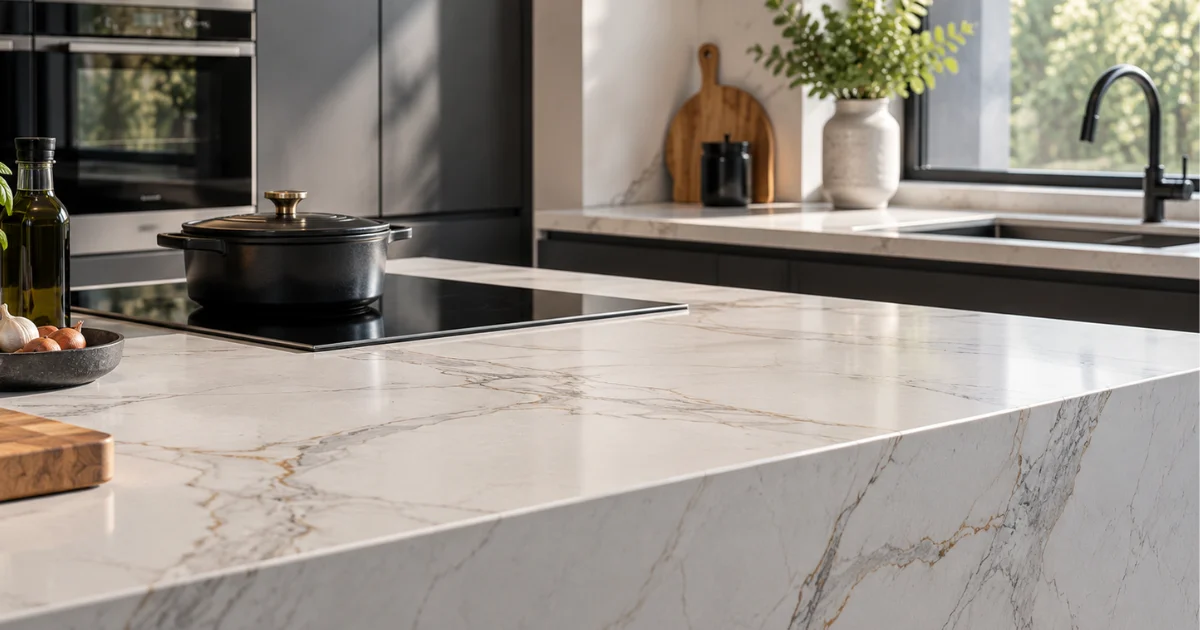
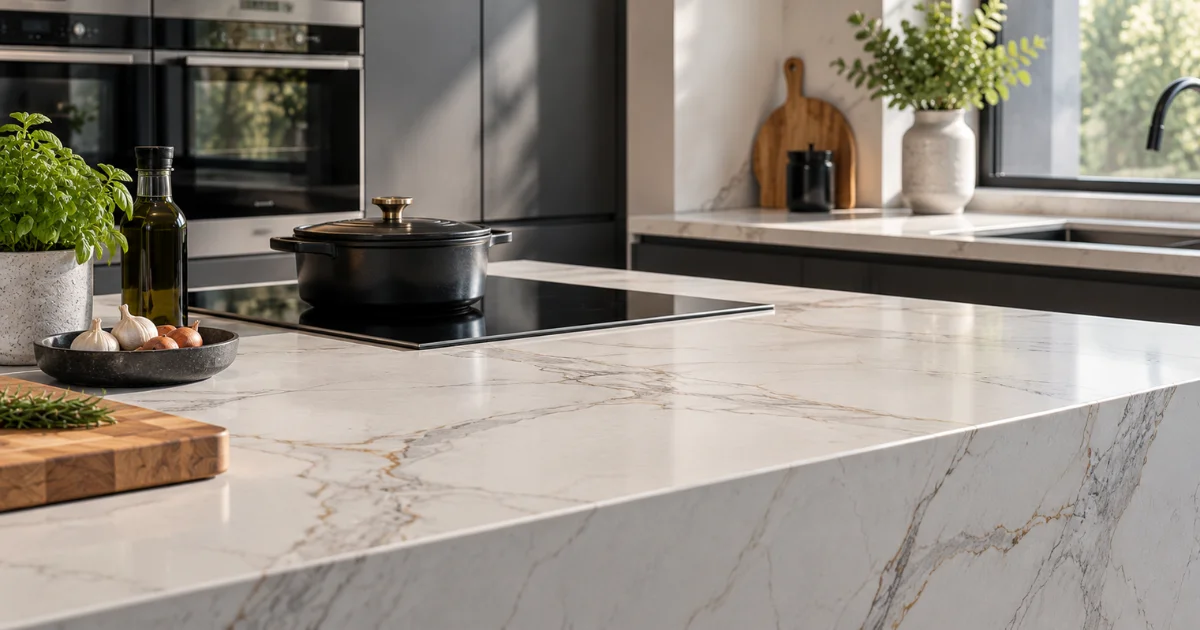
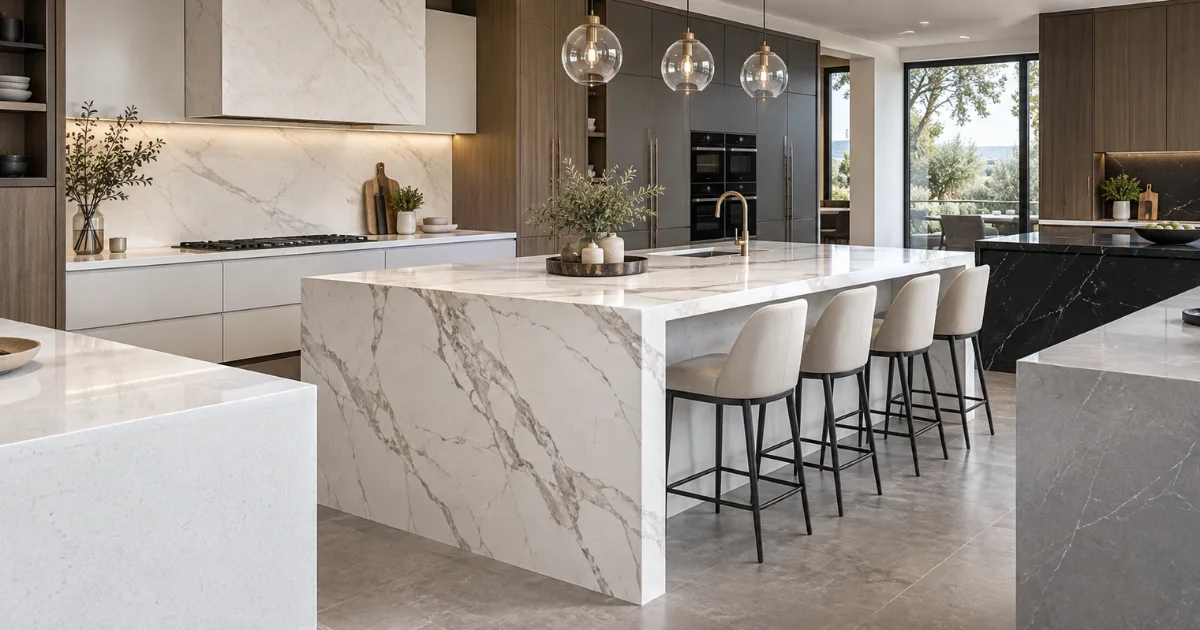
1. Calacatta Mansart: Calacatta Mansart is a strong choice if you want the look of luxury marble with a modern quartz worktop. Its light base and veining can work particularly well with white, cream, grey or darker kitchen cabinets.

It is especially effective on a kitchen island where the pattern has room to stand out.

2. Calacatta Leonardo: Calacatta Leonardo gives you another marble-style option with a bright, elegant appearance. It suits contemporary kitchens where you want the worktop to become one of the main visual features.

White quartz with subtle veining also helps make a smaller kitchen feel brighter.

3. Calacatta Borghini: If you like a more distinctive marble appearance, Calacatta Borghini is worth looking at. The veining adds character without requiring the maintenance associated with natural marble.

It works well when paired with simple cabinets because the worktop can provide most of the visual detail.

4. Bianco Assolutto: For homeowners who prefer a plain white quartz worktop, Bianco Assolutto is a simple and versatile option.
White worktops are easy to combine with different cabinet colours, including:

. White cabinets for a clean, minimalist kitchen.

. Grey cabinets for a softer modern contrast.

. Natural wood cabinets for a warmer look.

. Dark cabinets when you want stronger contrast.

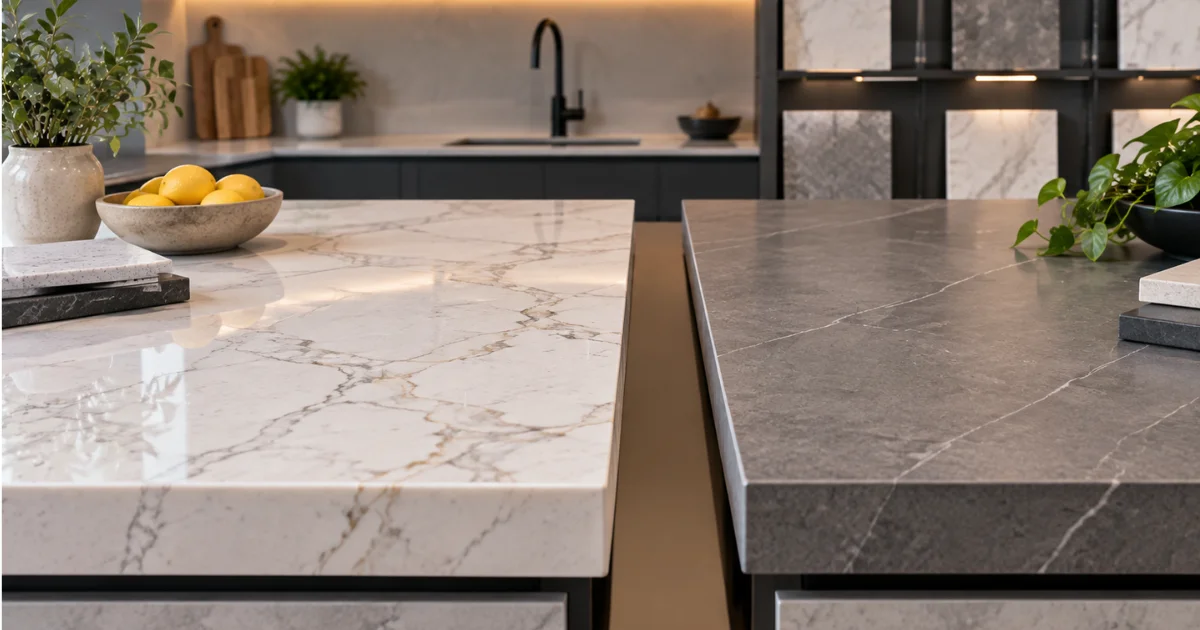
5. Ancient Grey: Grey remains one of the most practical choices for modern kitchens. Ancient Grey can work particularly well with white cabinets, timber finishes and darker kitchen furniture.

Grey quartz also tends to be more forgiving visually than very bright white surfaces when everyday marks appear between cleans.

6. Platinum Black: For a bold kitchen, Platinum Black gives you a much darker worktop option. Black quartz can create a strong contrast against light cabinets and works particularly well in contemporary kitchens.

I would normally recommend checking the amount of natural light first. A dark worktop can look excellent in a bright kitchen but may make a small, darker room feel heavier.

7. Platinum Grey: Platinum Grey sits comfortably between light and dark worktops. It is a useful choice when you want something more interesting than white but do not want the stronger appearance of black.

Grey quartz works with many cabinet colours, which makes it a safe option if you want a worktop that will still suit the kitchen after future changes.

8. Botticino: Botticino offers a warmer appearance that can suit kitchens using cream, beige, taupe or natural wood tones.

If your kitchen feels too cold with pure white and grey finishes, a warmer quartz colour can make the overall space feel more balanced.

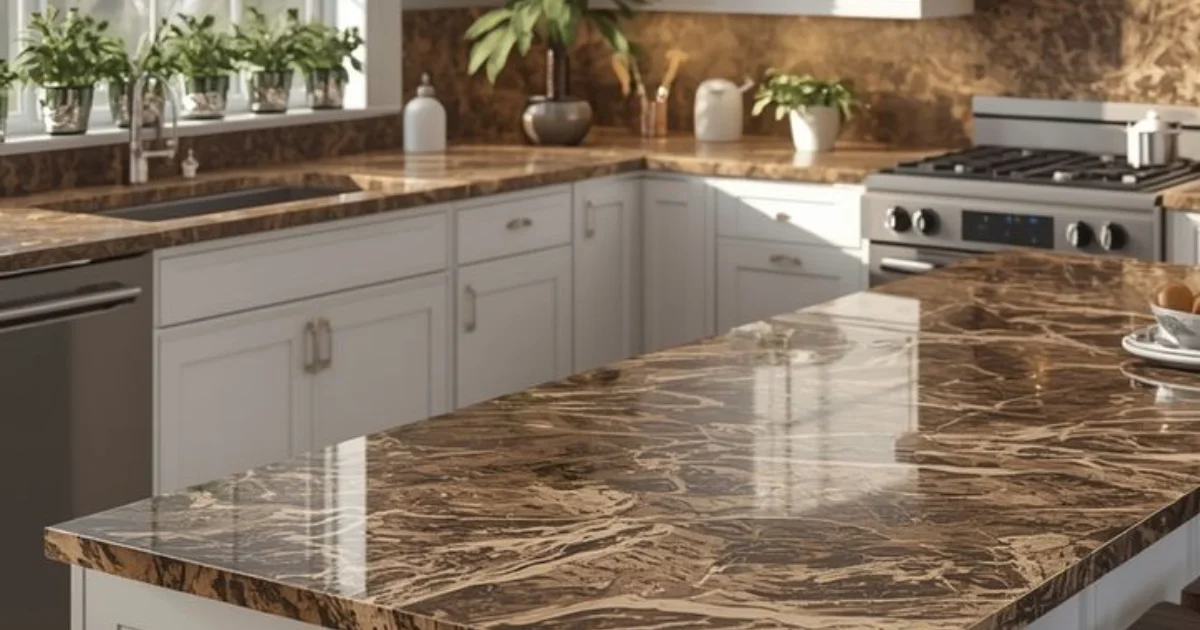
9. Imperial Gold: For something warmer and more decorative, Imperial Gold can introduce gold and earthy tones into the kitchen.

This type of quartz can work well with cream, beige, brown and natural wood finishes. It is a good option when you want the worktop to add warmth rather than create a stark contrast.

10. Betong: If you prefer an industrial or contemporary kitchen, Betong is a good style to consider. Concrete-inspired quartz works particularly well with handleless cabinets, black details and modern flooring.

It can give you the appearance of a concrete worktop while still providing the practical qualities expected from quartz.

Other Quartz Worktop Colours to Consider

The 10 options above are only a starting point. Quartz worktops are available in a wide range of shades and patterns, including:

  • White quartz, such as Bianco Raffaello, Bianco Shimmer and Platinum White.
  • Grey quartz, including Ancient Grey, Platinum Grey and Ornamental Grey.
  • Black quartz, such as Platinum Black and darker patterned options.
  • Cream and beige quartz, including Botticino, Dune and Nocciola.
  • Brown and earthy quartz, which can complement timber and traditional kitchens.
  • Gold quartz, including Imperial Gold and Marlin Gold.
  • Green quartz, with deeper colours such as Kenyan Forest creating a more distinctive look.
  • Blue and cooler shades, which can add a less conventional touch to a modern kitchen design.
  • Pink and warmer tones, which can work well in softer contemporary interiors.
  • Ivory and taupe quartz, which are useful when you want warmth without choosing a strong colour.
  • Marble-effect quartz, such as the Calacatta range, for a more luxurious appearance.
  • Concrete-effect quartz, such as Betong, for modern and industrial kitchens.
  • Wood-look combinations, which can be paired with quartz worktops to introduce natural warmth elsewhere in the kitchen.

How Do You Choose the Right Quartz Colour?
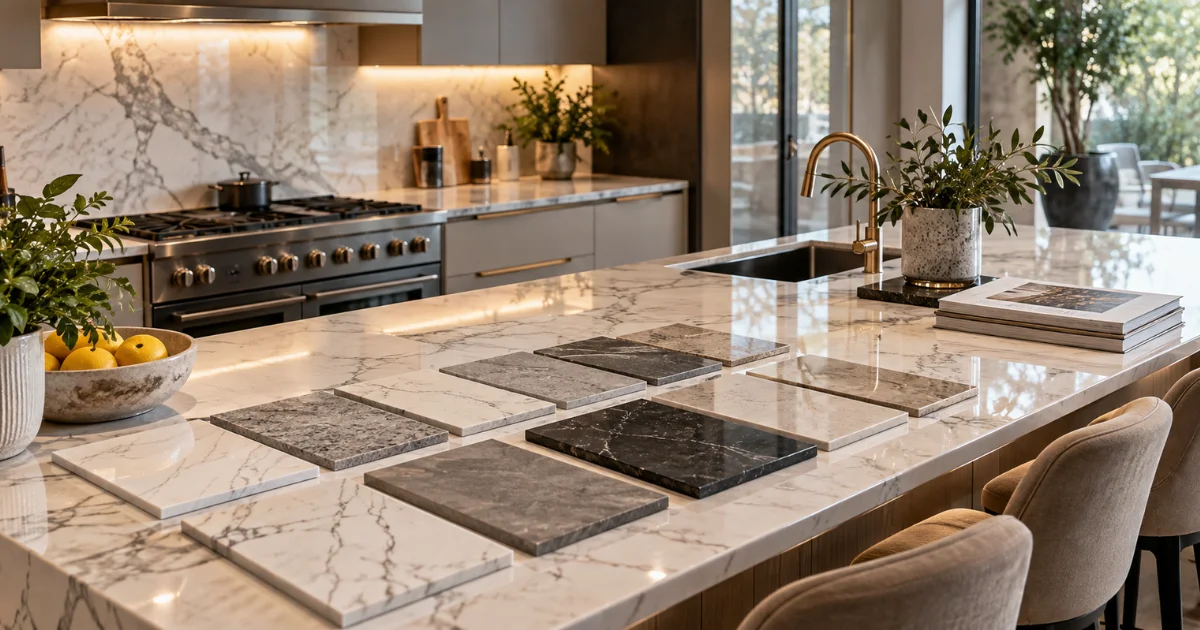
Do not choose a quartz colour from a small screen image alone. The same worktop can look noticeably different depending on kitchen lighting, cabinet colour and surrounding finishes.

Before making the final choice, look at a physical sample alongside your:

  • Kitchen cabinet doors.
  • Flooring and wall colours.
  • Splashback or wall tiles.
  • Handles and appliances.
  • Natural and artificial lighting.

For larger kitchens and islands, also look at how the pattern runs across the slab. A heavily veined quartz can look completely different once it has been cut for a sink, hob or island.

Final Words

The best colour for a quartz worktop depends on the kitchen you are creating. White and marble-effect quartz remain popular for bright, clean kitchens, while grey, black, beige, concrete and warmer shades offer more contrast and character.

The most important thing is to choose the colour as part of the whole kitchen rather than treating the worktop as a separate feature.
What Is the Best Thickness for a Kitchen Worktop?

What Is the Best Thickness for a Kitchen Worktop?

When choosing a new kitchen worktop, thickness is easy to overlook. Most homeowners spend more time choosing the colour and pattern, but the thickness can change the kitchen’s overall appearance.

For quartz worktops, the main choice is often 20mm or 30mm.

Neither is automatically better. The right option depends on the look you want, the kitchen design and how the worktop will be supported and installed.

20mm vs 30mm Quartz Worktops

The basic difference is simple:

  • 20mm quartz gives a slimmer, cleaner and more contemporary appearance.
  • 30mm quartz gives a thicker, more substantial and traditional worktop appearance.

Both can work very well in a kitchen when the installation is properly planned.

20mm Quartz Worktops

A 20mm quartz worktop is a popular choice for modern kitchens where a thinner profile looks better with the cabinets.

It can work particularly well with:

  • Handleless kitchen cabinets.
  • Modern kitchen islands.
  • Minimalist designs.
  • Contemporary flat-panel doors.
  • Kitchens where you want a lighter-looking worktop.

One thing I always consider with 20mm quartz is the edge detail. A thinner slab gives a very different visual effect from a 30mm worktop, so it is worth looking at an actual sample rather than judging thickness from photographs.

30mm Quartz Worktops

30mm quartz worktops have a more substantial appearance and remain a popular choice for traditional and contemporary kitchens.

The extra thickness can make an island or long run of cabinets feel more solid and visually prominent.

30mm can be a good choice when you want:

  • A more traditional worktop profile.
  • A stronger visual presence around a kitchen island.
  • The worktop to look substantial against the cabinets.
  • A classic appearance rather than an ultra-modern finish.

For many homeowners, 30mm simply feels like the more familiar kitchen worktop thickness.

Is 20mm Quartz Strong Enough?

Yes, 20mm quartz can be perfectly suitable for a kitchen, but thickness should not be considered on its own.

The way the worktop is supported, the size of any overhang, cut-outs for sinks and hobs, and the manufacturer’s requirements all matter.

This is particularly important around islands and breakfast bars, where unsupported overhangs can put additional stress on the material.

A professional installer should check the support requirements before fabrication rather than assuming that thicker automatically means stronger.

Is 30mm Better Than 20mm?

Not necessarily.

A 30mm worktop is thicker, but that does not mean you will always get a better kitchen. 20mm quartz can look excellent and perform well when it has the correct support and installation.

The choice is often more about appearance and kitchen design than simply choosing the thickest available slab.

Which Looks Better: 20mm or 30mm?

This is mainly down to the style of your kitchen.

Choose 20mm if you want a sleek, modern appearance.

The thinner profile can make cabinets and islands look more streamlined and works particularly well in contemporary kitchens.

Choose 30mm if you prefer a thicker, more substantial appearance.

It can give the kitchen a traditional feel and makes the worktop more visually prominent.

Neither option is wrong. I would normally look at the cabinet style, island design, worktop overhang and overall proportions before making the decision.

What About Other Kitchen Worktop Thicknesses?

What About Other Kitchen Worktop Thicknesses_

Quartz is not the only worktop material where thickness matters. Laminate worktops, for example, are available in different thicknesses, while solid surface and natural stone products can have their own standard and fabrication options.

That is why you should not compare thickness across materials as though 20mm of one material will perform exactly like 20mm of another.

The material, construction and installation method all make a difference.

What Is the Best Thickness for a Kitchen Worktop?

For quartz worktops, both 20mm and 30mm are good options.

If you are creating a modern, minimalist kitchen, I would lean towards 20mm quartz for its slimmer appearance.

If you want a more traditional or substantial look, 30mm quartz is often the better visual choice.

The important thing is not simply choosing the thicker worktop. Your installer needs to check the support, cut-outs, joints and overhangs to make sure the chosen thickness is suitable for your particular kitchen.

Final Words

When deciding between 20mm vs 30mm quartz, think about the finished look rather than assuming thicker is better.

20mm gives a sleek contemporary profile, while 30mm gives a more substantial traditional appearance. Both can be excellent kitchen worktops when correctly specified, supported and installed.

If you are unsure, compare both thicknesses against your cabinet doors and island design before ordering. It is much easier to make the right decision at the planning stage than change the worktop later.

Quartz Worktops vs Porcelain Worktops_ Which Is Better_

Quartz Worktops vs Porcelain Worktops: Which Is Better?

If you are choosing a new kitchen worktop, quartz and porcelain are two materials that often come up. Both can give a kitchen a high-end finish, but they behave differently when it comes to heat, impact, cutting, maintenance and installation.

So, which is better?

The honest answer is that it depends on how you use your kitchen and what you expect from your worktop.

Quartz vs Porcelain Worktops

Both materials offer a strong, low-maintenance surface, but there are some important differences.

Feature Quartz Worktops Porcelain Worktops
Appearance Wide range of colours and marble effects Modern stone and marble effects
Heat resistance Good, but hot pans should not go directly on the surface Excellent heat resistance
Scratch resistance Very good for normal kitchen use Excellent, but edges can be more vulnerable
Stain resistance Very good Excellent
Maintenance Easy everyday cleaning Easy everyday cleaning
Impact resistance Good when properly installed Hard surface but can chip from strong impacts
Installation Requires specialist cutting and fitting Requires specialist handling and cutting
Best suited to Most busy family kitchens Kitchens where heat and ultra-thin designs are priorities

Why Do Homeowners Choose Quartz Worktops?

Quartz is an engineered worktop material made using quartz minerals combined with resins and pigments. It has become popular because it offers a consistent appearance with plenty of colours and patterns.

One of the biggest advantages is the choice available. You can find everything from plain white and grey quartz to marble-effect designs such as Calacatta-style surfaces.

For everyday kitchen use, quartz is also relatively easy to clean and does not require the regular sealing associated with some natural stone surfaces.

However, quartz is not heat-proof. I always recommend using a trivet or heat mat rather than placing a hot saucepan or baking tray directly onto the worktop.

What Makes Porcelain Worktops Different from Quartz?

Porcelain is a highly compacted, fired material that offers excellent resistance to heat, stains and many everyday kitchen conditions.

Its heat resistance is one of its biggest advantages. If you regularly cook at high temperatures, porcelain can be an attractive option.

Porcelain can also produce very realistic stone and marble effects, making it popular for modern kitchens, islands and splashbacks.

The main consideration is installation. Porcelain slabs can be thinner and very hard, but they require careful transportation, cutting and fitting because an exposed edge can be more vulnerable to chipping if handled incorrectly.

Quartz or Porcelain Worktops: Which Is More Heat Resistant?

Quartz contains resin, so excessive heat can potentially damage the surface. Porcelain handles high temperatures much better.

That does not mean you should treat either material carelessly. Using trivets remains a sensible habit, particularly where the manufacturer’s care instructions recommend them.

Quartz or Porcelain Worktops: Which Is Easier to Maintain?

Both are relatively easy to maintain.

For everyday cleaning, a soft cloth with warm water and a suitable worktop cleaner is usually enough. The important thing is to avoid harsh chemicals or abrasive cleaning pads unless the manufacturer specifically approves them.

Quartz has an advantage for homeowners who want a familiar, straightforward kitchen surface, while porcelain is also very low maintenance once correctly installed.

Quartz or Porcelain Worktops: Which Is More Resistant to Scratches?

Both are highly resistant to everyday scratching, but neither should be treated as completely scratch-proof.

Avoid cutting directly on the surface. Use a chopping board and take care when moving heavy appliances or cookware across the worktop.

With porcelain, the edges and corners deserve particular care, as a hard impact can cause a chip even though the main surface is highly durable.

Quartz or Porcelain Worktops: Which Looks Better?

Quartz offers a wide range of colours, including:

  • White and off-white finishes for bright kitchens.
  • Grey and black shades for contemporary designs.
  • Beige and cream colours for warmer interiors.
  • Marble-effect patterns for a more luxurious appearance.
  • Concrete-inspired finishes for modern industrial kitchens.

Porcelain also offers impressive stone and marble effects, and its large-format slabs can create a clean, continuous look across an island or worktop.

Quartz or Porcelain Worktops: Which Is Better for Your Kitchen?

Quartz or Porcelain Worktops Which Is Better for Your Kitchen_

I would look at how you actually use the kitchen rather than choosing purely on appearance.

Quartz may be the better choice if:

  • You want a wide range of colours and patterns.
  • You prefer the appearance of engineered stone.
  • You want a durable surface for normal family cooking.
  • You want a worktop that is easy to clean and maintain.

Porcelain may be the better choice if:

  • Heat resistance is particularly important to you.
  • You want a very hard-wearing surface.
  • You like large-format stone or marble effects.
  • You are considering a thinner, contemporary worktop design.

Quartz or Porcelain: Which Should You Choose?

Quartz remains an excellent all-round kitchen worktop, particularly for homeowners who want plenty of design choices and a practical surface for everyday use.

Porcelain has the edge where heat resistance and certain modern slab designs are the priority.

Whichever you choose, the quality of the slab and the installation matter just as much as the material itself. Poor cutting, incorrect support or careless fitting can cause problems with even a high-quality worktop.

Final Words

For a typical family kitchen, I would choose quartz for its balance of appearance, practicality and everyday durability. If your priority is maximum heat resistance or a particular large-format design, porcelain deserves serious consideration.

The best worktop is not simply the hardest material. It is the one that suits your cooking habits, kitchen design, budget and expectations for everyday use.

How Long Do Quartz Worktops Last

How Long Do Quartz Worktops Last?

A good quartz worktop can last 20 years or more when it is properly installed and looked after. In many kitchens, the worktop can last as long as the kitchen itself, and sometimes considerably longer.

Quartz is a popular choice because it offers a good balance between durability, appearance and everyday practicality. However, its lifespan depends on more than the material itself. How you use, clean and maintain the surface also matters.

What Affects the Lifespan of a Quartz Worktop?

The quality of the quartz is important, but it is only one part of the picture.

  • Good installation makes a difference. A correctly templated, supported and installed worktop is less likely to develop problems around joints, cut-outs and overhangs.
  • Everyday care protects the finish. Using chopping boards, trivets and suitable cleaning products helps prevent avoidable scratches, marks and heat damage.
  • Heavy impacts can cause damage. Quartz is tough, but dropping a heavy object onto an unsupported edge or corner can cause chips or cracks.
  • Harsh cleaning products can affect the surface. Strong chemicals and abrasive cleaners can damage the finish over time, even though the quartz itself remains structurally strong.
  • The worktop design also matters. Large overhangs, sink cut-outs and hob cut-outs need suitable support to reduce stress on the material.

Does Quartz Wear Out Over Time?

Quartz does not normally wear out in the same way as some softer worktop materials.

With normal kitchen use, you should not expect the surface to suddenly become unusable after a certain number of years. Instead, signs of wear usually appear gradually through scratches, chips, stains, dull areas or accidental damage.

A well-maintained quartz worktop can continue to look good for decades.

Can Quartz Worktops Be Damaged?

Yes. Quartz is highly durable, but it is not indestructible.

You should avoid putting extremely hot pans directly onto the surface. Always use a heat-resistant trivet or mat. You should also avoid cutting directly on the worktop and dragging heavy cookware or appliances across it.

These simple precautions can prevent many of the problems that shorten the useful life of a quartz worktop.

Does the Colour Affect How Long Quartz Lasts?

The material’s lifespan does not simply depend on whether you choose a white, black or marble-effect quartz.

However, some finishes and patterns can make everyday marks more noticeable. For example, a very plain, polished surface may show scratches, smears or water marks more clearly than a patterned design.

The important factor is the quality of the product and installation rather than choosing a particular colour.

When Does a Quartz Worktop Need Replacing?

Age alone is rarely a good reason to replace quartz.

You may need to consider replacement when the worktop has serious cracking, extensive damage, failed joints or problems that cannot be repaired economically.

A specialist can sometimes repair minor scratches, chips and other localised damage instead of replacing the entire worktop.

How Can You Make Your Quartz Worktop Last Longer?

A few simple habits can make a significant difference.

  • Always use a chopping board instead of cutting directly on the quartz.
  • Place hot pans and baking trays on a suitable heat-resistant trivet.
  • Lift heavy appliances rather than dragging them across the surface.
  • Clean spills promptly using products suitable for quartz.
  • Avoid abrasive pads, powders and unsuitable chemical cleaners.
  • Follow the care instructions provided by the quartz manufacturer.

So, How Long Should You Expect Quartz to Last?

For most homeowners, a good-quality quartz worktop that has been properly installed and maintained should last 20 years or more.

You do not need to treat quartz as a delicate surface, but you should understand its limitations. Protect it from excessive heat, heavy impacts, abrasive cleaning and unnecessary scratching, and it can remain a practical and attractive part of your kitchen for many years.

If your existing quartz worktop is showing signs of wear, it is worth having the damage assessed before assuming that you need a replacement. In many cases, a professional can identify whether the problem can be repaired or restored.

If you are looking to upgrade your culinary space, a high-quality Kitchen Worktop can completely transform the look and feel of your room.