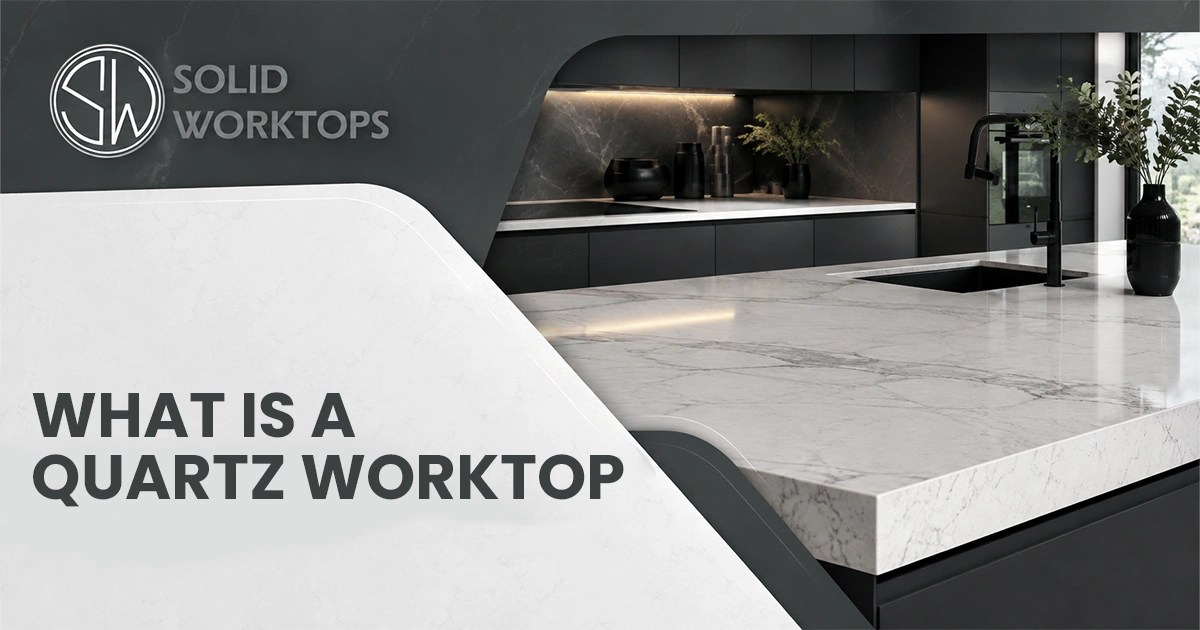
If you are choosing a new kitchen worktop, quartz and porcelain are two materials that often come up. Both can give a kitchen a high-end finish, but they behave differently when it comes to heat, impact, cutting, maintenance and installation.
So, which is better?
The honest answer is that it depends on how you use your kitchen and what you expect from your worktop.
Quartz vs Porcelain Worktops
Both materials offer a strong, low-maintenance surface, but there are some important differences.
| Feature | Quartz Worktops | Porcelain Worktops |
| Appearance | Wide range of colours and marble effects | Modern stone and marble effects |
| Heat resistance | Good, but hot pans should not go directly on the surface | Excellent heat resistance |
| Scratch resistance | Very good for normal kitchen use | Excellent, but edges can be more vulnerable |
| Stain resistance | Very good | Excellent |
| Maintenance | Easy everyday cleaning | Easy everyday cleaning |
| Impact resistance | Good when properly installed | Hard surface but can chip from strong impacts |
| Installation | Requires specialist cutting and fitting | Requires specialist handling and cutting |
| Best suited to | Most busy family kitchens | Kitchens where heat and ultra-thin designs are priorities |
Why Do Homeowners Choose Quartz Worktops?
Quartz is an engineered worktop material made using quartz minerals combined with resins and pigments. It has become popular because it offers a consistent appearance with plenty of colours and patterns.
One of the biggest advantages is the choice available. You can find everything from plain white and grey quartz to marble-effect designs such as Calacatta-style surfaces.
For everyday kitchen use, quartz is also relatively easy to clean and does not require the regular sealing associated with some natural stone surfaces.
However, quartz is not heat-proof. I always recommend using a trivet or heat mat rather than placing a hot saucepan or baking tray directly onto the worktop.
What Makes Porcelain Worktops Different from Quartz?
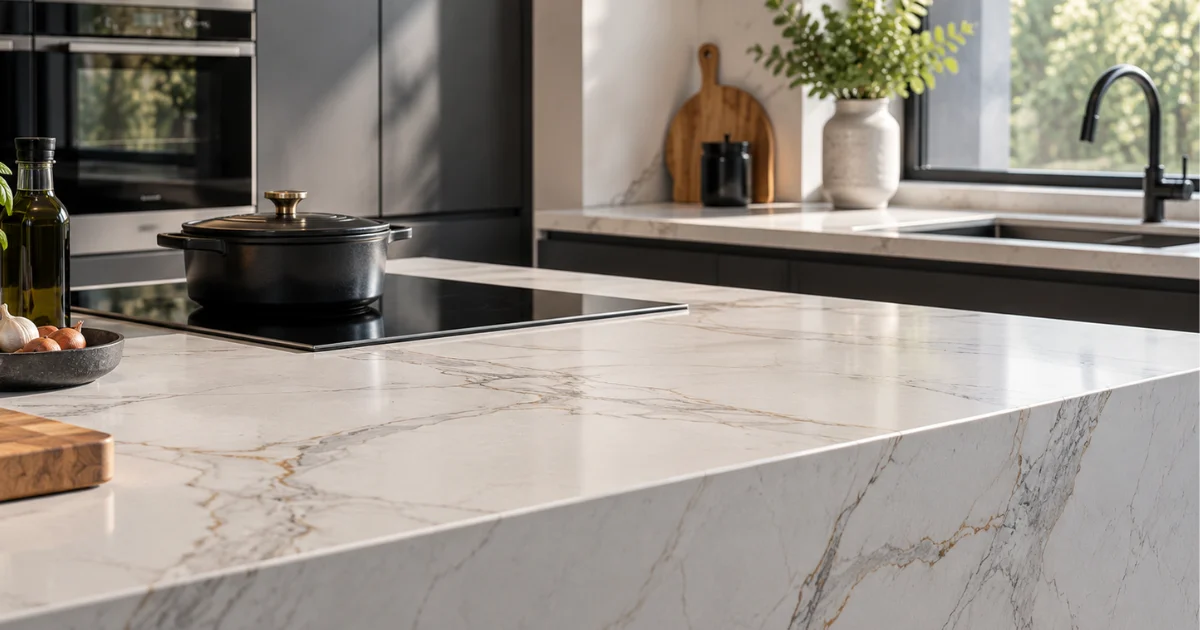
Porcelain is a highly compacted, fired material that offers excellent resistance to heat, stains and many everyday kitchen conditions.
Its heat resistance is one of its biggest advantages. If you regularly cook at high temperatures, porcelain can be an attractive option.
Porcelain can also produce very realistic stone and marble effects, making it popular for modern kitchens, islands and splashbacks.
The main consideration is installation. Porcelain slabs can be thinner and very hard, but they require careful transportation, cutting and fitting because an exposed edge can be more vulnerable to chipping if handled incorrectly.
Quartz or Porcelain Worktops: Which Is More Heat Resistant?
Quartz contains resin, so excessive heat can potentially damage the surface. Porcelain handles high temperatures much better.
That does not mean you should treat either material carelessly. Using trivets remains a sensible habit, particularly where the manufacturer’s care instructions recommend them.
Quartz or Porcelain Worktops: Which Is Easier to Maintain?
Both are relatively easy to maintain.
For everyday cleaning, a soft cloth with warm water and a suitable worktop cleaner is usually enough. The important thing is to avoid harsh chemicals or abrasive cleaning pads unless the manufacturer specifically approves them.
Quartz has an advantage for homeowners who want a familiar, straightforward kitchen surface, while porcelain is also very low maintenance once correctly installed.
Quartz or Porcelain Worktops: Which Is More Resistant to Scratches?
Both are highly resistant to everyday scratching, but neither should be treated as completely scratch-proof.
Avoid cutting directly on the surface. Use a chopping board and take care when moving heavy appliances or cookware across the worktop.
With porcelain, the edges and corners deserve particular care, as a hard impact can cause a chip even though the main surface is highly durable.
Quartz or Porcelain Worktops: Which Looks Better?
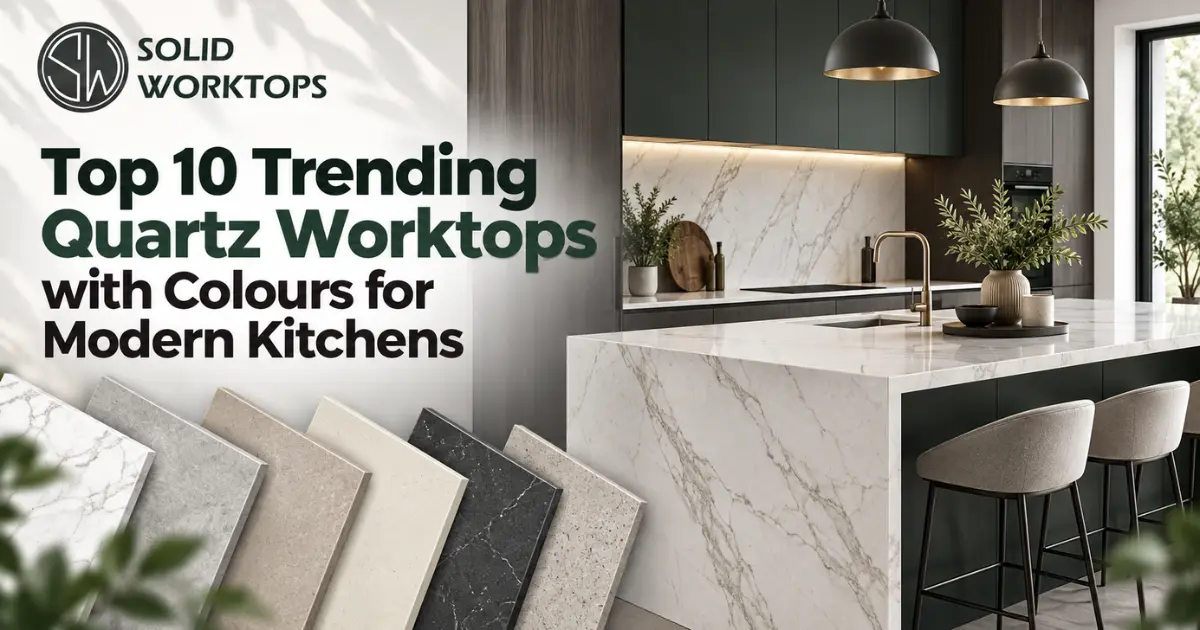
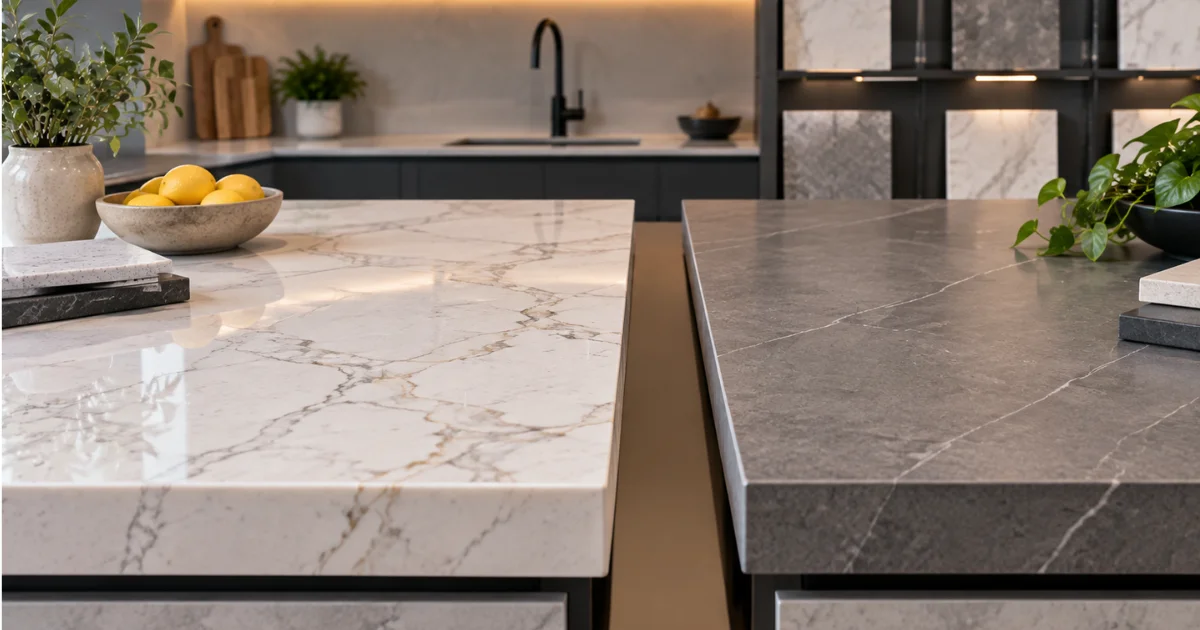
Quartz offers a wide range of colours, including:
- White and off-white finishes for bright kitchens.
- Grey and black shades for contemporary designs.
- Beige and cream colours for warmer interiors.
- Marble-effect patterns for a more luxurious appearance.
- Concrete-inspired finishes for modern industrial kitchens.
Porcelain also offers impressive stone and marble effects, and its large-format slabs can create a clean, continuous look across an island or worktop.
Quartz or Porcelain Worktops: Which Is Better for Your Kitchen?
I would look at how you actually use the kitchen rather than choosing purely on appearance.
Quartz may be the better choice if:
- You want a wide range of colours and patterns.
- You prefer the appearance of engineered stone.
- You want a durable surface for normal family cooking.
- You want a worktop that is easy to clean and maintain.
Porcelain may be the better choice if:
- Heat resistance is particularly important to you.
- You want a very hard-wearing surface.
- You like large-format stone or marble effects.
- You are considering a thinner, contemporary worktop design.
Quartz or Porcelain: Which Should You Choose?
Quartz remains an excellent all-round kitchen worktop, particularly for homeowners who want plenty of design choices and a practical surface for everyday use.
Porcelain has the edge where heat resistance and certain modern slab designs are the priority.
Whichever you choose, the quality of the slab and the installation matter just as much as the material itself. Poor cutting, incorrect support or careless fitting can cause problems with even a high-quality worktop.
Final Words
For a typical family kitchen, I would choose quartz for its balance of appearance, practicality and everyday durability. If your priority is maximum heat resistance or a particular large-format design, porcelain deserves serious consideration.
The best worktop is not simply the hardest material. It is the one that suits your cooking habits, kitchen design, budget and expectations for everyday use.