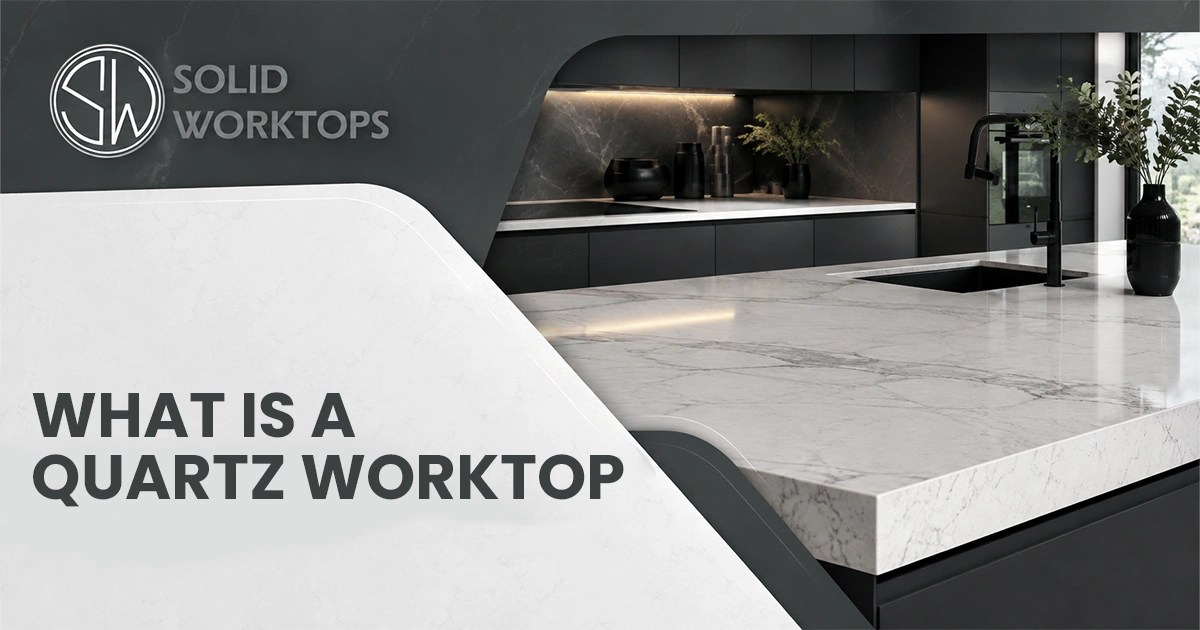
A quartz worktop is an engineered stone worktop made using natural quartz crystals, resins, binders and colour pigments. Manufacturers combine these materials and compact them into strong slabs, which they then cut and fabricate to fit kitchens and bathrooms.
Most quartz worktops contain around 90% to 93% crushed natural quartz, with the remaining percentage made up of polymer resins, binders and pigments. This combination gives quartz its hard-wearing surface while allowing manufacturers to create a wide range of colours, patterns and finishes.
If you want a worktop that combines a premium stone appearance with low maintenance, good stain resistance and plenty of design choices, quartz is one of the most popular options to consider for a UK kitchen.
How Is a Quartz Worktop Made?
Quartz worktops are different from natural stones such as granite and marble because manufacturers engineer them rather than cutting them directly from a natural stone block.
The manufacturing process generally involves combining crushed quartz with resins, binders and pigments. Manufacturers then compact the mixture under high pressure to create dense slabs.
These slabs can then be cut, polished and fabricated to suit individual kitchens.
This manufacturing process gives quartz an important advantage: you have much greater control over the appearance of the finished surface.
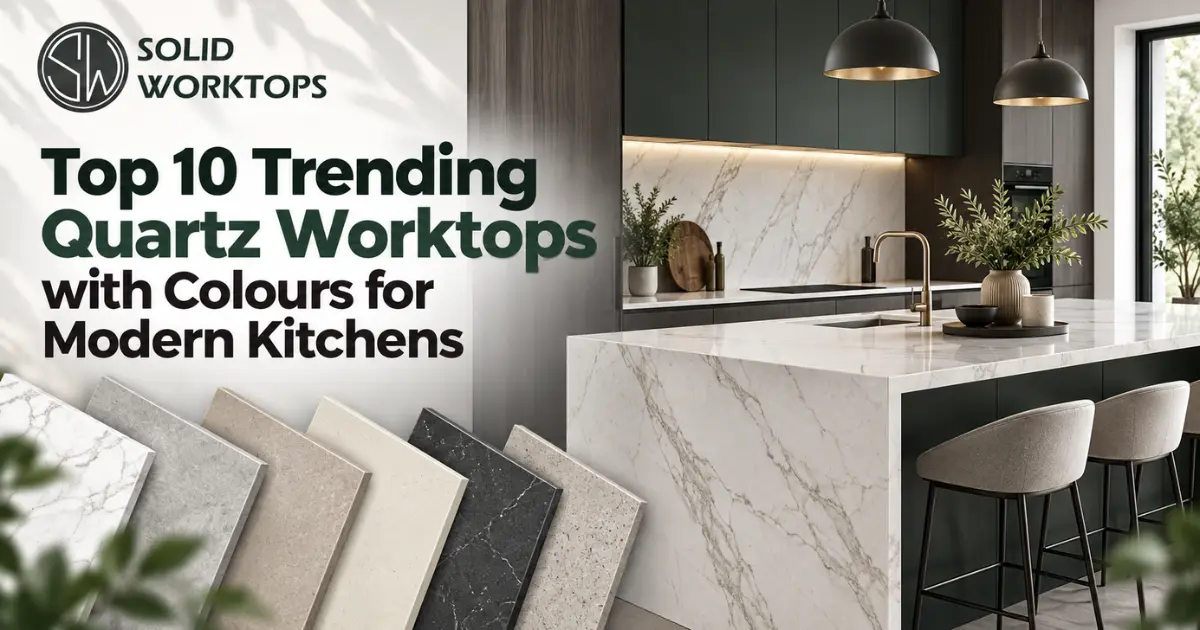
You can choose from plain colours, subtle patterns, bold designs and quartz worktops that imitate the appearance of natural marble.
What Is Quartz Made From?
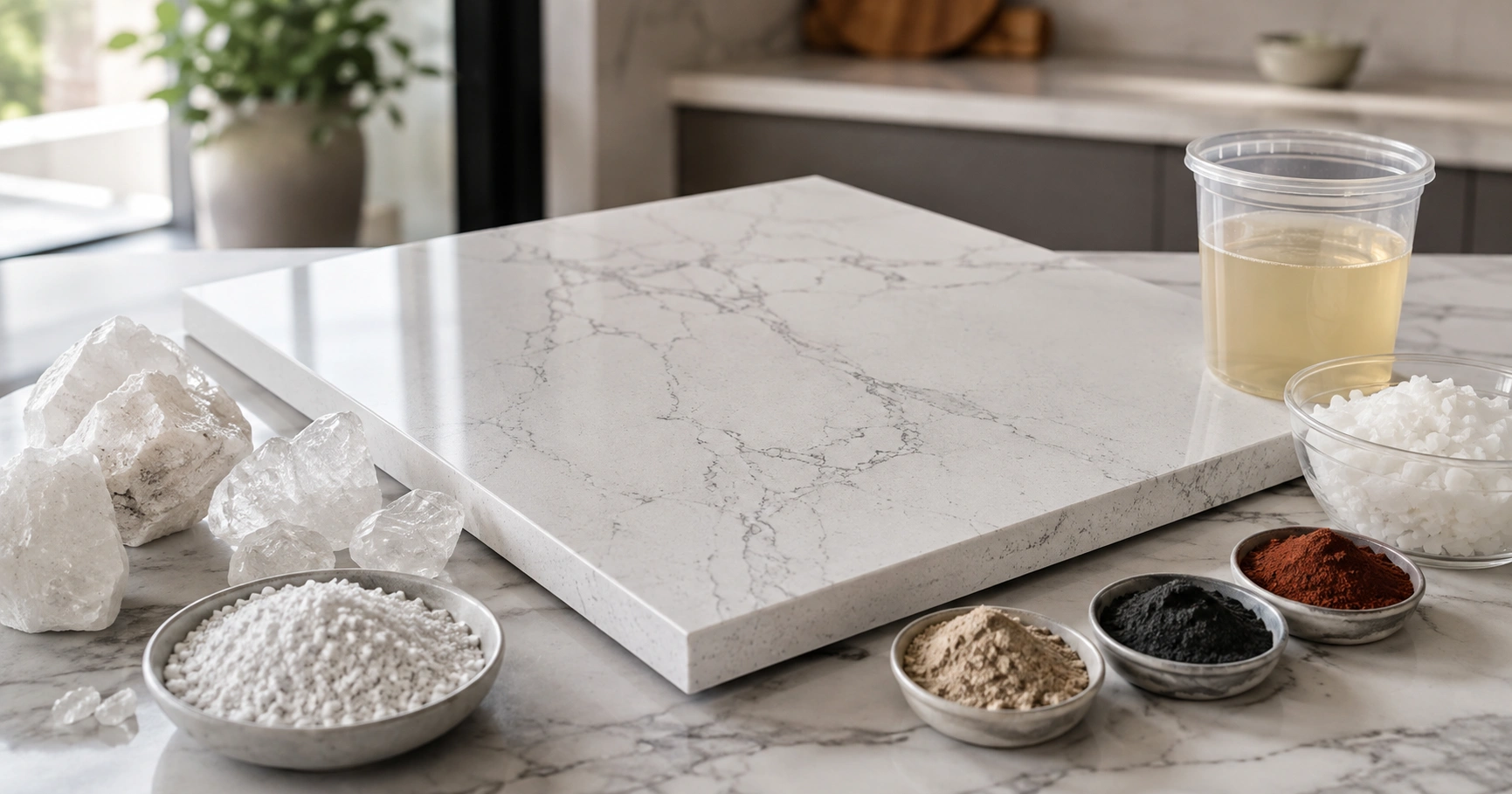
Quartz worktops mainly contain natural quartz crystals. These crystals provide much of the hardness and durability associated with the material.
The remaining components typically include:
- Polymer resins
- Binders
- Colour pigments
- Other materials used during manufacturing
The exact composition can vary between manufacturers and product ranges, so you should always check the specification of the particular quartz worktop you are considering.
What Are the Main Features of Quartz Worktops?
Quartz has several characteristics that make it suitable for busy kitchens.
1. Quartz Is Non-Porous
One of the biggest benefits of quartz is its non-porous surface.
Unlike some natural stones, quartz does not readily absorb liquids. This makes it more resistant to common kitchen spills such as coffee, wine and cooking oil.
For you, this means less worry when preparing food and an easier surface to keep clean.
However, you should still clean spills promptly rather than allowing them to sit on the worktop for long periods.
2. Quartz Requires Low Maintenance
Quartz worktops are easy to look after during everyday use.
You normally do not need to seal or wax a quartz worktop in the same way that some natural stone surfaces require sealing.
For everyday cleaning, a soft cloth with warm water and a mild cleaning product is generally enough.
This makes quartz a convenient choice if you want a premium-looking kitchen without a demanding maintenance routine.
3. Quartz Offers Consistent Designs
Because manufacturers engineer quartz, you can achieve a more consistent appearance than you might get with some natural stones.
Natural granite, marble and quartzite can contain variations in colour, veining and pattern from one slab to another. Quartz can provide a more controlled and consistent design.
This can be particularly useful if you want your kitchen worktop to have a specific appearance.
4. Quartz Is Durable
Quartz worktops provide a hard and durable surface that can handle the demands of everyday kitchen use.
They are highly resistant to everyday scratches and can withstand normal food preparation when you use them correctly.
However, no worktop is completely scratch-proof or chip-proof. You should still use a chopping board and take care when handling heavy or sharp objects around the edges.
What Are the Benefits of Quartz Worktops?
Quartz has become a popular choice because it combines several features in one surface.
Easy to Clean
You can usually clean everyday marks with a soft cloth, warm water and a suitable mild cleaner.
Hygienic Surface
Its non-porous nature makes it difficult for liquids to penetrate the surface, helping you maintain a clean food-preparation area.
Wide Choice of Designs
You can choose from a large range of colours, patterns and finishes. This includes designs inspired by natural marble and other stones.
Low Maintenance
You do not normally need to reseal a quartz worktop as part of routine maintenance.
Premium Appearance
Quartz can give your kitchen a sophisticated, high-end appearance without requiring you to choose a natural stone slab.
What Are the Disadvantages of Quartz Worktops?
Although quartz offers many advantages, you should understand its limitations before choosing it for your kitchen.
Quartz Is Sensitive to Extreme Heat
Do not place extremely hot pans directly on a quartz worktop.
The quartz itself is heat-resistant, but the resin used in engineered quartz can be affected by very high temperatures. A hot pan or roasting tray can potentially cause scorching, discolouration or damage.
Always use a heat-resistant mat or trivet under hot cookware.
Quartz Can Be Affected by Direct Sunlight
Some quartz products can be affected by prolonged exposure to strong UV light. Over time, direct sunlight may cause certain colours to fade or change.
This is particularly important if you plan to install quartz in an area that receives strong, continuous sunlight.
Ask your supplier about the specific product’s UV resistance if your kitchen receives significant direct sunlight.
Quartz Can Still Chip
Quartz is highly durable, but the edges and corners can be more vulnerable to impact.
Avoid dropping heavy objects onto the worktop and take extra care around sink and hob cut-outs.
Quartz vs Granite: What Is the Difference?
Quartz and granite can both provide a premium kitchen worktop, but they have important differences.
Quartz is engineered, while granite is a natural stone.
Quartz gives you more consistency in colour and pattern, while granite provides the unique natural variation that comes from the stone itself.
Quartz also generally requires less routine maintenance because it does not need the same type of sealing that porous natural stone can require.
If you want a consistent modern design, quartz may suit you better. If you prefer completely natural stone with individual variations, granite may be the better choice.
Quartz vs Marble: Which Should You Choose?
Marble is well known for its luxurious appearance, but it requires more care than many homeowners expect.
Quartz can give you a similar marble-inspired appearance while offering a non-porous, lower-maintenance surface.
This makes marble-effect quartz particularly attractive if you want the look of luxury marble with the practicality of an engineered worktop.
However, if you specifically want genuine natural marble and appreciate its unique veining and character, natural marble remains a distinctive choice.
Is a Quartz Worktop Right for Your Kitchen?
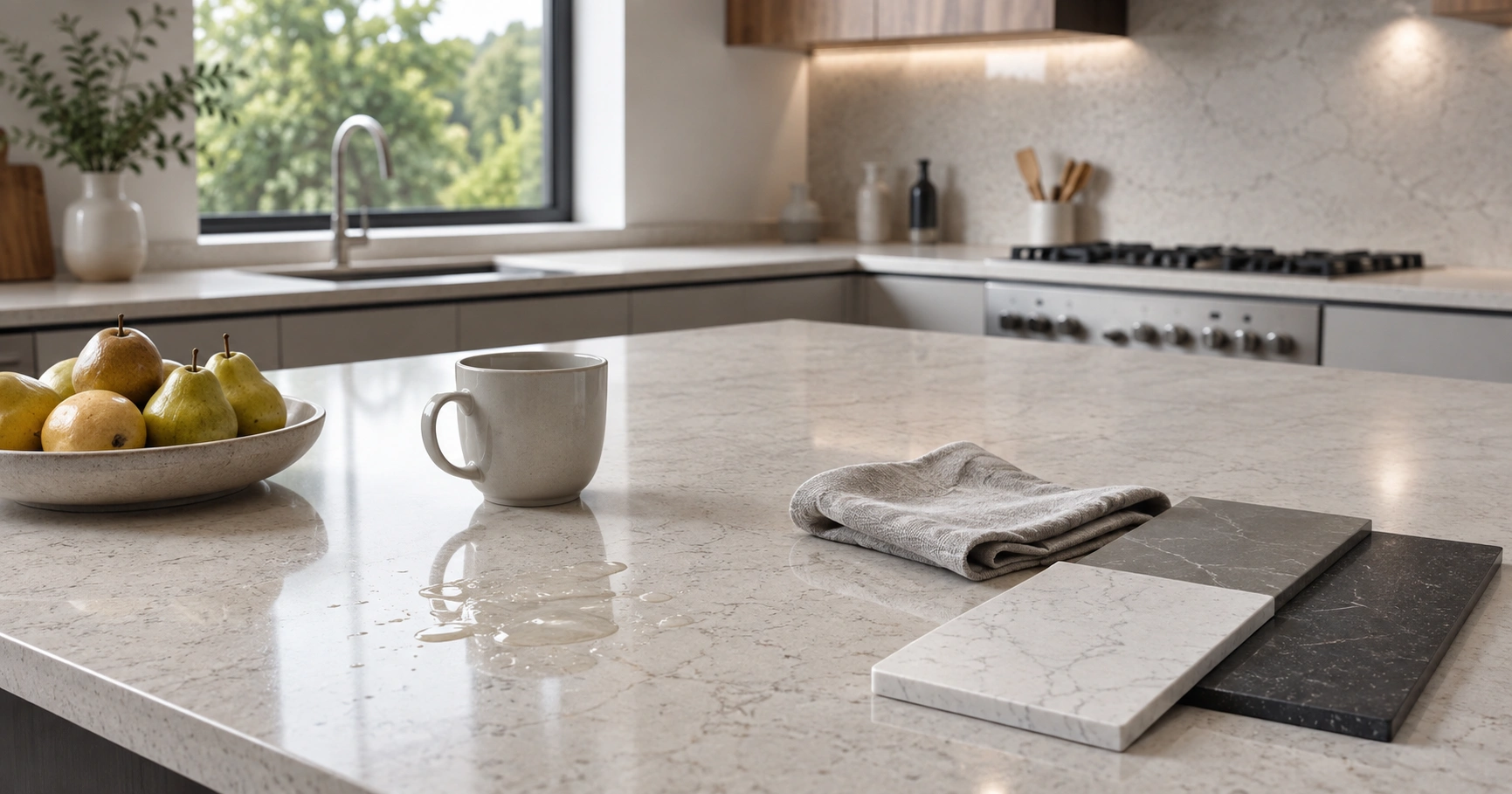
Quartz can be an excellent choice if you want a worktop that combines:
- A premium appearance
- Low everyday maintenance
- Good resistance to stains
- A wide range of designs
- A consistent colour and pattern
- A durable surface for normal kitchen use
You should consider other materials if your main priority is the lowest possible price or if you need a worktop that can tolerate very high temperatures without the precautions required by quartz.
How Do You Clean a Quartz Worktop?
For everyday cleaning, keep things simple.
Use a soft cloth with warm water and a mild, suitable cleaning product. Wipe away spills as soon as practical, particularly strongly coloured liquids and food.
Avoid abrasive cleaning products and harsh scouring pads that could affect the surface finish.
Most importantly, do not use your quartz worktop as a chopping board and do not place hot cookware directly onto it.
Quartz Worktop FAQs
What is a quartz worktop?
A quartz worktop is an engineered stone surface made mainly from crushed natural quartz combined with resins, binders and colour pigments. Manufacturers compact these materials into slabs and fabricate them to fit kitchens and bathrooms.
Are quartz worktops made from real stone?
Yes. Quartz worktops contain a high percentage of natural quartz, but they are engineered rather than being made from a single piece of natural stone like granite or marble.
Is quartz better than granite for a kitchen worktop?
Neither material is automatically better. Quartz offers a consistent appearance, low maintenance and a wide choice of designs, while granite provides natural stone variation and character. Your choice should depend on your preferred appearance, maintenance requirements and budget.
Do quartz worktops need sealing?
Generally, quartz worktops do not require routine sealing. Their non-porous engineered surface provides good resistance to liquid absorption.
Can you put hot pans on quartz?
No. You should not place very hot pans, roasting trays or other hot cookware directly onto quartz. Use a heat-resistant mat or trivet to protect the surface.
Can quartz worktops stain?
Quartz is highly resistant to staining because its surface is non-porous. However, no surface is completely stain-proof. Clean spills promptly and follow the manufacturer’s care instructions.
Are quartz worktops easy to clean?
Yes. Quartz is generally easy to clean with a soft cloth, warm water and a suitable mild cleaner.
Can quartz worktops scratch?
Quartz is highly resistant to everyday scratches, but it is not completely scratch-proof. Use chopping boards and avoid dragging heavy or sharp objects across the surface.
Can quartz worktops fade in sunlight?
Some quartz products can experience colour changes after prolonged exposure to strong UV light. If your worktop will receive significant direct sunlight, check the specific product’s UV-resistance information before buying.
Are quartz worktops suitable for busy family kitchens?
Yes. Their durable, non-porous and low-maintenance characteristics make quartz a popular option for busy kitchens. You still need to follow basic care guidelines, particularly around heat and sharp objects.
Are quartz worktops expensive?
Quartz is generally considered a mid-to-high-range worktop option. It usually costs more than budget materials such as laminate but can be more affordable than some premium natural stones.
Choose Your Quartz Worktop with Solid Worktops
A quartz worktop can give you the premium appearance of stone with the convenience of a low-maintenance engineered surface. With a wide choice of colours, patterns and finishes, you can find a design that works with both modern and traditional UK kitchens.
At Solid Worktops, we offer quartz worktops in a range of designs to help you find the right surface for your kitchen. Whether you want a simple contemporary finish or a marble-inspired design, we can help you explore quartz options that match your style and project requirements.
Before choosing your worktop, consider the design, thickness, kitchen layout, cut-outs, installation requirements and overall budget. The right quartz worktop can give your kitchen a stylish, practical surface that you can enjoy for years.