
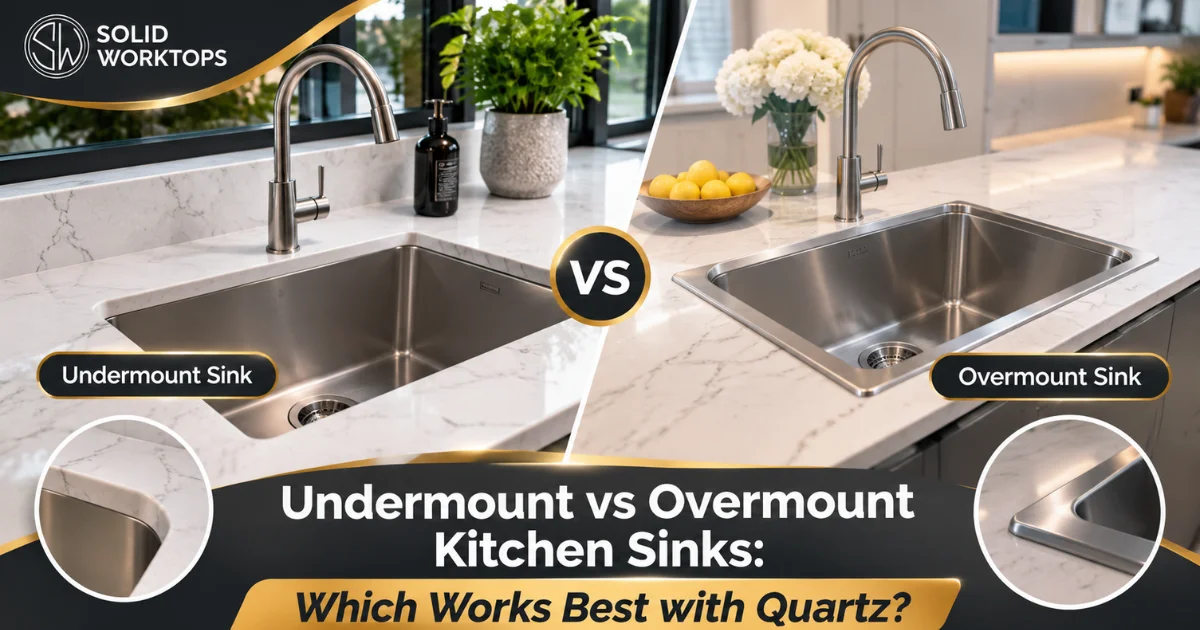
An undermount sink is often chosen for quartz worktops because it creates a clean, uninterrupted surface and makes it easier to wipe crumbs and water directly into the sink. An overmount sink can also work well with quartz, particularly when the homeowner prefers a visible rim or needs a sink style suited to an existing kitchen layout.
The right choice depends on your kitchen design, cleaning preferences, budget and installation requirements. Quartz can accommodate different sink styles, but the cut-out, exposed edge finishing and support must suit the selected sink.
What Is the Difference Between Undermount and Overmount Kitchen Sinks?
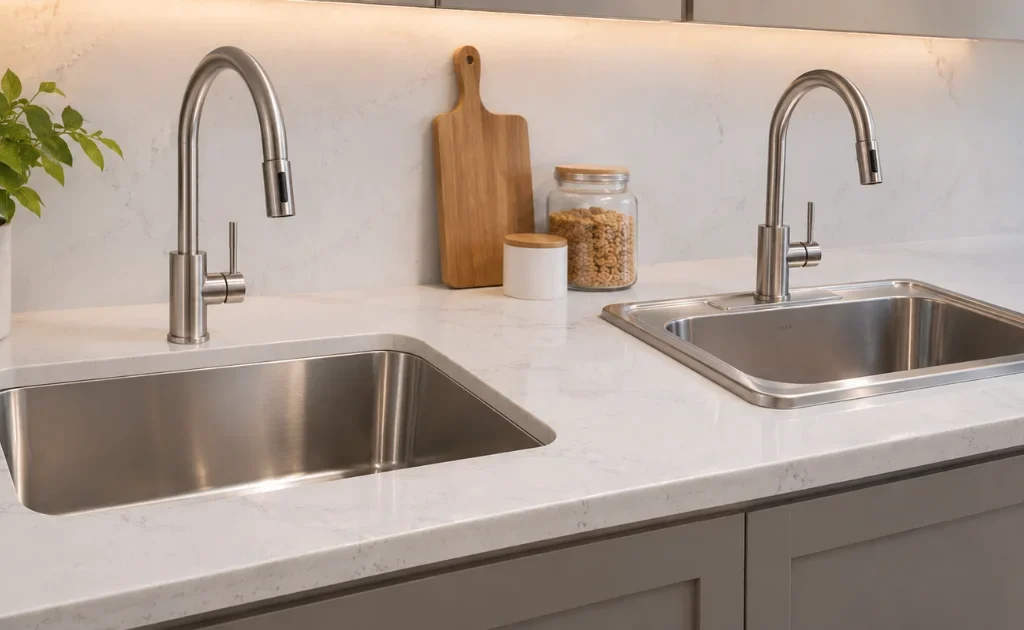
The main difference is how the sink sits in relation to the worktop.
An undermount sink fits beneath the quartz surface, leaving the edge of the cut-out exposed. An overmount sink, also called a top-mount or inset sink, sits in a prepared opening with its rim resting on top of the worktop.
Both options can suit a quartz kitchen, but they create different appearances and require different installation details.
What Is an Undermount Sink for a Quartz Worktop?
An undermount sink is installed below the worktop surface. The quartz cut-out remains visible around the opening, so the fabricator must finish the exposed edge neatly and accurately.
What Are the Benefits of an Undermount Sink?
- A seamless appearance: The sink sits beneath the quartz, creating a clean transition between the worktop and bowl.
- Straightforward surface cleaning: You can wipe crumbs and small spills from the worktop directly into the sink without having to work around a raised rim.
- A contemporary finish: Undermount sinks complement modern kitchens, particularly when paired with quartz worktops and simple cabinet designs.
- More visible worktop space around the sink: Without a rim resting on the surface, the surrounding quartz has a more continuous appearance.
What Should You Consider Before Choosing an Undermount Sink?
An undermount sink needs an accurately cut and properly finished opening. Because the quartz edge around the sink is exposed, poor fabrication or an unsuitable installation can affect the appearance and increase the risk of damage.
The sink also needs an appropriate support and fixing system. The installation method must suit the sink’s weight, the worktop specification and the manufacturer’s instructions.
Ask your worktop supplier how they will finish the cut-out, support the sink and seal the junction between the sink and quartz.
What Is an Overmount Sink for Quartz?
An overmount sink sits in an opening in the worktop, with a rim resting on the quartz surface. The rim covers the edge of the cut-out, making this style visually different from an undermount sink.
Overmount sinks come in a range of shapes, sizes and materials, including stainless steel. They can be suitable for new kitchens and some replacement projects, provided the sink dimensions and installation requirements match the worktop.
What Are the Benefits of an Overmount Sink?
- The rim covers the cut-out: The visible sink rim sits over the edge of the opening, so the cut-out is not exposed in the same way as an undermount installation.
- A wide choice of designs: Overmount sinks are available in different configurations, which can help when matching the sink to the kitchen layout.
- Potential suitability for replacement projects: An inset sink may be practical when its dimensions fit an existing worktop opening, although compatibility must be checked.
- A defined border around the sink: Some homeowners prefer the visible rim because it creates a clear separation between the sink and worktop.
What Are the Drawbacks of an Overmount Sink?
The raised rim can make it harder to wipe crumbs and water directly into the bowl. Dirt, water or residue may also accumulate around the rim or seal if the area is not cleaned regularly.
The seal around the sink needs proper installation and maintenance. A poorly maintained or damaged seal can allow water to reach areas where it should not.
An overmount sink is not automatically easier or cheaper to install in every situation. The total cost depends on the sink, the worktop cut-out, fitting requirements and any changes needed to the cabinets or plumbing.
Undermount vs Overmount Kitchen Sinks: Which Is Better for Quartz?
Use this comparison to decide which sink style better suits your kitchen.
| Feature | Undermount sink | Overmount sink |
| Appearance | Creates a clean look with no rim sitting on top of the quartz. | Leaves a visible rim around the sink. |
| Everyday cleaning | Makes it easy to wipe crumbs and water into the bowl. | The rim can interrupt wiping and may need extra attention. |
| Cut-out finish | The exposed quartz edge must be finished neatly. | The rim covers the cut-out edge from above. |
| Installation | Requires suitable support, fixing and sealing. | Requires a compatible opening and a correctly fitted rim and seal. |
| Design suitability | Often suits contemporary kitchens and minimalist worktops. | Can suit a wide range of kitchen styles and replacement layouts. |
| Maintenance | Keep the sink-to-worktop junction clean and check the seal as needed. | Clean around the rim and check the seal for deterioration. |
| Cost | Depends on the sink, fabrication and installation requirements. | Depends on the sink, fabrication and installation requirements. |
Neither style is best for every kitchen. If you prioritise a clean surface and a modern appearance, an undermount sink may be the better option. If you prefer a visible rim or need a sink that fits an existing opening, an overmount sink may be more suitable.
Does an Undermount Sink Work Well with Quartz Worktops?
Yes. Quartz worktops can work well with undermount sinks when the fabricator and installer follow the appropriate specifications.
The main consideration is the exposed edge around the sink opening. The fabricator needs to create a suitable cut-out and finish the edge so it looks neat and is appropriate for the selected quartz product.
Before ordering, confirm the following:
- The sink dimensions match the planned cut-out.
- The fabricator can achieve the required edge finish.
- The sink has an appropriate support and fixing arrangement.
- The installation includes suitable sealing at the sink-to-worktop junction.
- The sink manufacturer’s instructions and the quartz supplier’s requirements are compatible.
These details matter because quartz worktops cannot be treated like a flexible sheet that can simply be trimmed or adjusted without planning. Cutting and finishing should be carried out using appropriate equipment and methods.
How Does the Quartz Sink Cut-Out Affect Installation?
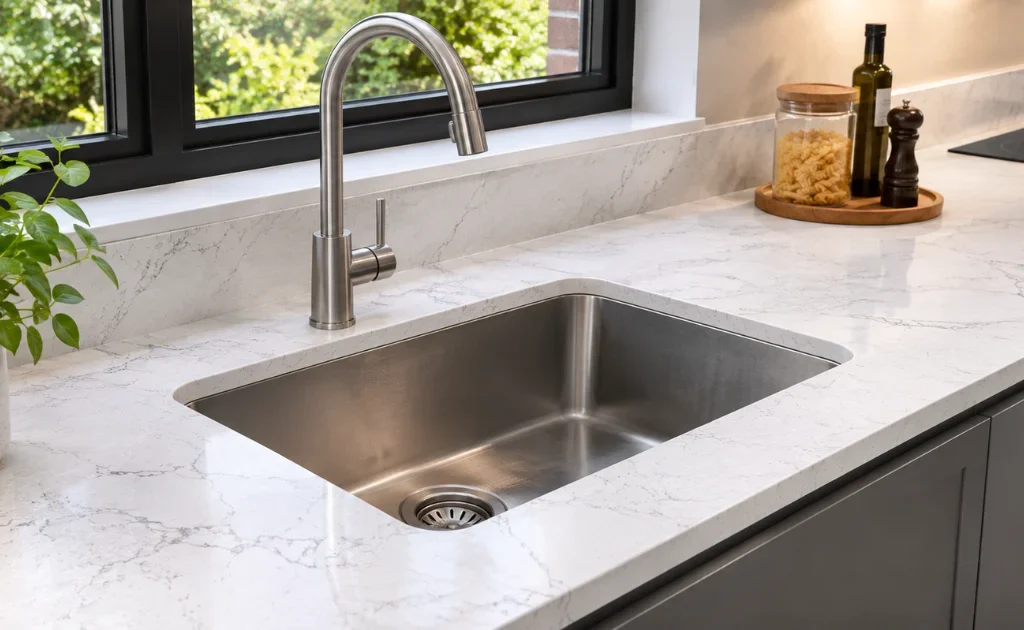
The quartz sink cut-out is the opening made in the worktop to accommodate the sink. Its shape and dimensions depend on the sink model, installation type and manufacturer’s requirements.
For an undermount sink, the cut-out edge remains visible. This makes accurate cutting and finishing especially important.
For an overmount sink, the rim covers the opening, but the cut-out still needs to be correctly sized and positioned. The rim must sit properly on the worktop without interfering with nearby taps, splashbacks or other fittings.
The fabricator will also need to consider the sink’s position in relation to cabinet supports, joints, worktop edges and nearby hob cut-outs. The space available can affect the final layout.
Choose the sink before the worktop is templated wherever possible. Confirm the exact sink model and provide its technical specifications to the worktop supplier. Changing the sink after fabrication may require alterations that are difficult, costly or unsuitable for the finished worktop.
What Should You Ask Your Worktop Supplier Before Choosing a Sink?
Before approving the final kitchen design, ask your supplier to confirm the sink and worktop details together.
- Which undermount and overmount sink styles are suitable for your chosen quartz?
- Will the quotation include the sink cut-out and required edge finishing?
- How will the sink be supported and secured?
- What sealing method will be used around the sink?
- Does the sink position leave suitable space around joints, corners and other cut-outs?
- Will changing the sink model affect the fabrication cost or installation schedule?
- Who is responsible for supplying and fitting the sink, tap and plumbing connections?
Clear answers help you understand what the quotation covers and reduce the risk of unexpected work later in the project.
Frequently Asked Questions
Is an undermount sink better than an overmount sink for quartz?
An undermount sink is often preferred for its clean appearance and straightforward surface cleaning. An overmount sink can be a practical alternative when the homeowner prefers a visible rim or needs a style suited to an existing layout. The best choice depends on the design, budget and installation requirements.
Can you install an undermount sink in a quartz worktop?
Yes, provided the selected sink and quartz are compatible and the fabricator can produce a suitable cut-out and finish. The sink also needs the correct support, fixing and sealing arrangements.
Are overmount sinks easier to install?
Not necessarily in every situation. The installation requirements depend on the sink design, worktop opening, cabinet layout and plumbing. Ask your installer to compare the requirements for the exact models you are considering.
Does an undermount sink make a quartz worktop easier to clean?
It generally makes it easier to wipe crumbs and water directly into the bowl because there is no raised rim on the worktop surface. The sink-to-worktop junction still needs regular cleaning and suitable maintenance.
Can an undermount sink leak?
Leaks can occur if the sink, plumbing connections or sink-to-worktop seal are faulty or deteriorate. Correct installation, suitable support and routine checks help identify problems before they cause more damage.