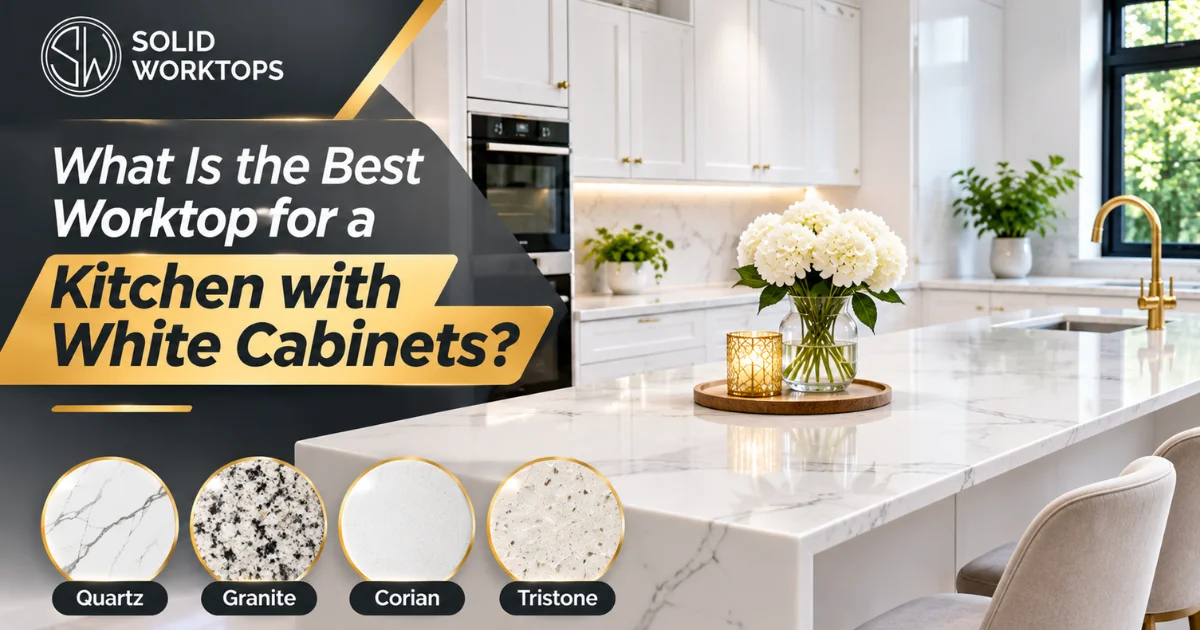
The best worktop for a kitchen with white cabinets depends on the style you want, how much contrast you prefer and how you use the kitchen. Grey or marble-effect quartz creates a contemporary look, black worktops add contrast, and beige or cream surfaces give the room a warmer appearance. Granite and solid-surface materials such as Corian and Tristone are also worth considering if their colours and finishes suit your design.
Before choosing a worktop, consider your cabinet shade, flooring, splashback, natural light and maintenance preferences. White cabinets provide a neutral starting point, but the worktop colour can change how warm, bright or contrasting the entire kitchen feels.
Which Worktop Colours Look Best with White Cabinets?
White cabinets work with a wide range of worktop colours. The best option depends on whether you want a bright, understated kitchen or a design with stronger contrast.
1. White Quartz Worktops for a Bright, Coordinated Kitchen
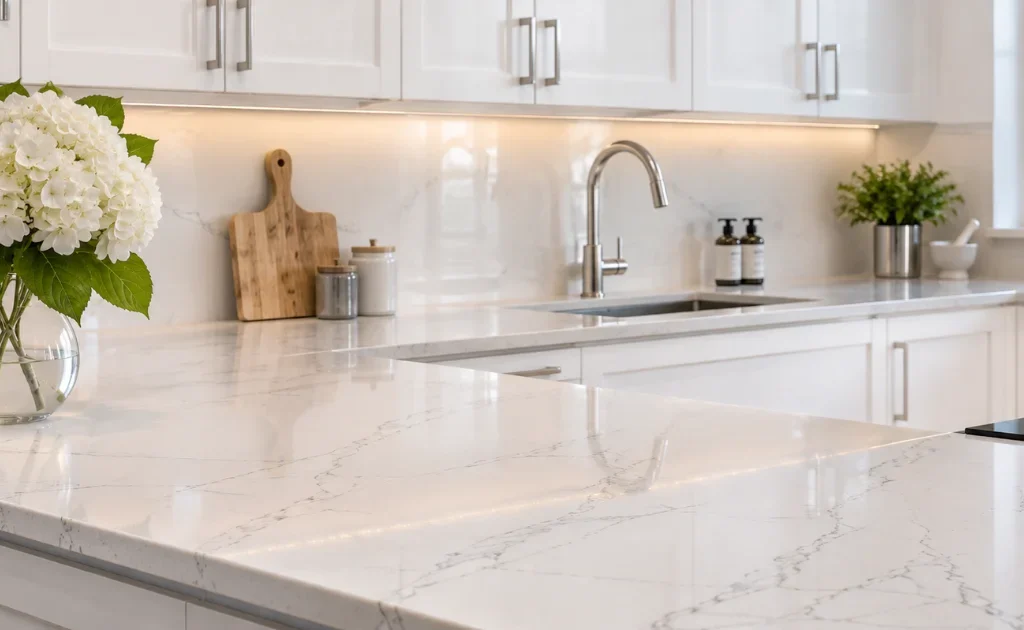
White quartz worktops create a clean, coordinated appearance with white cabinets. You can choose a similar white shade for a subtle, continuous look or introduce veining to add definition.
Marble-effect quartz can introduce grey or gold-style veining without using natural marble. This can work well when you want visual detail but prefer the consistent appearance available from an engineered quartz surface.
However, not all whites match. A cool white cabinet may look different beside a warmer cream-white worktop. Compare samples together in your kitchen’s lighting before making a final decision.
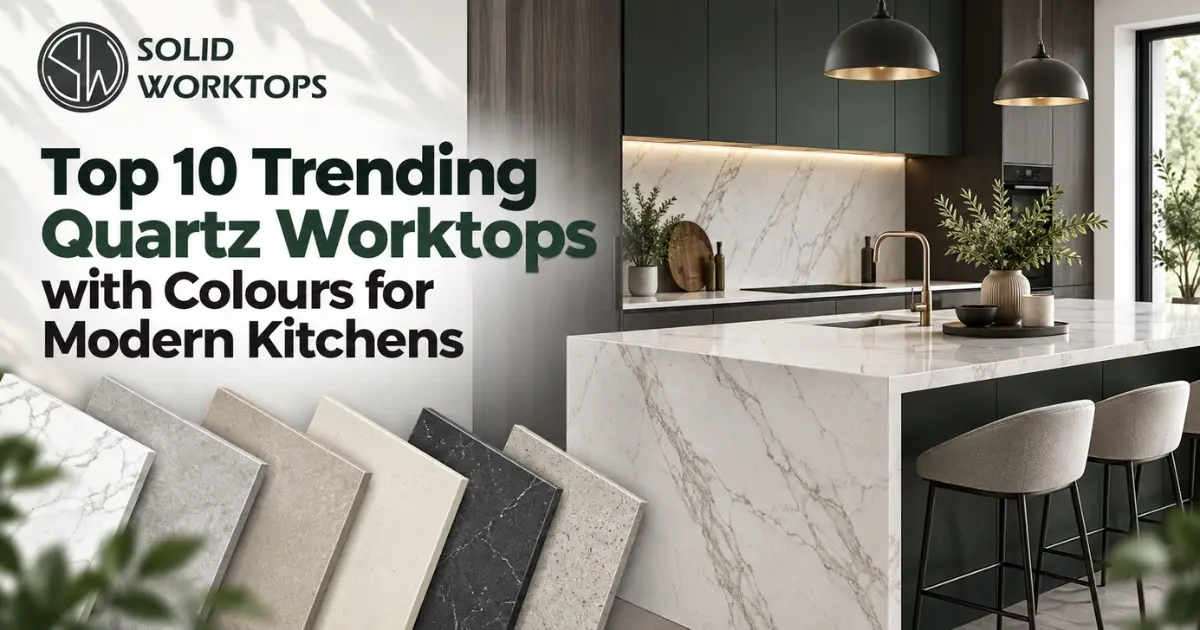
2. Grey Quartz Worktops for a Contemporary Kitchen
Grey quartz provides contrast without creating the strong difference you get with black. Light grey can keep the room feeling open, while darker grey creates a more noticeable outline around white cabinets.
Grey worktops can suit handleless kitchens, modern flat-fronted cabinets and many shaker designs. A concrete-effect finish can introduce a more understated, industrial appearance, while a marble-effect pattern can make the worktop a stronger design feature.
Consider the flooring and splashback before choosing the shade. If both are already dark or visually busy, a lighter grey may help keep the overall design balanced.
3. Black Worktops for Strong Contrast
Black worktops create a clear contrast against white cabinets and can give the kitchen a bold, defined appearance. They are particularly effective when you repeat black elsewhere through handles, taps, lighting or appliances.
Black quartz can work well with white cabinets in both modern and traditional kitchens. A patterned surface may soften the contrast, while a more uniform finish creates a simpler look.
Before choosing black, consider the lighting and size of the room. Dark worktops can make a small or poorly lit kitchen feel heavier, depending on the surrounding finishes. Fingerprints, water marks and dust may also be more noticeable on some dark finishes.
4. Beige and Cream Worktops for a Warmer Finish
Beige and cream worktops are useful when you want white cabinets without an overly cool or stark appearance. These colours can work particularly well with timber flooring, natural textures, brass-toned details and warm neutral walls.
A cream quartz worktop can complement warmer white cabinets, while beige introduces a slightly deeper tone. The result depends on the undertones of both surfaces, so compare physical samples rather than relying on colour names alone.
5. Marble-Effect Quartz for Added Pattern
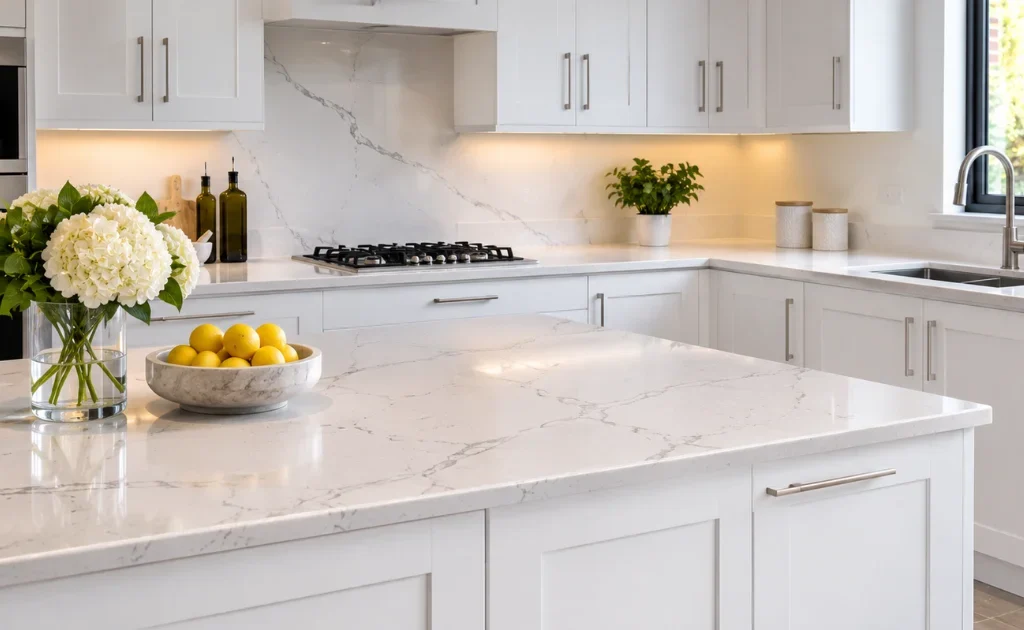
Marble-effect quartz can introduce veining and movement to a kitchen with plain white cabinets. Depending on the pattern, the worktop can become a subtle background feature or the main visual focus.
If you choose a prominent pattern, keep nearby finishes relatively simple. Plain cabinet doors and a restrained splashback can help prevent the kitchen from looking overcrowded.
Check the actual slab or large sample where possible. Small samples do not always show the full pattern, and veining can vary between slabs.
Which Worktop Material Is Best for White Kitchen Cabinets?
Colour is only part of the decision. The material affects maintenance, appearance, fabrication and how the worktop suits your everyday needs.
Quartz Worktops
Quartz is a popular option for white kitchens because it comes in a wide range of colours, including plain whites, greys, dark shades and marble-effect designs.
- Quartz offers a broad choice of patterns and finishes, making it easier to coordinate the worktop with different cabinet styles.
- Its non-porous surface generally makes everyday cleaning straightforward when you follow the manufacturer’s care instructions.
- Quartz is not completely heat-proof, so use trivets or heat-resistant mats rather than placing hot pans directly on the surface.
- Edge profiles, thickness and the layout of joints can affect the finished appearance, so discuss these details with your fabricator.
Quartz is worth considering if you want a coordinated appearance and a worktop that is practical for regular kitchen use.
Granite Worktops
Granite is a natural stone, so its pattern and colour variation can give a kitchen a distinctive appearance. It is available in lighter and darker shades that can complement white cabinetry.
- Granite can introduce natural patterning and variation that differs from the more controlled appearance of many engineered surfaces.
- Each slab has its own characteristics, so inspect the actual slab where possible before approving the material.
- Granite may require sealing and specific maintenance depending on the stone and its finish.
- The final price depends on the selected stone, fabrication requirements, slab availability and installation.
Granite may suit you if you prefer natural stone and want the worktop’s individual pattern to contribute to the kitchen design.
Corian and Tristone Solid-Surface Worktops
Corian and Tristone are solid-surface options that can suit kitchens with white cabinets, particularly if you prefer a clean appearance or want to explore designs with integrated features.
- Solid-surface materials are available in different colours and finishes, so you can compare them with your cabinet shade and splashback.
- Depending on the product and design, solid-surface worktops can support neat joints and certain integrated sink or upstand arrangements.
- Repair and refinishing options depend on the material, finish and type of damage, so check the manufacturer’s guidance.
- Your supplier should confirm the fabrication methods and suitable care routine for the specific product you choose.
These materials are worth comparing with quartz and granite when you want to balance appearance, fabrication options and maintenance.
What Is the Best Worktop for White Shaker Cabinets?
White shaker cabinets have a framed door design that can suit both traditional and contemporary kitchens. The worktop helps determine which direction the overall design takes.
- For a traditional kitchen, consider cream, beige or marble-effect worktops that complement the cabinet detailing and any timber flooring.
- For a modern shaker kitchen, consider grey quartz or a restrained marble-effect surface to introduce contrast without overwhelming the doors.
- For a bold design, consider black or dark grey worktops, particularly if you plan to repeat those tones in the handles, taps or lighting.
- For a softer, natural look, compare warm neutral worktops with wood flooring and understated splashback colours.
There is no single best colour for every white shaker kitchen. The cabinet’s undertone, room lighting and other materials should guide your choice.
Frequently Asked Questions
What colour worktop looks best with white cabinets?
White, grey, black, beige and cream worktops can all complement white cabinets. White and light grey create a coordinated appearance, black provides strong contrast, and beige or cream can introduce warmth. The best option depends on the cabinet undertone, flooring, lighting and overall kitchen design.
Are quartz worktops a good choice for white kitchens?
Quartz is worth considering because it offers a broad choice of colours and patterns, and its surface is generally straightforward to clean. You should still follow the manufacturer’s care instructions and protect the surface from direct contact with hot pans.
Do white cabinets look better with light or dark worktops?
Neither option is universally better. Light worktops can create a brighter, more coordinated appearance, while dark worktops introduce contrast and definition. Compare samples with your kitchen finishes before deciding.
Should my kitchen island have a different worktop colour?
It can, but it does not have to. Matching worktops create a consistent look, while a contrasting island can become a focal point. Consider the cabinet colours, room size, lighting and the patterns of the selected materials.
Is granite better than quartz for white kitchen cabinets?
Both materials can work well. Quartz offers a wide choice of engineered colours and patterns, while granite provides natural variation. Compare the appearance, maintenance requirements, price and fabrication options for the specific products you are considering.
Find the Right Worktop for Your White Kitchen
White cabinets give you plenty of design flexibility, but the right worktop should complement the rest of the room and suit how you use your kitchen.
At Solid Worktops, you can explore quartz, granite, Corian and Tristone options for your project. Compare colours and finishes with your cabinets, discuss edge profiles and fabrication requirements, and request a quotation based on your kitchen layout.
The aim is to choose a worktop that looks right in your home and remains practical for everyday use.