How to Choose Kitchen Designers for Your New Kitchen

How to Choose Kitchen Designers for Your New Kitchen

Choosing the right kitchen designers can help you create a kitchen that looks good, works well and makes the best use of your available space. Before committing to a design, check the designer’s experience, understand what their service includes, compare quotations and make sure they consider your cabinets, appliances, worktops, storage and installation requirements together.

The right kitchen design should suit how you cook, clean and use the room every day. It should also fit your budget and allow enough space for practical features such as worktop preparation areas, accessible cupboards and comfortable walkways.

What Is a Kitchen Designer? And what do kitchen designers do?

Kitchen designers plan the layout, appearance and functionality of a kitchen. They help homeowners decide where to position cabinets, appliances, sinks, worktops and storage to make the room practical and visually consistent.

Depending on the service offered, kitchen designers may provide:

  • Kitchen layout planning: They arrange cabinets, appliances and work areas to make efficient use of the available space.
  • Cabinet and storage selection: They help you choose cabinet styles, finishes, drawer systems and storage solutions.
  • Worktop selection: They help coordinate worktop materials, colours, thicknesses and edge profiles with the rest of the kitchen.
  • Lighting and colour planning: They consider how cabinet colours, wall finishes, flooring and lighting work together.
  • Project coordination: Some designers manage measurements, deliveries and installation, while others provide design plans only.

Always confirm which services are included before accepting a quotation. A kitchen designer may not supply or install every component, including the worktops.
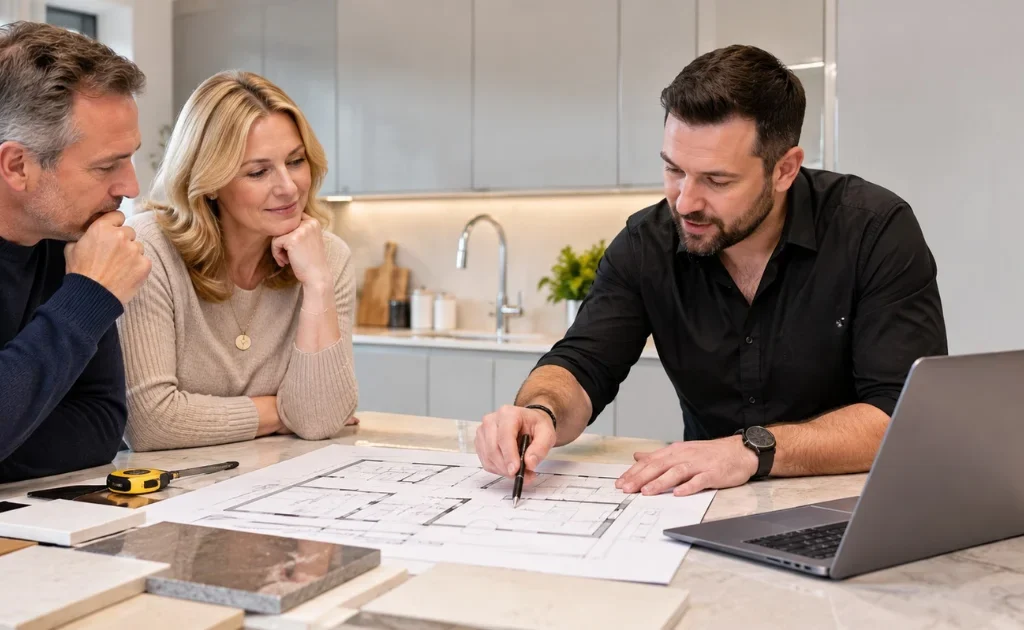
How Kitchen Designers Help You Choose the Right Kitchen Worktops

Kitchen worktops affect the appearance and everyday use of your kitchen. A suitable worktop should complement the cabinets while meeting your requirements for cleaning, durability, maintenance and budget.

Kitchen designers can help narrow down the options, but it is worth understanding the main materials before making a decision.

  • Quartz worktops: Quartz offers a wide choice of colours and patterns, including marble-effect designs. It suits homeowners who want a consistent finish and a worktop that is straightforward to maintain.
  • Granite worktops: Granite provides a natural stone appearance, with variations in colour and pattern between slabs. Its maintenance requirements depend on the particular stone and finish.
  • Corian worktops: Corian is a solid-surface material that supports a range of designs. It can be suitable for kitchens where a clean, contemporary appearance is important.
  • Tristone worktops: Tristone is another solid-surface option available in different colours and finishes. Check the specific product’s care and performance requirements before choosing it.

How Kitchen Designers Match Worktops with Kitchen Cabinets

Cabinet and worktop colours should complement each other without making the kitchen feel too busy or too plain. Kitchen designers can help you compare combinations before you order the materials.

Consider these practical combinations:

  • White cabinets with quartz worktops: White, grey, beige and marble-effect quartz can create different looks, from bright and minimal to warmer and more traditional.
  • Grey cabinets with quartz worktops: White, pale grey and contrasting darker surfaces can work well, depending on the cabinet shade and the amount of natural light.
  • Dark cabinets with light worktops: A lighter worktop can provide contrast and help the kitchen feel less enclosed.
  • Wood-effect cabinets with stone worktops: Neutral quartz or granite can complement the warmth of wood-effect finishes without competing with the cabinet pattern.

How Kitchen Designers Plan a Practical Kitchen Layout

A kitchen can look attractive in a design drawing but still feel awkward to use if the layout does not suit your routine. Good kitchen designers consider how you move between the fridge, sink, hob and food preparation areas.

Before approving the design, check that:

  • You have enough clear worktop space for preparing food near the areas where you need it.
  • Cupboard doors, drawers, the oven and the dishwasher can open without obstructing one another.
  • The sink and hob positions leave suitable preparation space.
  • You have enough room to move safely around an island or breakfast bar.
  • The worktop layout accounts for corners, joints, sink cut-outs and appliance openings.
  • Storage meets your needs without taking away too much useful worktop space.

If you want a kitchen island, ask kitchen designers to check the available floor space and circulation routes. An island should improve how you use the kitchen rather than make it difficult to move around.

How Kitchen Designers Should Plan Worktop Measurements and Installation

Worktop measurements are an important part of a successful kitchen installation. Incorrect measurements or changes to the cabinet layout can lead to fitting problems, unnecessary adjustments and delays.

Kitchen designers should coordinate the planned worktop dimensions with the cabinet layout, sink position, hob opening, wall alignment and any joints required.

Before ordering your worktops, confirm:

  • Cabinet installation: The base units should be installed and checked before final worktop measurements are taken.
  • Worktop overhangs: Agree on the intended overhang and edge finish before fabrication.
  • Sink and hob cut-outs: Confirm the appliance models and cut-out requirements with the relevant suppliers.
  • Joints and corners: Discuss where joints may be needed and how they will affect the finished appearance.
  • Upstands and splashbacks: Decide whether these are required and confirm their dimensions and finish.
  • Installation responsibilities: Establish who will measure, fabricate, deliver and fit the worktop.

How Kitchen Designers Help You Control Your Kitchen Budget

A kitchen budget should include more than cabinets and appliances. Worktops, installation, plumbing, electrical work, flooring, splashbacks and finishing details can all affect the final cost.

Ask kitchen designers for a written breakdown so you can see what the quotation includes and identify potential additional charges.

When comparing quotations, check:

  • Whether the price covers design work, materials and installation.
  • Which worktop material, thickness, finish and edge profile the quotation specifies.
  • Whether sink and hob cut-outs are included.
  • Whether delivery, removal of the old kitchen and waste disposal are included.
  • Whether plumbing, electrical work and other trades are included or quoted separately.
  • How the supplier handles changes, unexpected issues and additional work.

How Kitchen Designers Differ from Worktop Suppliers and Installers

Kitchen designers and worktop specialists have different responsibilities, although their work often overlaps.

Kitchen designers generally focus on the overall layout, cabinets, storage, colours and coordination of the kitchen. Worktop suppliers and specialists focus on the selected surface, including material options, measurements, fabrication and fitting where offered.

Working with both can help you make better decisions. Your kitchen designer can plan the overall look and layout, while your worktop specialist can explain which materials, thicknesses, edge profiles and cut-outs are suitable for the proposed design.

If you are choosing quartz, granite, Corian or Tristone, speak to your worktop supplier before finalising details that affect fabrication. This helps you understand the available options and gives the relevant specialists an opportunity to check the practical requirements.

What Questions Should You Ask Kitchen Designers Before Hiring Them?

Before committing to a kitchen design service, ask questions that clarify the designer’s experience, responsibilities and approach.

  • Can you show me similar kitchen designs? Examples can help you assess whether the designer’s style and experience suit your project.
  • What does your quotation include? Confirm whether you are paying for design plans, product supply, installation or project management.
  • How will you work within my budget? Ask how the designer prioritises essential features and handles changes in cost.
  • Will you help me select worktop materials? Check whether the service includes advice on quartz, granite and solid-surface options.
  • Who takes the final worktop measurements? Establish whether this responsibility belongs to the cabinet installer or the worktop specialist.
  • How are changes handled? Find out what happens if you change a cabinet, sink, hob or worktop specification after approval.
  • Who coordinates the installation? Make sure you know who to contact if different trades or suppliers need to resolve an issue.

Clear answers at the start can prevent misunderstandings later.

What Mistakes Should Homeowners Avoid When Choosing Kitchen Designers?

Even an attractive kitchen design can create problems if important practical details are overlooked. Avoid these common mistakes when comparing kitchen designers.

  • Choosing on appearance alone: A design should work for your daily routine, not just look impressive in photographs.
  • Ignoring the worktop early in the process: Your preferred material, thickness and layout can affect the design, budget and finishing details.
  • Approving a layout without checking measurements: Confirm that appliances, cupboards, doors and walkways have enough space.
  • Assuming every service is included: Check the quotation for installation, plumbing, electrical work, delivery and finishing.
  • Selecting materials from small samples only: View samples alongside your actual cabinets and flooring before making a final decision.
  • Failing to confirm responsibilities: Make sure the designer, cabinet installer and worktop specialist understand who handles each stage.

Taking time to check these details can help you avoid preventable changes and achieve a kitchen that meets your expectations.

Frequently Asked Questions About Kitchen Designers

How Much Do Kitchen Designers Cost?

The cost depends on the designer’s experience, the size and complexity of the project and whether the service includes design plans only or full project management. Some retailers include design services within a kitchen purchase, while independent designers may charge a separate fee. Ask for a written quotation that explains what you will receive.

When Should I Contact Kitchen Designers?

Contact kitchen designers before ordering cabinets, appliances or worktops. Early planning gives you more opportunity to coordinate the layout, material choices, measurements and budget before committing to products.

Do Kitchen Designers Choose the Worktop for You?

Kitchen designers may recommend worktop materials and help coordinate colours with your cabinets. However, you should also speak to a worktop specialist about the material’s practical requirements, fabrication options, care and installation.

Should I Choose Quartz Worktops Before or After My Kitchen Design?

It is best to consider quartz worktops during the design stage rather than leaving the decision until the end. You do not necessarily need to select the exact colour immediately, but your preferred material, thickness, edge profile and sink arrangement can influence the final specification.

Can Kitchen Designers Help Me Make a Small Kitchen Look Bigger?

Yes. Kitchen designers can make a small kitchen feel more open by planning suitable storage, keeping walkways clear and coordinating cabinet and worktop colours. Light-coloured surfaces may help create a brighter appearance, although the result also depends on lighting, room proportions and the overall layout.
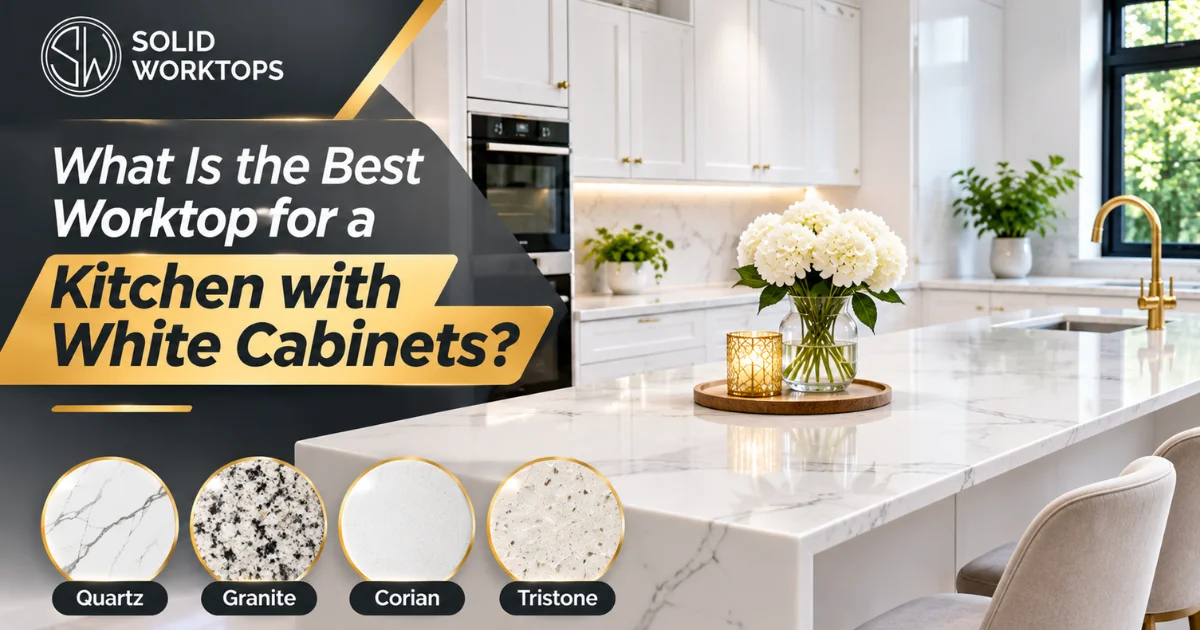
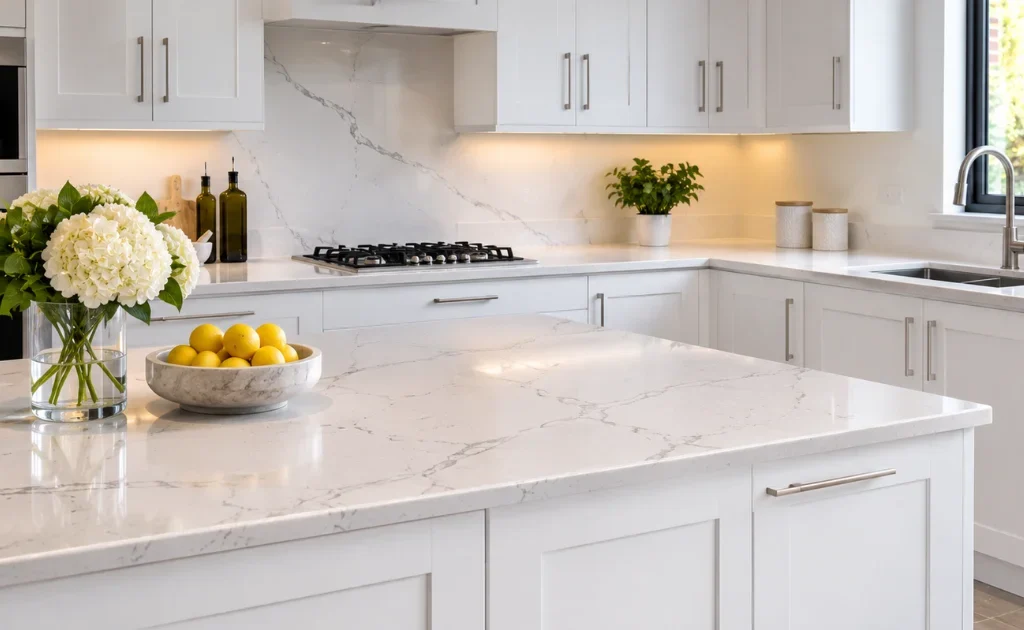
What Is the Best Worktop for a Kitchen with White Cabinets

What Is the Best Worktop for a Kitchen with White Cabinets?

The best worktop for a kitchen with white cabinets depends on the style you want, how much contrast you prefer and how you use the kitchen. Grey or marble-effect quartz creates a contemporary look, black worktops add contrast, and beige or cream surfaces give the room a warmer appearance. Granite and solid-surface materials such as Corian and Tristone are also worth considering if their colours and finishes suit your design.

Before choosing a worktop, consider your cabinet shade, flooring, splashback, natural light and maintenance preferences. White cabinets provide a neutral starting point, but the worktop colour can change how warm, bright or contrasting the entire kitchen feels.

Which Worktop Colours Look Best with White Cabinets?

White cabinets work with a wide range of worktop colours. The best option depends on whether you want a bright, understated kitchen or a design with stronger contrast.

1. White Quartz Worktops for a Bright, Coordinated Kitchen

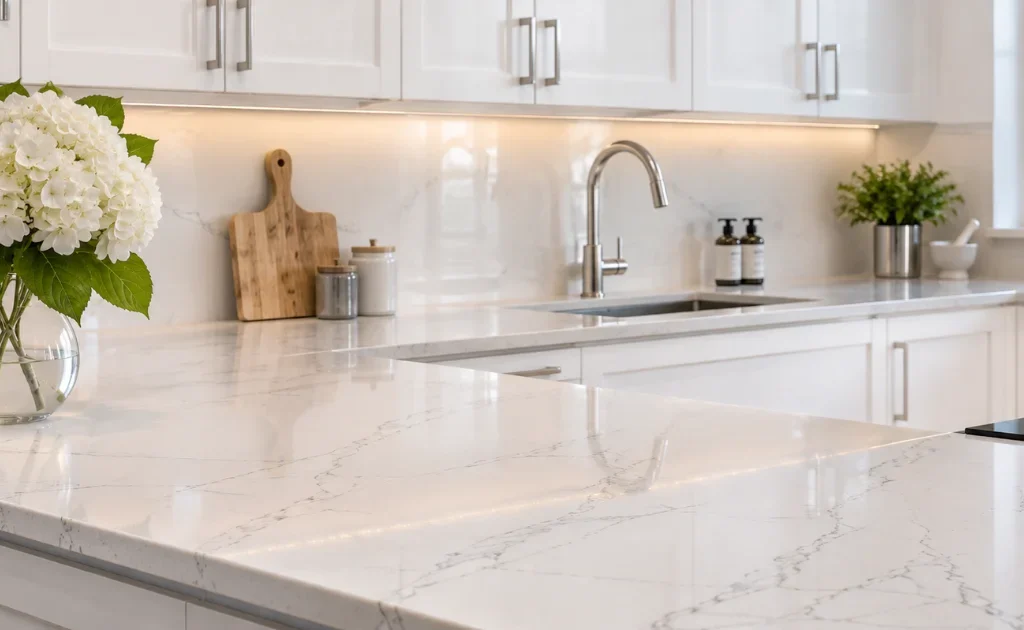
White quartz worktops create a clean, coordinated appearance with white cabinets. You can choose a similar white shade for a subtle, continuous look or introduce veining to add definition.

Marble-effect quartz can introduce grey or gold-style veining without using natural marble. This can work well when you want visual detail but prefer the consistent appearance available from an engineered quartz surface.

However, not all whites match. A cool white cabinet may look different beside a warmer cream-white worktop. Compare samples together in your kitchen’s lighting before making a final decision.

2. Grey Quartz Worktops for a Contemporary Kitchen

Grey quartz provides contrast without creating the strong difference you get with black. Light grey can keep the room feeling open, while darker grey creates a more noticeable outline around white cabinets.

Grey worktops can suit handleless kitchens, modern flat-fronted cabinets and many shaker designs. A concrete-effect finish can introduce a more understated, industrial appearance, while a marble-effect pattern can make the worktop a stronger design feature.

Consider the flooring and splashback before choosing the shade. If both are already dark or visually busy, a lighter grey may help keep the overall design balanced.

3. Black Worktops for Strong Contrast

Black worktops create a clear contrast against white cabinets and can give the kitchen a bold, defined appearance. They are particularly effective when you repeat black elsewhere through handles, taps, lighting or appliances.

Black quartz can work well with white cabinets in both modern and traditional kitchens. A patterned surface may soften the contrast, while a more uniform finish creates a simpler look.

Before choosing black, consider the lighting and size of the room. Dark worktops can make a small or poorly lit kitchen feel heavier, depending on the surrounding finishes. Fingerprints, water marks and dust may also be more noticeable on some dark finishes.

4. Beige and Cream Worktops for a Warmer Finish

Beige and cream worktops are useful when you want white cabinets without an overly cool or stark appearance. These colours can work particularly well with timber flooring, natural textures, brass-toned details and warm neutral walls.

A cream quartz worktop can complement warmer white cabinets, while beige introduces a slightly deeper tone. The result depends on the undertones of both surfaces, so compare physical samples rather than relying on colour names alone.

5. Marble-Effect Quartz for Added Pattern

Marble-effect quartz can introduce veining and movement to a kitchen with plain white cabinets. Depending on the pattern, the worktop can become a subtle background feature or the main visual focus.

If you choose a prominent pattern, keep nearby finishes relatively simple. Plain cabinet doors and a restrained splashback can help prevent the kitchen from looking overcrowded.

Check the actual slab or large sample where possible. Small samples do not always show the full pattern, and veining can vary between slabs.

Which Worktop Material Is Best for White Kitchen Cabinets?

Colour is only part of the decision. The material affects maintenance, appearance, fabrication and how the worktop suits your everyday needs.

Quartz Worktops

Quartz is a popular option for white kitchens because it comes in a wide range of colours, including plain whites, greys, dark shades and marble-effect designs.

  • Quartz offers a broad choice of patterns and finishes, making it easier to coordinate the worktop with different cabinet styles.
  • Its non-porous surface generally makes everyday cleaning straightforward when you follow the manufacturer’s care instructions.
  • Quartz is not completely heat-proof, so use trivets or heat-resistant mats rather than placing hot pans directly on the surface.
  • Edge profiles, thickness and the layout of joints can affect the finished appearance, so discuss these details with your fabricator.

Quartz is worth considering if you want a coordinated appearance and a worktop that is practical for regular kitchen use.

Granite Worktops

Granite is a natural stone, so its pattern and colour variation can give a kitchen a distinctive appearance. It is available in lighter and darker shades that can complement white cabinetry.

  • Granite can introduce natural patterning and variation that differs from the more controlled appearance of many engineered surfaces.
  • Each slab has its own characteristics, so inspect the actual slab where possible before approving the material.
  • Granite may require sealing and specific maintenance depending on the stone and its finish.
  • The final price depends on the selected stone, fabrication requirements, slab availability and installation.

Granite may suit you if you prefer natural stone and want the worktop’s individual pattern to contribute to the kitchen design.

Corian and Tristone Solid-Surface Worktops

Corian and Tristone are solid-surface options that can suit kitchens with white cabinets, particularly if you prefer a clean appearance or want to explore designs with integrated features.

  • Solid-surface materials are available in different colours and finishes, so you can compare them with your cabinet shade and splashback.
  • Depending on the product and design, solid-surface worktops can support neat joints and certain integrated sink or upstand arrangements.
  • Repair and refinishing options depend on the material, finish and type of damage, so check the manufacturer’s guidance.
  • Your supplier should confirm the fabrication methods and suitable care routine for the specific product you choose.

These materials are worth comparing with quartz and granite when you want to balance appearance, fabrication options and maintenance.

What Is the Best Worktop for White Shaker Cabinets?

White shaker cabinets have a framed door design that can suit both traditional and contemporary kitchens. The worktop helps determine which direction the overall design takes.

  • For a traditional kitchen, consider cream, beige or marble-effect worktops that complement the cabinet detailing and any timber flooring.
  • For a modern shaker kitchen, consider grey quartz or a restrained marble-effect surface to introduce contrast without overwhelming the doors.
  • For a bold design, consider black or dark grey worktops, particularly if you plan to repeat those tones in the handles, taps or lighting.
  • For a softer, natural look, compare warm neutral worktops with wood flooring and understated splashback colours.

There is no single best colour for every white shaker kitchen. The cabinet’s undertone, room lighting and other materials should guide your choice.

Frequently Asked Questions

What colour worktop looks best with white cabinets?

White, grey, black, beige and cream worktops can all complement white cabinets. White and light grey create a coordinated appearance, black provides strong contrast, and beige or cream can introduce warmth. The best option depends on the cabinet undertone, flooring, lighting and overall kitchen design.

Are quartz worktops a good choice for white kitchens?

Quartz is worth considering because it offers a broad choice of colours and patterns, and its surface is generally straightforward to clean. You should still follow the manufacturer’s care instructions and protect the surface from direct contact with hot pans.

Do white cabinets look better with light or dark worktops?

Neither option is universally better. Light worktops can create a brighter, more coordinated appearance, while dark worktops introduce contrast and definition. Compare samples with your kitchen finishes before deciding.

Should my kitchen island have a different worktop colour?

It can, but it does not have to. Matching worktops create a consistent look, while a contrasting island can become a focal point. Consider the cabinet colours, room size, lighting and the patterns of the selected materials.

Is granite better than quartz for white kitchen cabinets?

Both materials can work well. Quartz offers a wide choice of engineered colours and patterns, while granite provides natural variation. Compare the appearance, maintenance requirements, price and fabrication options for the specific products you are considering.

Find the Right Worktop for Your White Kitchen

White cabinets give you plenty of design flexibility, but the right worktop should complement the rest of the room and suit how you use your kitchen.

At Solid Worktops, you can explore quartz, granite, Corian and Tristone options for your project. Compare colours and finishes with your cabinets, discuss edge profiles and fabrication requirements, and request a quotation based on your kitchen layout.

The aim is to choose a worktop that looks right in your home and remains practical for everyday use.

Undermount vs Overmount Kitchen Sinks_ Which Works Best with Quartz

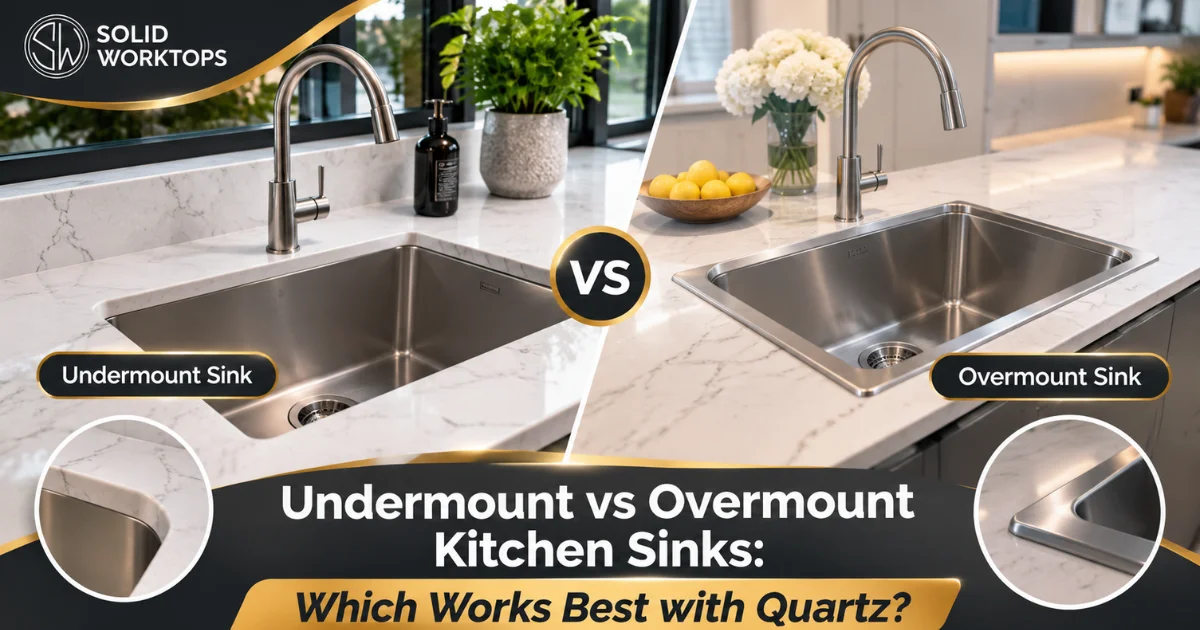
Undermount vs Overmount Kitchen Sinks: Which Works Best with Quartz?

An undermount sink is often chosen for quartz worktops because it creates a clean, uninterrupted surface and makes it easier to wipe crumbs and water directly into the sink. An overmount sink can also work well with quartz, particularly when the homeowner prefers a visible rim or needs a sink style suited to an existing kitchen layout.

The right choice depends on your kitchen design, cleaning preferences, budget and installation requirements. Quartz can accommodate different sink styles, but the cut-out, exposed edge finishing and support must suit the selected sink.

What Is the Difference Between Undermount and Overmount Kitchen Sinks?

The main difference is how the sink sits in relation to the worktop.

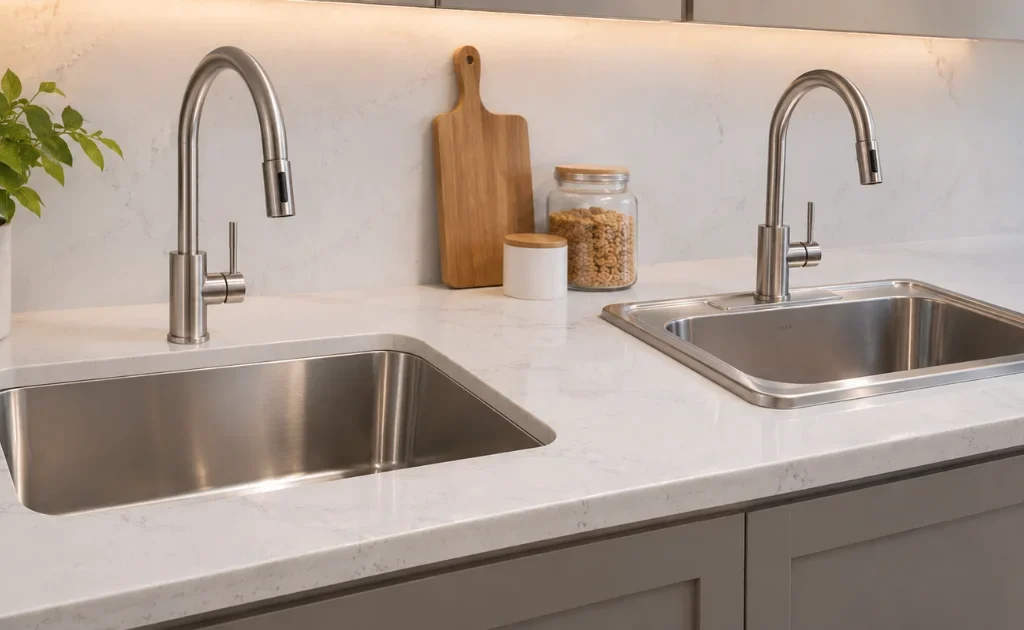
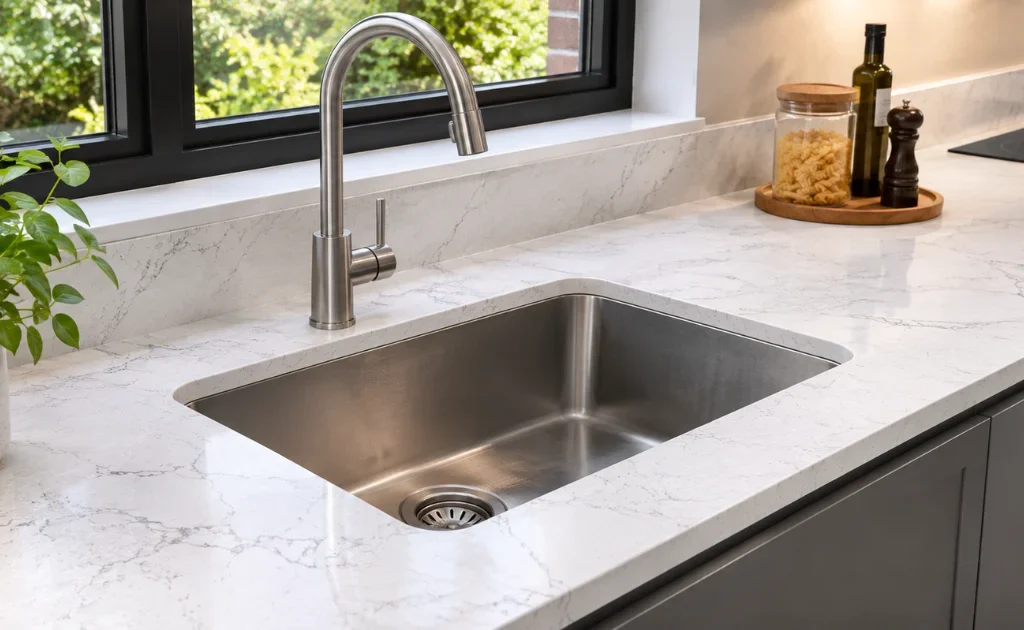
An undermount sink fits beneath the quartz surface, leaving the edge of the cut-out exposed. An overmount sink, also called a top-mount or inset sink, sits in a prepared opening with its rim resting on top of the worktop.

Both options can suit a quartz kitchen, but they create different appearances and require different installation details.

What Is an Undermount Sink for a Quartz Worktop?

An undermount sink is installed below the worktop surface. The quartz cut-out remains visible around the opening, so the fabricator must finish the exposed edge neatly and accurately.

What Are the Benefits of an Undermount Sink?
  • A seamless appearance: The sink sits beneath the quartz, creating a clean transition between the worktop and bowl.
  • Straightforward surface cleaning: You can wipe crumbs and small spills from the worktop directly into the sink without having to work around a raised rim.
  • A contemporary finish: Undermount sinks complement modern kitchens, particularly when paired with quartz worktops and simple cabinet designs.
  • More visible worktop space around the sink: Without a rim resting on the surface, the surrounding quartz has a more continuous appearance.

What Should You Consider Before Choosing an Undermount Sink?

An undermount sink needs an accurately cut and properly finished opening. Because the quartz edge around the sink is exposed, poor fabrication or an unsuitable installation can affect the appearance and increase the risk of damage.

The sink also needs an appropriate support and fixing system. The installation method must suit the sink’s weight, the worktop specification and the manufacturer’s instructions.

Ask your worktop supplier how they will finish the cut-out, support the sink and seal the junction between the sink and quartz.

What Is an Overmount Sink for Quartz?

An overmount sink sits in an opening in the worktop, with a rim resting on the quartz surface. The rim covers the edge of the cut-out, making this style visually different from an undermount sink.

Overmount sinks come in a range of shapes, sizes and materials, including stainless steel. They can be suitable for new kitchens and some replacement projects, provided the sink dimensions and installation requirements match the worktop.

What Are the Benefits of an Overmount Sink?

  • The rim covers the cut-out: The visible sink rim sits over the edge of the opening, so the cut-out is not exposed in the same way as an undermount installation.
  • A wide choice of designs: Overmount sinks are available in different configurations, which can help when matching the sink to the kitchen layout.
  • Potential suitability for replacement projects: An inset sink may be practical when its dimensions fit an existing worktop opening, although compatibility must be checked.
  • A defined border around the sink: Some homeowners prefer the visible rim because it creates a clear separation between the sink and worktop.

What Are the Drawbacks of an Overmount Sink?

The raised rim can make it harder to wipe crumbs and water directly into the bowl. Dirt, water or residue may also accumulate around the rim or seal if the area is not cleaned regularly.

The seal around the sink needs proper installation and maintenance. A poorly maintained or damaged seal can allow water to reach areas where it should not.

An overmount sink is not automatically easier or cheaper to install in every situation. The total cost depends on the sink, the worktop cut-out, fitting requirements and any changes needed to the cabinets or plumbing.

Undermount vs Overmount Kitchen Sinks: Which Is Better for Quartz?

Use this comparison to decide which sink style better suits your kitchen.

FeatureUndermount sinkOvermount sink
AppearanceCreates a clean look with no rim sitting on top of the quartz.Leaves a visible rim around the sink.
Everyday cleaningMakes it easy to wipe crumbs and water into the bowl.The rim can interrupt wiping and may need extra attention.
Cut-out finishThe exposed quartz edge must be finished neatly.The rim covers the cut-out edge from above.
InstallationRequires suitable support, fixing and sealing.Requires a compatible opening and a correctly fitted rim and seal.
Design suitabilityOften suits contemporary kitchens and minimalist worktops.Can suit a wide range of kitchen styles and replacement layouts.
MaintenanceKeep the sink-to-worktop junction clean and check the seal as needed.Clean around the rim and check the seal for deterioration.
CostDepends on the sink, fabrication and installation requirements.Depends on the sink, fabrication and installation requirements.

Neither style is best for every kitchen. If you prioritise a clean surface and a modern appearance, an undermount sink may be the better option. If you prefer a visible rim or need a sink that fits an existing opening, an overmount sink may be more suitable.

Does an Undermount Sink Work Well with Quartz Worktops?

Yes. Quartz worktops can work well with undermount sinks when the fabricator and installer follow the appropriate specifications.

The main consideration is the exposed edge around the sink opening. The fabricator needs to create a suitable cut-out and finish the edge so it looks neat and is appropriate for the selected quartz product.

Before ordering, confirm the following:

  • The sink dimensions match the planned cut-out.
  • The fabricator can achieve the required edge finish.
  • The sink has an appropriate support and fixing arrangement.
  • The installation includes suitable sealing at the sink-to-worktop junction.
  • The sink manufacturer’s instructions and the quartz supplier’s requirements are compatible.

These details matter because quartz worktops cannot be treated like a flexible sheet that can simply be trimmed or adjusted without planning. Cutting and finishing should be carried out using appropriate equipment and methods.

How Does the Quartz Sink Cut-Out Affect Installation?

The quartz sink cut-out is the opening made in the worktop to accommodate the sink. Its shape and dimensions depend on the sink model, installation type and manufacturer’s requirements.

For an undermount sink, the cut-out edge remains visible. This makes accurate cutting and finishing especially important.

For an overmount sink, the rim covers the opening, but the cut-out still needs to be correctly sized and positioned. The rim must sit properly on the worktop without interfering with nearby taps, splashbacks or other fittings.

The fabricator will also need to consider the sink’s position in relation to cabinet supports, joints, worktop edges and nearby hob cut-outs. The space available can affect the final layout.

Choose the sink before the worktop is templated wherever possible. Confirm the exact sink model and provide its technical specifications to the worktop supplier. Changing the sink after fabrication may require alterations that are difficult, costly or unsuitable for the finished worktop.

What Should You Ask Your Worktop Supplier Before Choosing a Sink?

Before approving the final kitchen design, ask your supplier to confirm the sink and worktop details together.

  • Which undermount and overmount sink styles are suitable for your chosen quartz?
  • Will the quotation include the sink cut-out and required edge finishing?
  • How will the sink be supported and secured?
  • What sealing method will be used around the sink?
  • Does the sink position leave suitable space around joints, corners and other cut-outs?
  • Will changing the sink model affect the fabrication cost or installation schedule?
  • Who is responsible for supplying and fitting the sink, tap and plumbing connections?

Clear answers help you understand what the quotation covers and reduce the risk of unexpected work later in the project.

Frequently Asked Questions

Is an undermount sink better than an overmount sink for quartz?

An undermount sink is often preferred for its clean appearance and straightforward surface cleaning. An overmount sink can be a practical alternative when the homeowner prefers a visible rim or needs a style suited to an existing layout. The best choice depends on the design, budget and installation requirements.

Can you install an undermount sink in a quartz worktop?

Yes, provided the selected sink and quartz are compatible and the fabricator can produce a suitable cut-out and finish. The sink also needs the correct support, fixing and sealing arrangements.

Are overmount sinks easier to install?

Not necessarily in every situation. The installation requirements depend on the sink design, worktop opening, cabinet layout and plumbing. Ask your installer to compare the requirements for the exact models you are considering.

Does an undermount sink make a quartz worktop easier to clean?

It generally makes it easier to wipe crumbs and water directly into the bowl because there is no raised rim on the worktop surface. The sink-to-worktop junction still needs regular cleaning and suitable maintenance.

Can an undermount sink leak?

Leaks can occur if the sink, plumbing connections or sink-to-worktop seal are faulty or deteriorate. Correct installation, suitable support and routine checks help identify problems before they cause more damage.

Which Quartz Worktop Edge Is Best for Your Kitchen

Which Quartz Worktop Edge Is Best for Your Kitchen?

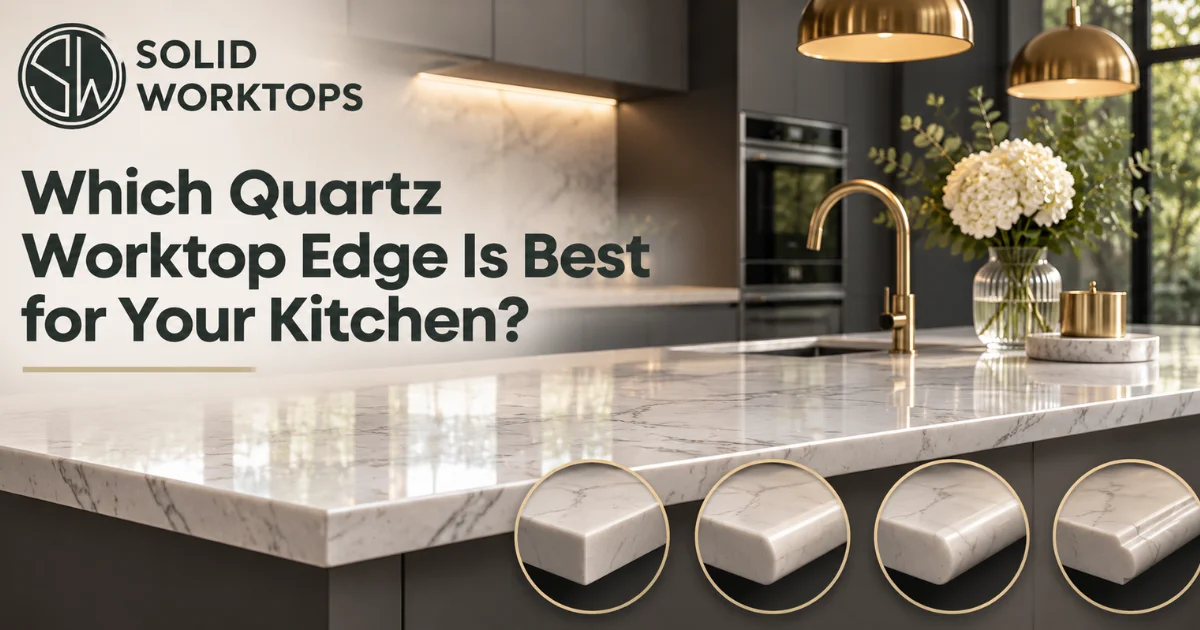
The best quartz worktop edge depends on your kitchen style, how you use the worktop and the finish you want. A square edge quartz worktop suits modern kitchens with clean lines, a rounded worktop edge softens the appearance of exposed corners, and a bevelled quartz edge adds a subtle decorative detail. An eased edge offers a similar straight appearance to a square edge but with its sharp aris slightly softened.

Before choosing, consider how the edge will look with your cabinets, whether children use the kitchen, how exposed the worktop corners are and whether your chosen profile affects the fabrication cost.

Different Quartz Worktop Edge Profiles

Quartz worktop edge profiles describe the shape and finish of the exposed edge of the worktop. Although the main surface may look similar across different kitchens, the edge profile can change the overall appearance considerably.

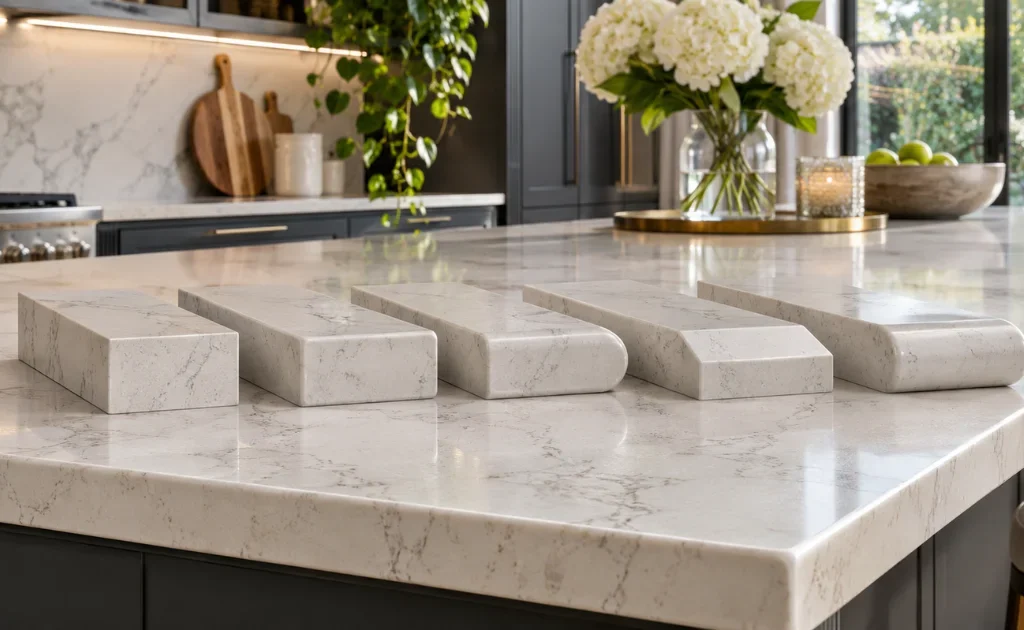
The most common options include square, eased, rounded, bullnose and bevelled edges. Each creates a different finish, so it is worth understanding the differences before ordering your worktop.

1. Square Edge Quartz Worktop

A square edge quartz worktop has a straight, angular appearance that suits contemporary kitchens. It creates a defined line along the front of the worktop and works particularly well with handleless cabinets, flat-fronted doors and minimalist interiors.

A square edge is a good choice if you want a clean, modern finish without an elaborate decorative profile.

What are the advantages of a square edge?

  • A square edge creates a simple, uninterrupted line that works well with modern kitchen cabinets and contemporary worktop colours.
  • It allows the quartz pattern to remain the main visual feature rather than drawing attention to a decorative edge.
  • It suits many kitchen layouts, including perimeter worktops, islands and breakfast bars.
  • Its relatively simple shape can be straightforward to specify, although fabrication requirements and pricing depend on the supplier and the exact finish.

Are square quartz worktop edges sharp?

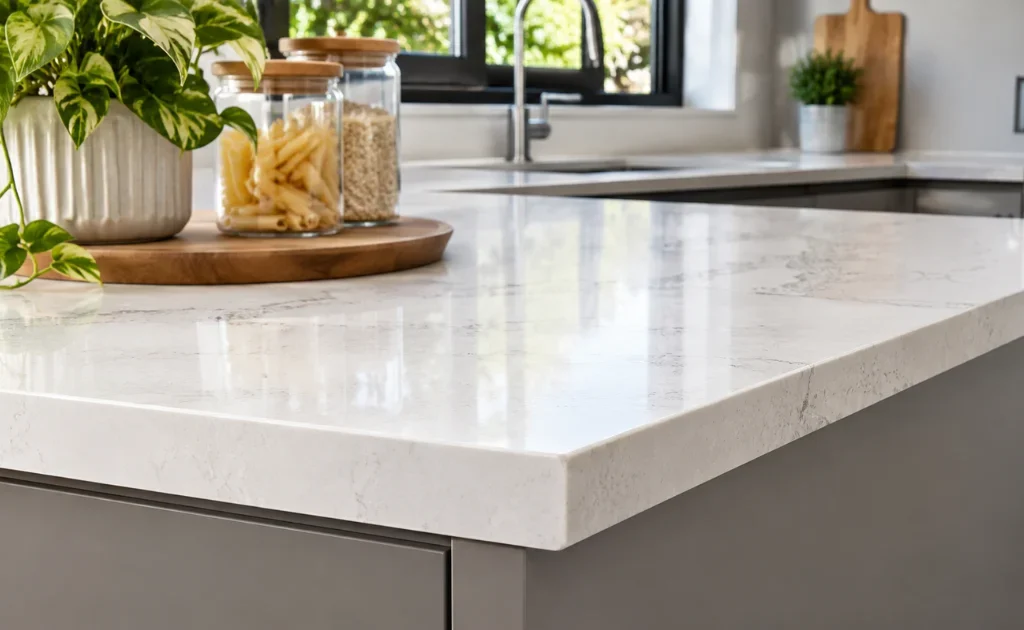
Not necessarily. A square-profile worktop can have a slightly eased edge, meaning the fabricator softens the sharp arris while keeping the overall appearance straight.

This distinction matters because a perfectly sharp-looking edge in a photograph may not represent the precise finish supplied. Ask the fabricator whether the edge will be fully square or slightly eased.

Square edges can be vulnerable to impact at exposed corners, particularly if something heavy strikes them. This does not mean every square edge will chip easily, as the result also depends on the quartz product, fabrication, support and the force of the impact.

2. Rounded Worktop Edge

A rounded worktop edge has a curved finish rather than a sharply defined corner. The degree of curvature varies. A small pencil-round edge has a subtle curve, while a full bullnose profile has a more pronounced rounded shape.

Choose a rounded edge if you prefer a softer appearance or want to reduce the sharpness of exposed worktop corners.

What are the benefits of a rounded quartz edge?

  • A rounded edge softens the transition between the worktop surface and its front face, making it suitable for kitchens where you prefer less angular detailing.
  • A small rounded profile can complement traditional cabinets, shaker kitchens and many family kitchen designs.
  • A rounded outside corner can reduce the sharpness of the corner that people may bump into when moving around the kitchen.
  • A simple rounded profile is generally straightforward to wipe clean, although the precise shape and finish determine how easily you can reach every area.

Is a rounded worktop edge safer for families?

A rounded edge can reduce the sharpness of exposed corners, which may be useful in kitchens where children move around an island or breakfast bar. However, it does not eliminate the risk of injury.

If safety is a priority, consider the corner shape as well as the long front edge. A worktop may have a rounded profile along its front but still have projecting corners that need attention. Ask your fabricator whether the outside corners can also be rounded to suit your layout.

3. Bevelled Quartz Edge

A bevelled quartz edge has an angled section cut along the edge instead of a simple square or curved finish. Depending on the bevel’s size and angle, it can create a subtle detail or a more noticeable decorative line.

A bevelled edge is worth considering if you want something more distinctive than a plain square edge without choosing a fully rounded profile.

When does a bevelled edge work best?

  • A bevelled edge can complement kitchens that combine traditional detailing with a more contemporary worktop finish.
  • It can add definition to the front edge without requiring a large, rounded profile.
  • It may suit a kitchen island where the exposed edge is a noticeable part of the design.
  • It can work with different quartz colours, but the final effect depends on the bevel dimensions, slab thickness and pattern.

Before choosing this option, ask to see a close-up photograph or physical sample. A small bevel can look quite different from a deeper one, and the exact profile available depends on the fabricator’s equipment and the quartz product.

4. Eased Edge Quartz Worktop

An eased edge retains the straight appearance of a square profile but has its sharp arris slightly softened. This small adjustment creates a more comfortable finished edge without making the worktop look obviously rounded.

An eased edge is a useful option if you like the clean lines of a square quartz worktop but do not want the edge to remain perfectly sharp.

It can suit modern, traditional and transitional kitchens because it does not introduce a strong decorative detail. However, suppliers may use square edge and eased edge differently in their product descriptions, so confirm the exact finish rather than relying on the name alone.

5. Bullnose Quartz Worktop Edge

A bullnose edge has a more pronounced rounded profile than a small pencil-round edge. Depending on the design, the curve may extend across much of the edge’s depth, creating a softer overall appearance.

Bullnose edges can suit traditional kitchens and designs where the worktop is intended to have a more curved finish. They may also be considered for islands and breakfast bars where the front edge is highly visible.

However, a bullnose profile is not automatically more durable or easier to clean than every alternative. The suitability and cost depend on the exact profile, the quartz material and the fabrication required.

Square vs Rounded vs Bevelled Quartz Worktop Edges

Use this comparison to narrow down your options before asking a worktop supplier for samples or a quotation.

Edge profileAppearanceBest suited toMain consideration
SquareStraight and angular.Modern kitchens, handleless cabinets and minimalist designs.Exposed corners can be vulnerable to impact.
EasedStraight with a slightly softened edge.Homeowners who prefer a clean, simple finish without a perfectly sharp arris.Confirm how the supplier defines and finishes the profile.
RoundedSoftened and curved.Family kitchens, softer interiors and designs with rounded details.The degree of curvature varies between profiles.
BevelledAngled and subtly decorative.Kitchens that need a little more detail along the worktop edge.The bevel’s size and angle affect the final appearance.
BullnoseMore fully rounded.Traditional designs and kitchens with softer edge detailing.Check the profile’s dimensions, appearance and fabrication cost.

No single edge profile is best for every kitchen. If you prefer minimal detailing, start by comparing square and eased edges. If you want a softer finish, compare rounded and bullnose profiles. If you want a decorative detail without a fully curved edge, consider a bevelled profile.

Does a Quartz Worktop Edge Profile Cost Extra?

The price depends on the supplier’s standard fabrication options and the complexity of the requested finish. Some profiles may be included in the worktop price, while custom or more elaborate detailing may incur an additional charge.

Before accepting a quotation, ask the supplier to confirm:

  • Which edge profiles are included in the quoted price.
  • Whether the price covers all exposed edges and outside corners.
  • Whether custom rounding, bevels or fabricated build-ups cost extra.
  • Whether any special fabrication around the island, sink or other shaped sections affects the total.
  • Whether the quotation includes templating, fabrication, delivery and installation.

Do not assume that every rounded or bevelled edge costs more than a square edge. Ask for the actual price for your chosen quartz and kitchen layout so you can compare like-for-like quotations.

How to Choose the Right Quartz Worktop Edge

Before making your final decision, consider the style you want, the way your household uses the kitchen and the fabrication options available for your chosen quartz. Choose a square edge if you:

  • Prefer a defined, contemporary finish with minimal decoration.
  • Want a straight appearance with the sharp arris slightly softened.
  • Prefer softer lines or want to reduce the sharpness of exposed corners.
  • Want a defined angled detail along the front of the worktop.
  • Prefer a more pronounced curved profile.

Where possible, compare physical samples or close-up photographs of the actual edge finish. Ask the fabricator to confirm the profile dimensions, the treatment of outside corners and any extra costs before the worktop goes into production.

The right choice is the one that fits your kitchen design, practical requirements and budget, while also giving you a finish you will be happy to live with.

Frequently Asked Questions

Which quartz worktop edge is most popular?

Square and eased profiles are common choices for kitchens with clean, contemporary lines, while rounded, bullnose and bevelled profiles suit different design preferences. Availability and popularity vary between suppliers and projects, so compare the options available for your chosen quartz.

Is a square edge better than a rounded edge?

Neither is universally better. A square edge gives a more angular appearance, while a rounded edge creates a softer finish. Consider your kitchen style, exposed corners, household needs and the fabricator’s recommendations.

Are bevelled quartz worktop edges difficult to clean?

A straightforward bevelled edge is generally easy to wipe down. Cleaning depends on the exact shape and finish, so inspect a sample if the profile includes more elaborate detailing.

Can I change the edge profile after installation?

Changing an existing quartz edge may be possible in some circumstances, but it depends on the worktop’s condition, available access, the desired profile and the fabricator’s assessment. Do not assume that every profile can be created safely on an installed worktop.

Can I choose different edge profiles for my kitchen island and main worktops?

This may be possible if the selected material and fabrication requirements allow it. Different profiles can create visual contrast, but they can also make the design feel less consistent if they are not planned carefully. Ask your supplier to review the full kitchen layout before confirming the choice.

Choose the Right Finish for Your Quartz Worktop

The edge profile is a small detail that can make a noticeable difference to the finished kitchen. Compare the shapes, check how they look with your chosen quartz and confirm the fabrication details before making your decision.

At Solid Worktops, you can discuss your kitchen layout, preferred quartz finish and edge-profile options before deciding what suits your project. Contact the team to ask about available finishes, fabrication requirements and a quotation for your kitchen.

Can Scratched Quartz Be Repaired_

Can Scratched Quartz Be Repaired?

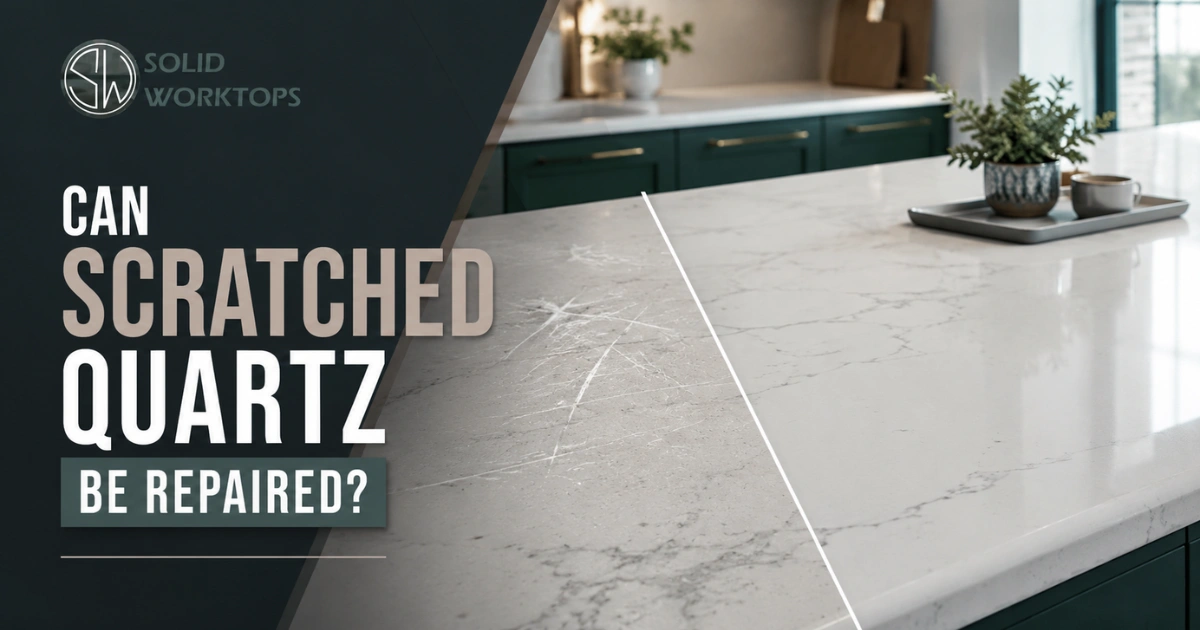
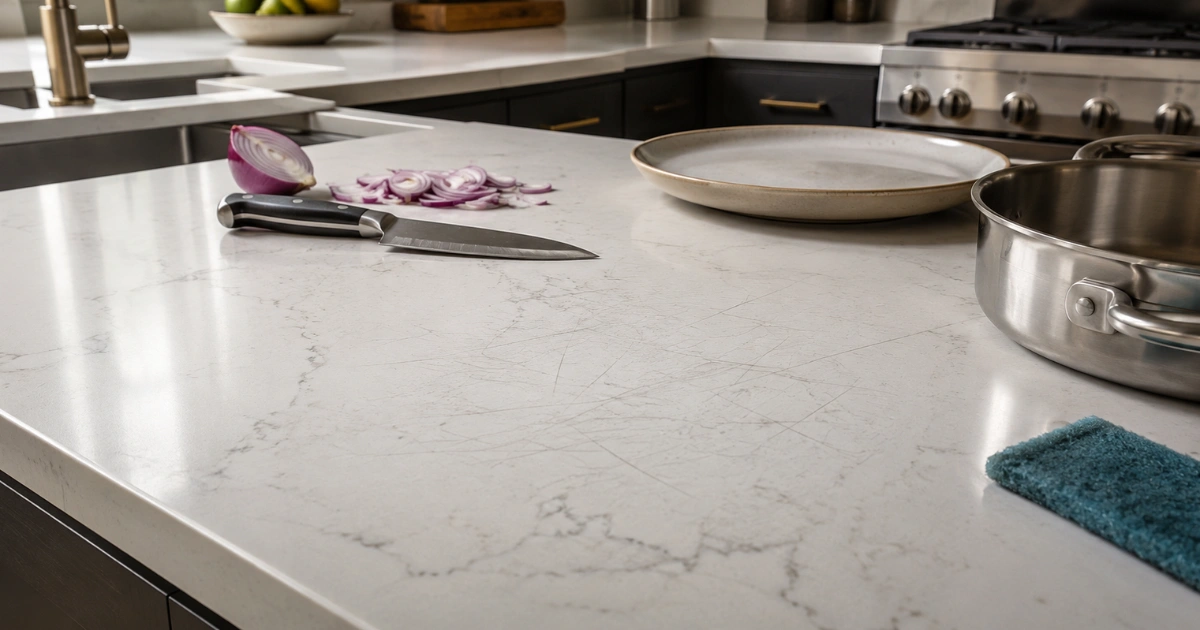
Quartz worktops are popular because they resist scratches better than many other kitchen surfaces. However, they are not completely scratch-proof. Dragging heavy cookware, cutting directly on the surface, or using abrasive cleaning products can leave marks that spoil the appearance of your worktop.

The good news is that many scratches and surface marks can be repaired without replacing the entire worktop. The right solution depends on whether the damage is a genuine scratch, a metal mark, or a deeper chip.

Can Quartz Worktops Really Be Repaired?

Yes, many scratches can be repaired, but not all damage is the same.

Light surface marks, metal transfer, and minor scratches can often be removed or significantly improved by a professional. Deep scratches or chipped edges may require specialist stone repair techniques, while severe damage may mean replacing a section of the worktop.

The earlier you deal with the damage, the better the final result is likely to be.

How Do Quartz Worktops Get Scratched?

Although quartz is one of the hardest kitchen worktop materials, everyday use can still cause damage.

Common causes include:

  • Cutting food directly on the surface instead of using a chopping board.
  • Sliding heavy pots, pans, or kitchen appliances across the worktop.
  • Dropping sharp or heavy objects.
  • Using abrasive cleaning pads or harsh chemicals.
  • Accidentally dragging ceramic plates or stoneware across the surface.

Most scratches happen gradually through everyday kitchen use rather than one major accident.

Is It Really a Scratch?

Many homeowners think their quartz worktop has been scratched when the mark is actually something else.

Common surface marks include:

  • Metal marks left by pots or kitchen utensils.
  • Rubber marks from appliance feet.
  • Hard water stains.
  • Grease build-up.
  • Cleaning product residue.

These marks often sit on the surface and can usually be removed without repairing the quartz itself.

Can You Repair Light Scratches?

Yes. Minor scratches are often the easiest to deal with.

A quartz repair specialist can assess the damage and use specialist techniques to reduce or remove the scratch while protecting the surrounding finish.

Attempting DIY repairs without the correct products can sometimes make the scratch more noticeable.

What About Deep Scratches?

Deep scratches require professional repair.

Depending on the damage, a specialist may:

  • Fill the scratch using a colour-matched resin.
  • Blend the repaired area with the surrounding surface.
  • Polish the repaired section where appropriate.
  • Restore the appearance without replacing the whole worktop.

Not every deep scratch can be made completely invisible, but many repairs produce excellent results.

Can You Polish Scratched Quartz?

Quartz should not be polished in the same way as natural stone such as granite or marble.

Most quartz worktops have a factory-finished surface. Using polishing compounds or mechanical polishers incorrectly can leave dull patches or uneven shine.

If your worktop has lost its finish after a scratch or incorrect cleaning, a professional can recommend the safest restoration method.

Should You Repair Quartz Yourself?

Small surface marks may simply need proper cleaning.

However, avoid using:

  • Sandpaper.
  • Steel wool.
  • Abrasive powders.
  • Diamond polishing pads.
  • Household polishing compounds.
  • Bleach or strong solvents.

These products can permanently damage the surface and may void the manufacturer’s warranty.

If you are unsure, seek professional advice before attempting any repair.

When Should You Call a Professional?

Professional repair is usually the best option if you notice:

  • Deep scratches you can feel with your fingernail.
  • Chipped edges or corners.
  • Cracks.
  • Dull patches caused by incorrect cleaning.
  • Damage near sinks, joints, or cut-outs.

An experienced quartz specialist can determine whether the worktop can be repaired or whether replacement is the better long-term solution.

Can a Scratched Quartz Worktop Be Restored to Look New?

In many cases, yes.

Professional repairs can often restore the appearance of the worktop so that scratches become difficult to notice. The success of the repair depends on:

  • The depth of the scratch.
  • The colour and pattern of the quartz.
  • The location of the damage.
  • How quickly the repair is carried out.

Early repairs usually produce the best results.

How to Prevent Quartz Worktop Scratches

A few simple habits can help keep your worktop looking its best.

  • Always use a chopping board.
  • Lift heavy appliances instead of dragging them.
  • Use trivets and protective mats.
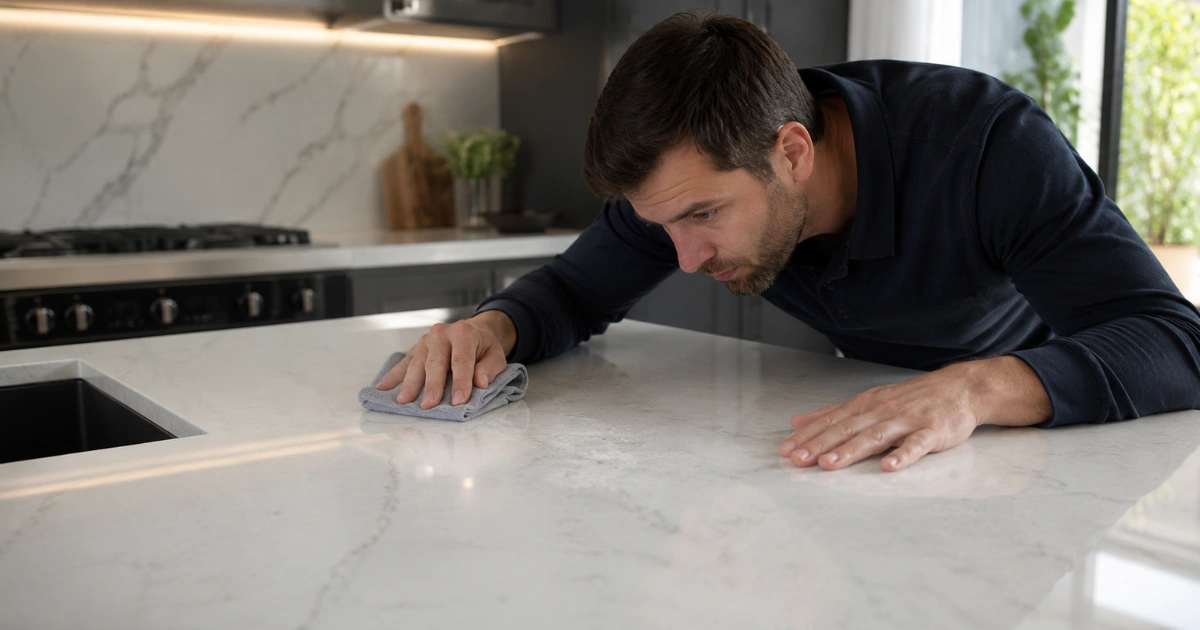
  • Clean with a soft cloth and pH-neutral cleaner.
  • Avoid abrasive cleaning products.
  • Wipe up spills promptly.

Good maintenance helps preserve both the appearance and lifespan of your quartz worktop.

Repair or Replace?

Replacement is rarely the first solution.

Many scratches, chips, and surface marks can be repaired professionally, saving you the cost and disruption of installing a new worktop.

If the damage is extensive or affects the structural integrity of the worktop, replacing the damaged section may be the most practical option.

A professional inspection will help you decide which solution offers the best value.

Frequently Asked Questions

Can all quartz scratches be repaired?

No. Light scratches and surface marks can often be repaired, while very deep damage may require more extensive restoration or replacement.

Can I remove scratches with toothpaste or baking soda?

No. These DIY methods may damage the finish and make the problem worse.

Does quartz scratch easily?

Quartz is highly scratch-resistant but not scratch-proof. Sharp objects and abrasive materials can still damage the surface.

Will a repaired scratch be visible?

A professional repair can often make the damage difficult to notice, although the final result depends on the depth and location of the scratch.

Is repairing quartz cheaper than replacing it?

In most cases, yes. Repairing a localised scratch is usually far more affordable than replacing the entire worktop.

Need Professional Quartz Worktop Repairs?

If your quartz worktop has scratches, chips, or dull areas, professional repair may restore its appearance without the expense of a full replacement. An experienced specialist can assess the damage, recommend the most suitable solution, and help extend the life of your worktop, keeping your kitchen looking its best for years to come.

Top Kitchen Worktop Design Trends for 2026-2027

The latest kitchen worktop trends for 2026–2027 focus on natural quartzite, porcelain, low-silica engineered surfaces, warm earthy colours, matte finishes, and curved designs. Homeowners are increasingly choosing textured materials, expressive stone patterns, and practical surfaces that combine durability with modern style. Slim worktop profiles, statement islands, and matching splashbacks are also shaping contemporary kitchen designs.

Top Kitchen Worktop Trends for 2026–2027

  1. Natural quartzite worktops: Quartzite offers distinctive natural veining, good scratch resistance, and strong heat tolerance for premium kitchens.

  2. Low-silica engineered surfaces: Newer mineral-based materials offer alternatives to traditional high-silica engineered stone, with compositions varying by manufacturer.

  3. Large-format porcelain: Porcelain and sintered stone provide low water absorption, excellent heat resistance, and slim modern profiles.

  4. Warm earthy colours: Cream, sand, mushroom, taupe, and warm greige create inviting kitchens that complement natural timber.

  5. Bold stone veining: Gold, bronze, charcoal, and flowing marble-effect patterns make kitchen islands attractive focal points.

  6. Matte and textured finishes: Honed, brushed, and leathered surfaces create softer appearances with reduced reflections.

  7. Curved kitchen islands: Rounded corners, curved breakfast bars, and softer worktop edges add character to contemporary layouts.

  8. Full-height stone splashbacks: Matching worktops and splashbacks create coordinated designs with fewer grout lines.

  9. Statement edge profiles: Slim 12–20mm surfaces and chunky mitred edges offer contrasting architectural styles.

Popular Kitchen Worktop Materials for 2026–2027

Material Main Benefits Best For
Quartzite Natural veining, good heat and scratch resistance Luxury kitchens
Low-Silica Engineered Stone Alternative engineered compositions and varied designs Modern kitchens
Porcelain Heat-resistant, low water absorption, low maintenance Contemporary kitchens
Quartz Stain-resistant, durable, easy to clean Busy family kitchens
Granite Unique natural patterns and good heat resistance Traditional and premium kitchens
Solid Wood Natural warmth and repairable finish Rustic kitchens and breakfast bars

Trending Kitchen Worktop Colours

  • Cream and Warm White: Create bright, welcoming kitchens without a stark appearance.

  • Taupe and Mushroom: Complement oak cabinetry, neutral walls, and natural textures.

  • Gold and Bronze Veining: Add warmth and distinctive patterns to marble-effect surfaces.

  • Forest Green: Create statement islands and coordinate with earthy kitchen interiors.

  • Terracotta and Warm Brown: Introduce rich natural tones to contemporary designs.

  • Charcoal and Dark Stone: Provide contrast against lighter cabinetry and warm timber finishes.

Matte vs Polished Kitchen Worktops

Finish Appearance Main Consideration
Matte Soft, low-sheen finish May show oils or handling marks
Honed Smooth, understated appearance Cleaning needs vary by material
Leathered Subtle natural texture Textured areas may need careful cleaning
Polished Glossy and reflective Can highlight fingerprints and watermarks

Kitchen Worktop Edge and Layout Trends

  • Slim worktop profiles: Thin porcelain and compact laminate designs suit minimalist interiors.

  • Chunky mitred edges: Built-up edges create the appearance of thick stone on kitchen islands.

  • Rounded corners: Softer edges reduce sharp projections in frequently used areas.

  • Curved island ends: Rounded worktops create smoother transitions around open-plan kitchens.

  • Waterfall edges: Extend the worktop material vertically down an island’s sides.

  • Matching splashbacks: Continue the stone pattern onto walls for a coordinated appearance.

Kitchen Worktop Trends: What’s Changing?

Established Designs Growing 2026–2027 Trends
Cool grey and stark white Warm cream, taupe, and earthy neutrals
Uniform stone patterns Expressive natural veining
Primarily high-gloss finishes Matte, honed, and textured surfaces
Conventional square islands Curved and sculptural islands
Standard edge profiles Slim surfaces and chunky mitred edges
Contrasting tiled splashbacks Matching full-height slab splashbacks
Traditional engineered quartz More low-silica material options

How to Choose the Right Kitchen Worktop Trend

  1. Consider daily kitchen use: Choose stain-resistant, durable materials for frequently used preparation areas.

  2. Match your cabinetry: Pair warm stone finishes with oak, walnut, cream, or muted green cabinets.

  3. Compare maintenance requirements: Quartz and porcelain require little upkeep, while some natural stones need sealing.

  4. Choose suitable thickness: Check slab support requirements before selecting thin or built-up worktop profiles.

  5. Consider kitchen size: Light colours and restrained patterns can help compact kitchens feel more open.

  6. Check fabrication requirements: Curved islands, specialist edges, and large slabs may increase installation costs.

  7. Review material safety: Ask suppliers about crystalline silica content, responsible fabrication, and appropriate workplace dust controls.

Which Kitchen Worktop Trend Is Best for 2026–2027?

Warm neutral quartz and porcelain worktops are practical choices for modern kitchens because they combine attractive designs with easy maintenance. Quartzite is particularly appealing for homeowners who prefer distinctive natural stone patterns, while low-silica engineered surfaces provide additional material options.

For statement designs, curved islands, bold veining, and matching splashbacks create visual interest without changing the entire kitchen layout.

The best kitchen worktop combines modern design, durability, suitable maintenance, and long-term value. Choose a material and finish that complement your kitchen, lifestyle, and renovation budget rather than following trends alone.

Natural Stone Revival

The second trend for 2026 is the natural stone. Natural stones such as marbles, granites, and choirs repeatedly return to the market because of their flavour and extended durability. People are fascinated by its veining and patterns, which reveal the character of most kitchens it is fixed in. This year, worktops are taking the next step, giving dramatic veining prominence and becoming a feature of modern kitchens. It comes naturally, and these exude elegance more so that the heat and scratch-resistant surfaces make it suitable for use.

Sustainable Surfaces

In terms of conceptual approach, sustainability remains to be a significant consideration in kitchen layout. The trend is towards sustainable work surfaces, for example, recycled glass, composite stone, and bamboo. These surfaces satisfy the green homeowners searching for durable and stylish green surfaces. For example, worktops from recycled glass are beautiful and offered in stunning colours and textures. The dramatic effect of bringing together small waste materials is that one can get artificial composites as strong and decorative as natural stones but with less negative environmental impact.

Matte Finishes

The shine is set to disappear from kitchens’ worktops, and in 2026, those who prefer a more minimalist look will be able to enjoy all sorts of matt Effect options. These surfaces have a stylish and modern appearance that is less apparent than on glossy ones, but at the same time, are more elegant. Textured worktops are available in Quartz, Concrete and Solid surfaces – ready with a non-slip surface – and easy to clean.

Bold Colour Choices

Typically, it was only a couple of years ago that kitchen worktops were a very conservative colour; therefore, 2026 is likely to be richer and more intense. Tones of deep green, rich blue, and terracotta are returning to popularity for those who feel like their kitchen could use a bit of colour. These shades are perfect when combined with light and dark cabinetry, making the contrast look warm and introducing character into the kitchen.

Textured Surfaces

We have had flat worktops for years, while a rough worktop will be in demand in 2026. Choices such as honed or leathered finish are evidence of this as they feel pleasing to the touch, and the appearance is phenomenal. These textured surfaces give the product depth and do not show marks or finger smudges, which is perfect for families with children.

Thin Profiles and Sleek Edges

The simplicity of line is evident in today’s kitchen, which also applies to worktops. Integrated plains with slim line edges are very popular in modern kitchens. This style’s design appears very continuous, adding order and space in the room and making kitchens clean. Compact laminate and ultra-thin Quartz give this look beautifully and are also hard-wearing.

Mixing Materials

The best design trend of 2027 is blending the materials in a single kitchen and creatingcreating a harmonious environment. For instance, the kitchen installation may incorporate an opulent marble countertop on what is known as a kitchen island, and other counters may be made from such as wood or Quartz. This not only breaks up the design and adds more differentiation but also makes it easier for homeowners to put their personal touch into the room they are using to create their masterpieces in the kitchen.

Smart Worktops

However, the influence of innovation and technology can be seen creeping into kitchen concepts. Mobile worktops and wireless charging worktop integrated work surfaces are the new products being developed in the market. These high-tech surfaces render the kitchen solution more usable and fit contemporary standards where connectivity is paramount. In addition, some of the high-end worktops also feature heating systems, making food preparation and serving easier.

Conclusion

The kitchen worktop trends for 2026 bring a perfect mix of style, practicality, and sustainability. From natural stones and eco-friendly options to bold colours and high-tech surfaces, there are numerous ways to elevate your kitchen’s design. Whether you prefer a modern minimalist look or a kitchen full of character, the right worktop can be a game-changer in aesthetics and functionality. Choose a trend that resonates with your style and meets the demands of your daily life to make your kitchen the heart of your home.

Når rytmen blir tydelig, trer størrelsen i bakgrunnen

Oppmerksomheten følger tempoet

Et digitalt kasino kan vise fram et stort utvalg, sterke farger og mange valgmuligheter på én gang. Likevel er det ofte ikke omfanget som først fanger blikket. Det er rytmen: hvor raskt skjermbildet beveger seg, hvor lett det er å oppfatte hva som skjer, og hvor rolig eller intens helheten føles. Når tempoet er forståelig, får oppmerksomheten et sted å lande.

Dette handler ikke bare om animasjoner. Små pauser mellom hendelser, tydelige overganger og en jevn lydkulisse påvirker hvordan en opplevelse kjennes. Et rolig uttrykk kan gi rom for nysgjerrighet, mens raske skift kan gjøre inntrykket mer energisk. For voksne som søker underholdning på nettet, kan slike forskjeller være vel så merkbare som antallet spill på en side.

Rytme gjør også at en digital flate virker mer oversiktlig. Når elementer dukker opp i et gjenkjennelig mønster, bruker man mindre oppmerksomhet på å orientere seg og mer på selve underholdningen. Det er en av grunnene til at en gjennomarbeidet opplevelse kan virke større enn den faktisk er: Den gir inntrykk av sammenheng, ikke bare mengde.

Lesbarhet skaper en rolig inngang

Førsteinntrykket formes gjerne av kontraster, tekststørrelse og hvor tydelig informasjonen er plassert. Hvis overskrifter, beskrivelser og valg konkurrerer om oppmerksomheten, blir selv en fargerik side fort slitsom. God lesbarhet gjør det motsatte. Den lar blikket bevege seg naturlig fra ett område til det neste uten at brukeren må lete etter sammenhengen.

Dette er særlig synlig når sider presenterer kampanjer eller ulike former for digital underholdning. En informativ omtale av norske casino free spins uten innskudd kan for eksempel være enklere å forstå når begrepene forklares nøkternt og innholdet er ryddig organisert. Da blir informasjonen en del av helhetsinntrykket, snarere enn et avbrudd fra det.

Lesbarhet handler dessuten om mengden som vises samtidig. Et enkelt symbol kan formidle mer enn en lang tekstblokk, men bare dersom betydningen er tydelig. På samme måte kan en kort beskrivelse være nyttig når den faktisk avklarer hva et område inneholder. Den gode balansen merkes ofte som en følelse av flyt: Man vet hvor man er, uten å måtte tenke særlig over det.

Små detaljer former atmosfæren

Atmosfæren oppstår gjerne gjennom flere beskjedne valg som virker sammen. Fargepaletten setter stemningen, lydene gir skjermen en følelse av bevegelse, og animasjonene skaper forventning om hva som følger. Ingen detalj trenger å dominere. Når uttrykket er samstemt, blir resultatet en egenart som kan kjennes både livlig og behagelig.

  • Farger: Dempede toner kan gi et roligere preg, mens klare kontraster tilfører energi.
  • Lyd: Diskrete lyder kan markere overganger uten å ta over oppmerksomheten.
  • Bevegelse: Korte animasjoner kan gjøre skjermen levende når de ikke konkurrerer med innholdet.
  • Avstand: Luft mellom elementene gjør det enklere å lese og forstå helheten.

Disse valgene påvirker også hvor lenge blikket blir værende på skjermen. En vedvarende strøm av blinkende signaler kan gjøre oppmerksomheten rastløs, mens et mer avstemt uttrykk gir variasjon uten å kreve konstant fokus. Det er ikke nødvendigvis stillhet brukeren ønsker, men en følelse av at hvert inntrykk har en funksjon.

En opplevelse med plass til pauser

Digitale underholdningsflater inviterer ofte til rask veksling mellom ulike inntrykk. Nettopp derfor kan pauser ha betydning. Et roligere øyeblikk mellom animasjoner eller et ryddig område uten for mange signaler gir hjernen anledning til å hente seg inn. Slike pauser svekker ikke nødvendigvis energien; de kan gjøre de livlige delene mer markante.

For voksne brukere er opplevelsen gjerne best når den føles enkel å lese, men ikke ensformig. Variasjon gir karakter, mens en forståelig rytme gjør at variasjonen ikke blir kaotisk. Det er denne kombinasjonen som får en skjerm til å virke gjennomtenkt: Den trekker oppmerksomheten mot det relevante og lar resten være bakgrunn.

Dermed er størrelse en mindre presis målestokk enn den først ser ut til. Mange valg kan gi bredde, men tydelig rytme og lesbarhet avgjør ofte om bredden oppleves som innbydende. Når tempo, lyd, farger og tekst spiller på lag, blir den digitale atmosfæren mer enn pynt. Den blir rammen som gjør underholdningen lett å følge, og som gir brukeren en mer sammenhengende stund på nettet.

Når skjermen finner roen: rytmen bak en behagelig casinoopplevelse

En nettcasinoopplevelse handler ikke bare om hva som vises på skjermen, men også om hvordan inntrykkene kommer til syne. Små bevegelser, pauser og skifter i lys former en rytme som kan få helheten til å virke lett og oversiktlig – eller travel og krevende. For voksne som bruker casino som underholdning, kan denne visuelle takten ha mye å si for om opplevelsen føles innbydende fra første stund.

Det er lett å legge merke til sterke farger og blanke effekter, men de mer tilbakeholdne valgene kan være vel så viktige. En rolig overgang mellom skjermer, tydelige knapper og et gjennomført uttrykk gjør at blikket slipper å lete. Når utformingen har en naturlig flyt, blir det enklere å være til stede i selve underholdningen.

Et førsteinntrykk som ikke maser

De første sekundene setter gjerne tonen. En side med god visuell rytme viser hvor oppmerksomheten bør ligge, uten å fylle hvert hjørne med blink, bevegelser og sterke kontraster. Det betyr ikke at uttrykket må være dempet eller kjedelig. Snarere handler det om å la enkelte elementer få skinne, mens resten gir dem plass.

På tvers av ulike nettcasinoer kan det være interessant å sammenligne hvordan oppsett, fargebruk og bevegelser påvirker helhetsinntrykket. En oversikt som https://bestemobilcasino.com/beste-casino/ kan fungere som et informativt utgangspunkt for å se hvordan slike tjenester presenteres, mens selve opplevelsen ofte avgjøres av detaljene: hvor raskt innholdet blir synlig, hvor lett det er å orientere seg, og om overgangen mellom områdene virker naturlig.

Et behagelig førsteinntrykk oppstår ofte når siden ikke ber om all oppmerksomheten på én gang. Tydelige overskrifter og avgrensede felt gir øyet et sted å hvile. Samtidig gjør en jevn visuell stil at ulike deler oppleves som del av samme helhet, i stedet for en samling løsrevne inntrykk.

Små bevegelser, stor forskjell

Bevegelse er et av de tydeligste virkemidlene i digital underholdning. En kort overgang kan gi følelsen av at noe skjer, mens en mer omfattende animasjon kan gjøre skjermen livlig og teatralsk. Men effekten avhenger av tempoet. Når bevegelser er korte og forutsigbare, kan de bidra til flyt. Når alt beveger seg samtidig, konkurrerer elementene om blikket.

Lyden følger ofte den samme rytmen. Diskrete signaler kan understøtte inntrykket av fremdrift, mens høy lyd eller gjentatte effekter kan gjøre opplevelsen mer intens enn ønsket. Muligheten til å justere lyd og bevegelser handler derfor ikke bare om komfort. Den gir også rom for å tilpasse atmosfæren til egen smak og situasjonen man befinner seg i.

Noen av de mest virkningsfulle detaljene er nesten usynlige når de fungerer godt:

  • Overganger som er raske nok til å bevare flyten, men rolige nok til å være behagelige.
  • Farger som skiller viktige felt fra bakgrunnen uten å gjøre hele skjermen skarp.
  • Bevegelser som peker på én ting om gangen, framfor å trekke blikket i flere retninger.
  • Lyd som støtter stemningen, uten å overdøve den visuelle opplevelsen.

Det finnes ikke én riktig rytme for alle. Noen foretrekker et energisk uttrykk med mye liv, mens andre trives best når skjermen er luftig og rolig. En god utforming gir plass til begge deler ved å være tydelig i grunnformen og la intensiteten komme fra utvalgte innslag.

Oversikt skaper en lettere stemning

Visuell ro handler også om å vite hvor man er. Når menyer, kategorier og informasjonsfelt har faste plasser, blir opplevelsen mindre hakkete. Det er særlig merkbart på mobil, der skjermen er mindre og hvert element derfor får større betydning. En ryddig rekkefølge gjør at innholdet oppleves samlet, selv når man beveger seg mellom ulike deler av tjenesten.

Lesbar tekst og god avstand mellom elementer kan virke som små saker, men de påvirker hvor anstrengende det er å bruke skjermen over tid. Tydelige kontraster gjør informasjon lettere å oppfatte. En konsekvent utforming gir samtidig en følelse av omtanke: tjenesten framstår som gjennomarbeidet fordi delene ser ut til å høre sammen.

Det er her brukervennlighet og atmosfære møtes. En side trenger ikke være overdådig for å føles gjennomført. Ofte gir det mer å bruke noen få visuelle virkemidler på en konsekvent måte enn å fylle skjermen med stadig nye effekter. Når rytmen holder seg stabil, kan selv et fargerikt uttrykk kjennes lett.

En opplevelse med rom for egen smak

Det fine ved nettbasert casino som voksenunderholdning er at uttrykket kan variere mye fra tjeneste til tjeneste. Noen legger vekt på en sceneaktig stemning, andre på enkel oversikt eller et moderne, rent formspråk. Den visuelle rytmen er med på å gi hvert sted sin egen personlighet, nesten som musikken og lyset i et fysisk underholdningsrom.

Det er derfor verdt å legge merke til hvordan skjermen får en til å føle seg, ikke bare hvilke elementer den viser. Virker tempoet behagelig? Er det lett å finne fram? Får øynene pauser mellom de mest fargerike innslagene? Slike observasjoner gjør det enklere å forstå hvorfor noen opplevelser kjennes smidige og tillitvekkende, mens andre virker mer masete.

Når farger, bevegelser, lyd og oversikt spiller på lag, oppstår en letthet som ikke nødvendigvis roper etter oppmerksomhet. Den merkes heller som fraværet av friksjon: skjermen føles forståelig, stemningen holder seg jevn, og underholdningen får stå i sentrum. Det er ofte denne balanserte rytmen som gjør et digitalt casinoopphold behagelig å vende tilbake til.

Jackpots progresivos y premios fijos: cómo entender sus probabilidades y pagos en casinos online que más pagan

Los juegos de casino online pueden ofrecer premios con estructuras distintas. En algunos, el valor principal permanece establecido; en otros, un jackpot progresivo aumenta a medida que se realizan apuestas dentro de una red de juego. Comprender cómo se forman esos pagos y qué representan sus probabilidades ayuda a comparar modalidades con criterios claros, más allá del tamaño anunciado del premio.

Qué distingue a un premio fijo de un jackpot progresivo

Un premio fijo tiene un importe definido por las reglas del juego. Puede consistir en una cantidad determinada o en un múltiplo de la apuesta, y su valor no depende de las partidas jugadas por otros participantes. La tabla de pagos suele indicar qué combinaciones otorgan premios y cuánto corresponde a cada una.

En un jackpot progresivo, una parte de las apuestas elegibles contribuye al fondo acumulado. El contador puede crecer con el tiempo hasta que se cumple la condición establecida para concederlo. Según el diseño, el premio puede estar ligado a una sola máquina o juego, o formar parte de una red compartida. Las reglas también especifican si el jackpot se activa mediante una combinación concreta, una función especial o un mecanismo aleatorio.

Probabilidad, frecuencia y valor esperado

La probabilidad expresa la posibilidad matemática de que ocurra un resultado determinado en una jugada. Si un juego asigna una probabilidad de una entre un millón a un premio, esa cifra describe la frecuencia teórica esperada a gran escala; no fija cuándo sucederá en una sesión particular. En los juegos basados en generadores de números aleatorios, cada resultado se determina de acuerdo con el sistema y las reglas aplicables.

También conviene distinguir la probabilidad de ganar cualquier premio de la probabilidad de obtener el máximo. Un juego puede conceder premios menores con mayor frecuencia y reservar una posibilidad más reducida para el jackpot. El retorno teórico al jugador, o RTP, resume el porcentaje medio de las apuestas que el modelo matemático devuelve en premios a lo largo de muchas jugadas. No predice el resultado individual ni indica por sí solo la frecuencia de un premio específico.

Al consultar comparativas y explicaciones sobre casinos online que más pagan, resulta útil fijarse en las reglas de pago, el tipo de jackpot y la información sobre probabilidades. Estos elementos permiten interpretar las cifras en su contexto y diferenciar un premio máximo de la distribución general de pagos de un juego.

Cómo leer las tablas de pagos

Una tabla de pagos relaciona combinaciones o eventos con las cantidades correspondientes. En premios fijos, suele mostrar importes o multiplicadores vinculados a cada resultado. En jackpots progresivos, puede indicar el valor inicial, la contribución al fondo y las condiciones para optar al acumulado. Si el premio depende del tamaño de la apuesta, las reglas precisan qué nivel de participación habilita cada posibilidad.

La volatilidad es otra característica descriptiva: señala cómo se distribuyen los premios en el tiempo. Una estructura de baja volatilidad suele repartir pagos de menor tamaño con más frecuencia, mientras que una de mayor volatilidad concentra una parte mayor del retorno en premios menos frecuentes y de mayor importe. Esta medida complementa al RTP, pero no lo sustituye.

Una comparación basada en las reglas

Para comparar juegos, es práctico observar conjuntamente el RTP publicado, la tabla de pagos, la probabilidad del premio principal y las condiciones de participación. En los progresivos, el contador visible informa del tamaño actual del fondo, mientras que la descripción del juego explica cómo evoluciona y qué evento lo concede. En los premios fijos, el importe definido facilita conocer de antemano la estructura de cada pago.

Las cifras matemáticas describen modelos y resultados posibles; su utilidad depende de leerlas junto con las reglas completas. Así, la comparación entre jackpots progresivos y premios fijos se apoya en criterios concretos: cómo se acumula el premio, qué resultados lo activan y qué proporción de los pagos corresponde a cada categoría.

Når nettcasinoet slutter å rope: rytme, rom og ro i en digital spillekveld

Et nettcasino merkes før man har rukket å bestemme seg for hva man vil se. Noen sider møter blikket med blinkende felt, tilbud og et tettpakket utvalg. Andre lar innholdet tre fram i et roligere tempo. Forskjellen handler ikke bare om utseende. Den påvirker hvor lett det er å orientere seg, hvor lenge opplevelsen føles behagelig, og om nettstedet virker som et sted man gjerne vender tilbake til.

For voksne som bruker nettcasino som underholdning, er nettlesingen en del av selve kvelden. Det kan være et kort avbrekk mellom andre gjøremål eller en lengre stund med musikk, dempet lys og en stor skjerm. I begge tilfeller betyr det noe om siden føles samlet, eller om hvert blikk straks trekkes i en ny retning.

Førsteinntrykket setter tempoet

En ryddig startside gir en følelse av oversikt uten å gjøre alt likt. Tydelige kategorier, lesbare overskrifter og avstand mellom innholdsfeltene skaper små pauser for øyet. Når menyen er forståelig og viktige valg ligger der man forventer å finne dem, slipper man å bruke oppmerksomheten på å lete. Da kan man heller legge merke til stemningen og utvalget.

Det betyr ikke at et moderne nettsted må være nøkternt eller fargeløst. Grafikk, lyd og bevegelige elementer kan gi siden personlighet, så lenge de ikke kjemper om oppmerksomheten samtidig. En varm fargeflate eller en diskret animasjon kan gjøre inntrykket levende; en overlesset startside kan derimot få hele tilbudet til å virke hastig. God utforming handler ofte om å vite når man skal holde igjen.

Omtaler av betalingsløsninger kan også gi et avgrenset innblikk i hvordan slike tjenester presenteres, slik denne referansen til https://beste-kryptocasinoer.com/revolut-casino/ viser, men betalingsnavnet alene sier lite om hvor behagelig nettstedet er å utforske. Det er helheten mellom struktur, språk og visuell ro som former førsteinntrykket.

En meny som lar innholdet puste

Når man beveger seg videre fra startsiden, blir kvaliteten på organiseringen tydeligere. Kategorier bør kjennes naturlige, og søkefeltet bør være lett å oppdage uten å ta over hele skjermen. Like viktig er det at hvert valg gir en forståelig forventning om hva som kommer etterpå. Uklare navn og gjentatte menyer skaper friksjon, mens en enkel struktur lar besøket flyte.

Små detaljer gjør stor forskjell i denne overgangen. Et tydelig skille mellom nytt innhold, populære valg og personlige favoritter kan gi utvalget en lesbar orden. Det gir også siden en følelse av kontinuitet: Man skjønner hvor man er, selv når innholdet skifter. En ryddig meny behøver ikke være usynlig; den bør bare være til hjelp uten å bli hovedattraksjonen.

  • Lesbare kategorier gjør utvalget lettere å forstå ved første øyekast.
  • Jevne mellomrom mellom feltene gir blikket plass til å hvile.
  • Gjenkjennelige symboler og ord gjør det enklere å finne tilbake til kjente deler av siden.

På en liten skjerm blir dette særlig merkbart. Elementer som fungerer godt på en stor dataskjerm, kan fort kjennes klemt sammen på mobilen. Når knapper er passe store, tekstlinjene korte nok og menyen enkel å åpne og lukke, føles besøket mindre som en kamp med skjermen. Det er en praktisk komfort, men også en del av atmosfæren.

Fra funksjon til kveldens stemning

Etter hvert legger man merke til andre ting enn menyen. Lydbildet, illustrasjonene og overgangen mellom ulike deler av nettstedet setter tonen. Noen foretrekker et lyst og luftig uttrykk, andre liker en mørkere flate med hotelloungefølelse. Det avgjørende er ikke hvilken stil som velges, men om detaljene passer sammen og gir inntrykk av en gjennomtenkt helhet.

Tempoet påvirkes også av hvor raskt innholdet dukker opp, og om siden stadig avbrytes av nye meldinger. Når overgangene er smidige og informasjonen presenteres uten unødvendig støy, får opplevelsen en jevnere puls. Det er lett å undervurdere hvor mye dette betyr. En liten forsinkelse eller et felt som stadig flytter på seg kan gjøre en ellers hyggelig kveld mer anstrengende enn den trenger å være.

God komfort handler likevel ikke om å fjerne all energi. Et nettcasino er underholdning, og en viss glans hører med. Men det er forskjell på liv og uro. Når grafikken får støtte innholdet, og lyden ikke overtar rommet, blir det lettere å velge sin egen stemning. Siden føles mindre som en scene som roper etter applaus, og mer som et sted man kan oppholde seg i sitt eget tempo.