
Table of Contents
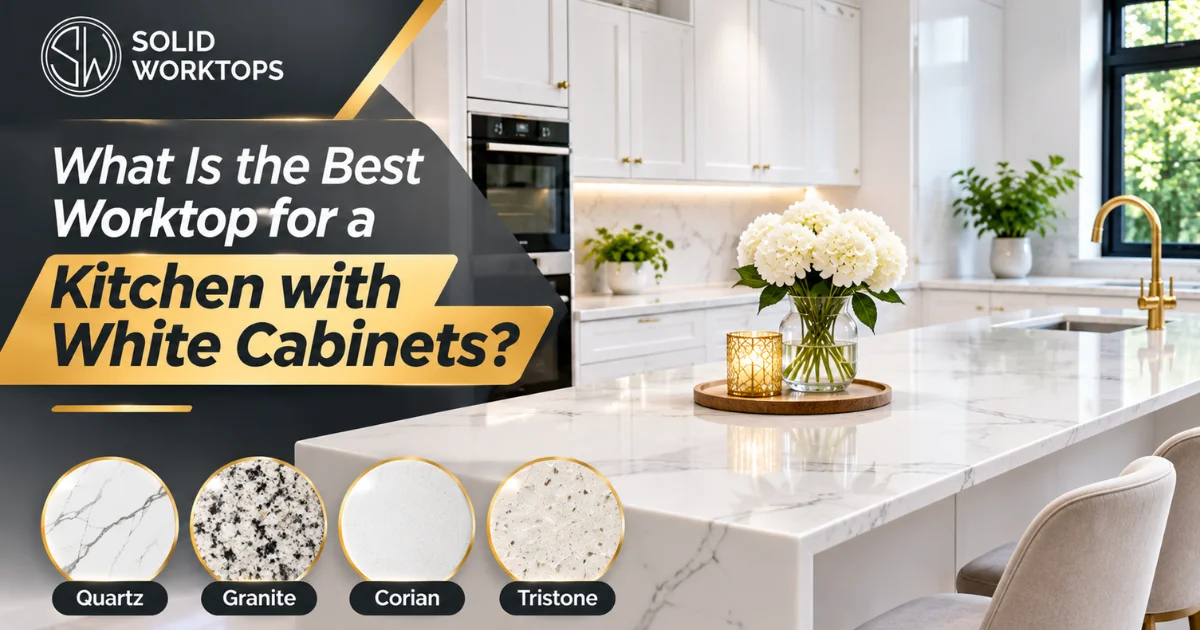
ToggleThe best kitchen worktop materials are quartz, granite, ceramic, solid wood, and solid surface, each offering different benefits for durability, design, and maintenance. Quartz is ideal for busy family kitchens, granite provides natural beauty and excellent heat resistance, while ceramic offers strong heat and stain resistance. Solid wood suits traditional interiors, and solid surface worktops are ideal for seamless designs and integrated sinks.
Best Kitchen Worktop Materials Compared
| Material | Main Benefits | Limitations | Best For |
|---|---|---|---|
| Quartz | Durable, non-porous, stain-resistant | Sensitive to excessive heat | Busy family kitchens |
| Granite | Unique natural patterns, strong heat resistance | Some varieties require sealing | Luxury and traditional kitchens |
| Ceramic / Porcelain | Excellent heat, stain, and scratch resistance | Edges can chip under impact | Modern kitchens |
| Solid Wood | Natural warmth, repairable surface | Requires regular maintenance | Rustic and country kitchens |
| Solid Surface | Nearly seamless joints, integrated sinks, repairable | Scratches more easily than stone | Contemporary and bespoke kitchens |
Top 5 Kitchen Worktop Materials
1. Quartz Worktops
-
Durability: Offers strong resistance to everyday scratches, stains, and general kitchen wear.
-
Maintenance: Non-porous construction requires no sealing and is easy to clean.
-
Appearance: Available in marble-effect patterns, solid colours, and contemporary finishes.
-
Limitations: Hot pans and excessive heat can damage resin binders.
-
Best for: Busy households seeking low-maintenance kitchen worktops.
-
Durability: Natural stone provides excellent scratch resistance and long-term performance.
-
Heat resistance: Tolerates high temperatures, although protective trivets are recommended.
-
Appearance: Each slab features distinctive mineral patterns and natural colour variations.
-
Maintenance: Some granite varieties require sealing to reduce moisture absorption.
-
Best for: Traditional kitchens and homeowners who prefer natural stone.
3. Ceramic and Porcelain Worktops
-
Durability: Offer excellent resistance to heat, stains, and everyday surface wear.
-
Water resistance: Low water absorption makes them practical for kitchen preparation areas.
-
Appearance: Available in slim profiles, natural stone effects, and modern finishes.
-
Limitations: Exposed edges can chip under heavy impacts and require careful fabrication.
-
Best for: Minimalist kitchens and high-use cooking spaces.
4. Solid Wood Worktops
-
Appearance: Oak, walnut, and other hardwoods provide warmth and natural texture.
-
Repairability: Minor scratches and surface damage can often be sanded and refinished.
-
Design: Complements Shaker cabinets, farmhouse kitchens, and traditional interiors.
-
Maintenance: Requires regular protection against moisture, stains, and heat.
-
Best for: Rustic kitchens, breakfast bars, and traditional designs.
5. Solid Surface Worktops
-
Seamless appearance: Colour-matched adhesives create smooth, nearly invisible joints.
-
Design flexibility: Suitable materials can be thermoformed into curves and bespoke shapes.
-
Integrated sinks: Matching basins and coved splashbacks reduce exposed joints.
-
Repairability: Minor scratches and marks can often be removed through refinishing.
-
Limitations: More vulnerable to scratches and excessive heat than quartz or granite.
-
Best for: Contemporary kitchens and customised layouts.
Kitchen Worktop Durability and Maintenance Comparison
| Material | Heat Resistance | Stain Resistance | Maintenance |
|---|---|---|---|
| Quartz | Moderate | Excellent | Very low |
| Granite | High | Varies by stone and sealing | Low to moderate |
| Ceramic / Porcelain | Very high | Excellent | Very low |
| Solid Wood | Low | Depends on protective finish | High |
| Solid Surface | Low to moderate | High | Low |
How to Choose the Right Kitchen Worktop Material
-
Consider your cooking habits: Choose heat-resistant materials for frequently used cooking areas.
-
Compare durability: Quartz, granite, and porcelain offer strong resistance to everyday wear.
-
Check maintenance requirements: Quartz and porcelain need little upkeep, while timber requires regular protection.
-
Match your kitchen style: Select colours and textures that complement your cabinetry, flooring, and splashbacks.
-
Set your budget: Compare material prices alongside templating, fabrication, delivery, and installation.
-
Review design requirements: Consider worktop thickness, sink cut-outs, edge profiles, and bespoke features.
Which Kitchen Worktop Material Is Best?
-
Best for busy families: Quartz offers excellent stain resistance, durability, and easy cleaning.
-
Best for natural stone appearance: Granite provides unique patterns and strong heat resistance.
-
Best for modern kitchens: Ceramic and porcelain offer sleek profiles and low-maintenance surfaces.
-
Best for traditional kitchens: Solid wood creates a warm, natural appearance.
-
Best for seamless designs: Solid surface allows discreet joints, integrated sinks, and curved worktops.
-
Best for heat resistance: Ceramic, porcelain, and granite are strong choices.
What Should You Check Before Buying Kitchen Worktops?
-
Worktop measurements: Confirm length, depth, thickness, and required sink or appliance openings.
-
Installation requirements: Check whether specialist templating, fabrication, and professional fitting are needed.
-
Surface finish: Compare polished, matte, honed, and textured options.
-
Maintenance instructions: Review cleaning products, sealing requirements, and repair options.
-
Total installation cost: Include materials, delivery, cut-outs, edge profiles, and labour.
-
Product warranties: Confirm manufacturer recommendations and installation conditions.
Which Kitchen Worktop Offers the Best Overall Value?
Quartz offers an excellent balance of durability, stain resistance, and low maintenance for most busy kitchens. Granite is ideal for homeowners who value natural stone, while porcelain provides strong heat resistance and contemporary styling.
Solid wood brings warmth to traditional interiors, and solid surface worktops provide flexible designs with excellent repairability.
The best kitchen worktop depends on your cooking habits, preferred appearance, maintenance expectations, and renovation budget. Compare materials, physical samples, and complete installation quotations before making your final choice.
Granite Worktops
Granite is one of the most famous natural stones due to its strength and appearance. All of the granite slabs are different. Therefore, your worktop will come with its own design. This extremely hard material makes it scratch-resistant and also made to handle high temperatures. Granite is particularly suitable for people who like spending time in the kitchen because it is quite heat-resistant. The only issue with granite is that it has to be sealed normally, as it can sometimes absorb on its surface.
Benefits of Granite:
- Durable and scratch-resistant
- Withstands high heat
- Unique patterns in every slab
Quartz Worktops
Quartz worktops are not natural stones but polymerised resin composites within a quartz framework. This makes them very hard and water resistant, so you do not have to apply sealant. Quartz comes in several colours, and while it can be granular like granite, overall, quartz is versatile, and you can find a perfect design for your kitchen. Unlike others, it is easy to maintain because it does not stain, scratch or collect bacteria; it is ideal for a family or multiple occupants.
Benefits of Quartz:
- Non-porous and low maintenance
- Stain and scratch-resistant
- Wide variety of colours and patterns
Marble Worktops
Marble has the usual elegant look that most individuals like to have. Natural veining can be incorporated easily into the kitchen design, and soft colours can bring beauty to any kitchen. However, marble is not as strong as granite or quartz countertops; it is not so hard to attract a scratch and has poor resistance to stain. For this reason, it is recommended most effectively in the kitchen with gentle traffic or those who would not mind taking that little extra into account regarding the proper cleaning procedure.
Benefits of Marble:
- Timeless, elegant look
- Unique veining in each piece
- Cool surface ideal for baking
Solid Wood Worktops
It also results in worktops of solid wood that are warm and natural to incorporate in the kitchen. It serves a perfect purpose for conventional and contemporary home designs and imbues any room with character. Others include oak, walnut, maple, and even hickory. Despite its weaknesses like roughness and susceptibility to deep scratches and heat, you can sand most wooden furniture and recover it. It must be oiled often to maintain good condition and avoid water damage.
Benefits of Solid Wood:
- Adds warmth and character
- It can be sanded and refinished
- Works well in both classic and modern kitchens
Laminate Worktops
Laminate worktops are cheaper and available in different colours and designs; some resemble stone or wooden worktops. Laminate is produced by joining several plastic sheets to particleboard; it is portable and easy to put up. It is stain and water-resistant but tends to be scratched or burned. Laminate is a sensible decision if one needs a fancy worktop but would only be ready to spend a little.
Benefits of Laminate:
- Cost-effective
- Wide range of styles
- Resistant to stains and moisture
Stainless Steel Worktops
Due to its durability and cleanliness, professional kitchens employ stainless steel. Everywhere, it appears sleek and sophisticated and resists heat and stains. Stainless steel worktops are easy to clean for serious cooks. Users appreciate how they wear out and scratch and dent.
Benefits of Stainless Steel:
- Heat-resistant and hygienic
- Easy to clean
- Modern, industrial look
Choosing the Right Kitchen Worktop
Each worktop material has advantages; the best worktop depends on the client’s preferences, lifestyle, and pocket. Marble is a luxury material and is appropriate for low-traffic areas; granite and quartz are better for active kitchen zones. More costs are incurred on stainless steel than solid woods and laminates, which are easier to work with.
Use the menu or links below to help determine what is best for your kitchen at Solid Worktops. We offer a choice of high-quality work surfaces to help professionals choose the best solution for their rooms.