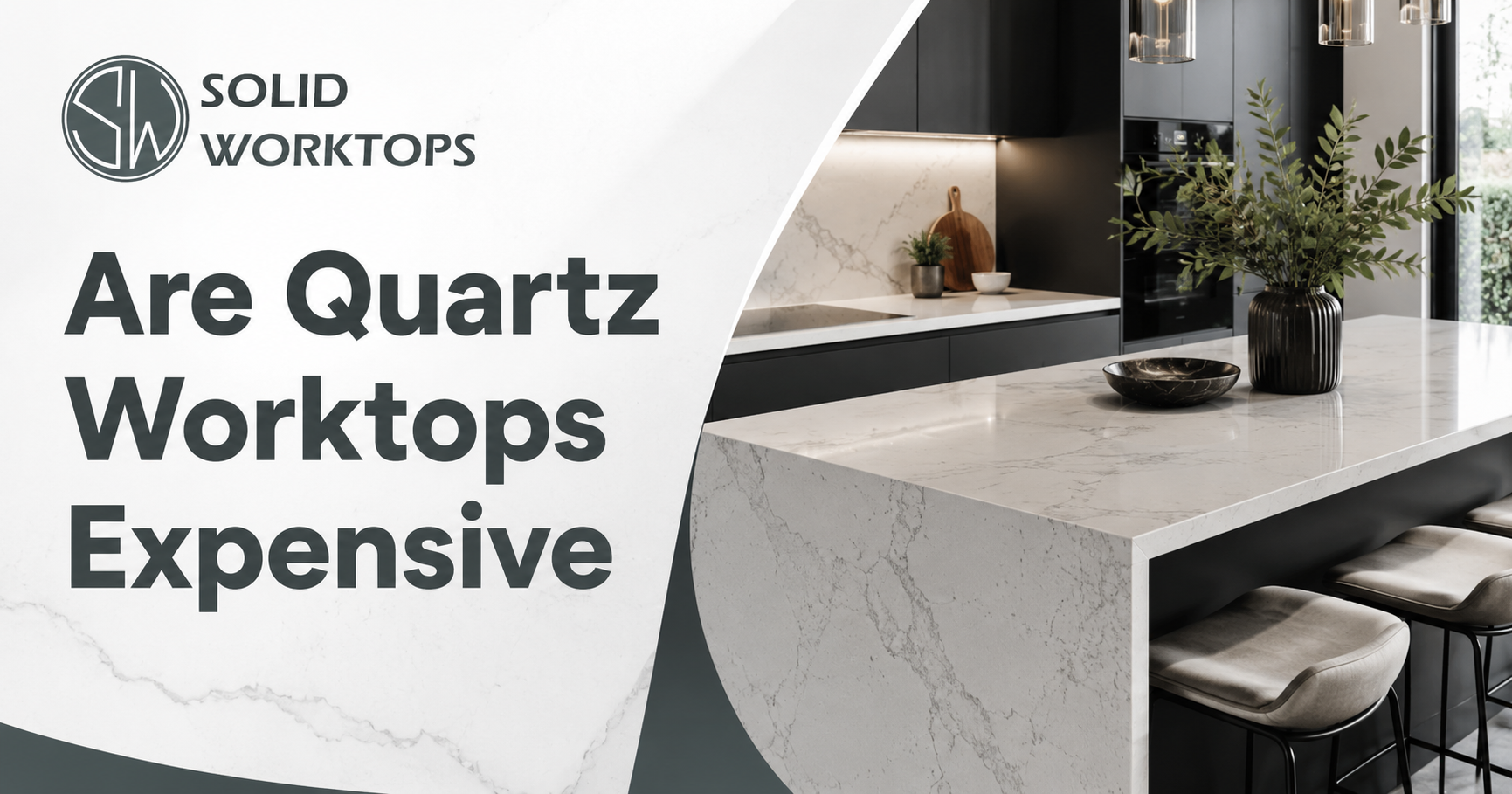
Are Quartz Worktops Expensive

Are Quartz Worktops Expensive

Yes, quartz worktops are a mid-to-high-priced option in the UK, but they offer a good balance between luxury, durability and value. They cost more than budget-friendly materials such as laminate, but they can be more affordable than premium natural stones such as high-end marble and some types of quartzite.

For many UK homeowners, quartz sits in the middle-to-premium part of the worktop market. You can choose a stylish quartz surface without paying the highest prices associated with luxury natural stone.

The final price depends on the quartz range, thickness, kitchen size, design, cut-outs, edging and installation requirements.

How Much Do Quartz Worktops Cost in the UK?
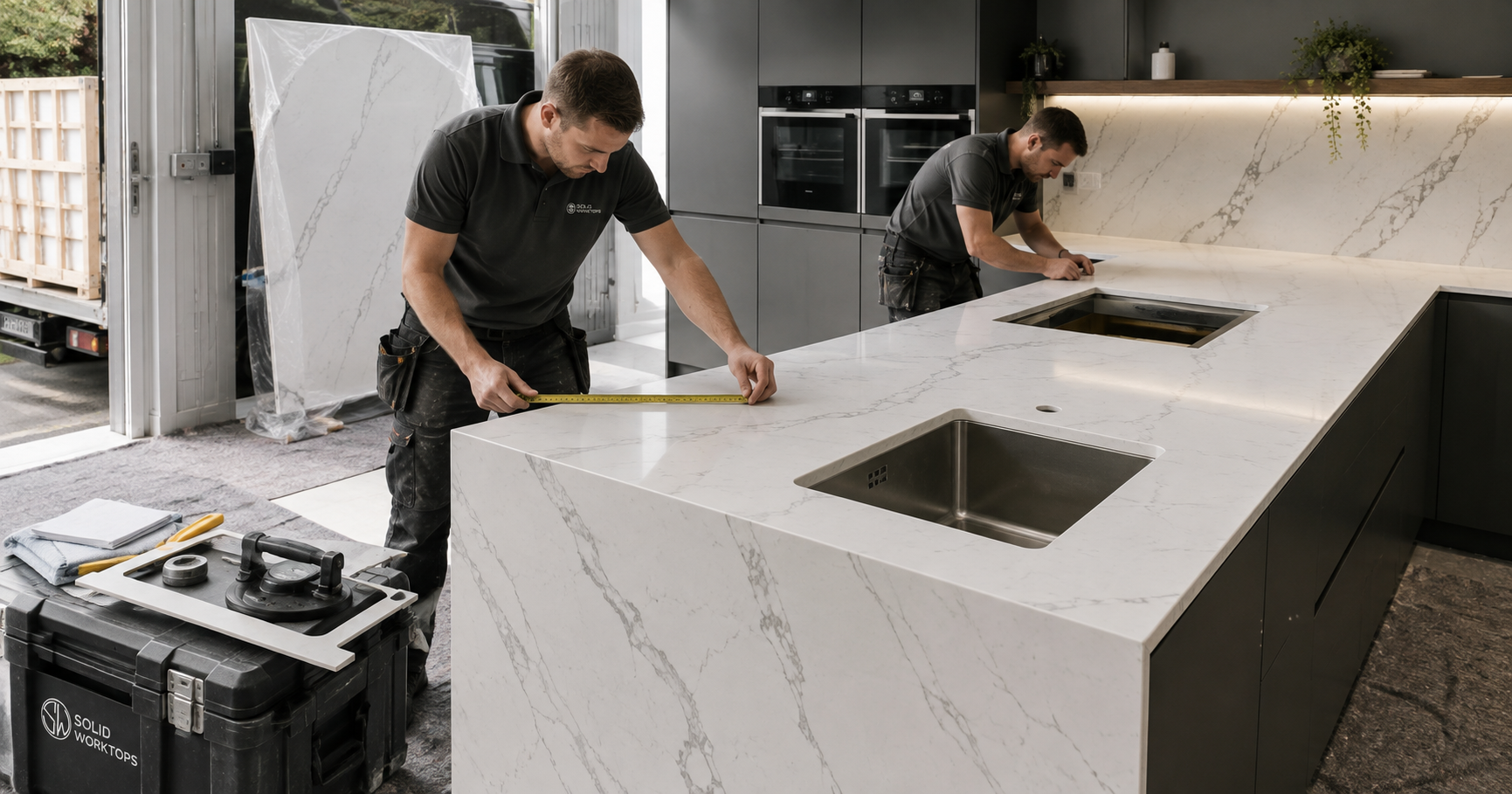
Quartz worktops can vary significantly in price because suppliers offer different grades, brands, colours and finishes.

As a general guide, a fully installed quartz worktop can cost around £200–£550 per square metre, although some projects may fall outside this range.

Your total quotation can include more than the worktop material. You may also pay for:

  • Measuring and templating
  • Cutting and fabrication
  • Sink cut-outs
  • Hob cut-outs
  • Tap holes
  • Edge profiles
  • Upstands or splashbacks
  • Waterfall edges
  • Delivery
  • Installation

This means you should always compare the complete installed price, rather than looking only at the cost per square metre.

Where Does Quartz Sit Compared with Other Worktop Materials?

If you are comparing worktop materials for a UK kitchen, quartz is not the cheapest choice, but it is also not normally at the very top of the price range.

Worktop material Typical position in the market Best for
Laminate £ Budget Affordable kitchen renovations
Timber/Wood ££ Budget to mid-range Natural, traditional appearance
Solid surface ££ Mid-range Seamless contemporary designs
Quartz £££ Mid-to-high range Premium look and everyday practicality
Granite £££ Mid-to-high range Natural stone appearance
Premium quartzite ££££ High-end Luxury natural stone kitchens
Premium marble ££££ High-end Luxury and statement kitchens
Premium sintered stone ££££ High-end High-performance premium kitchens

Prices can vary considerably within each category, so treat this as a guide rather than a fixed price list.

Is Quartz More Affordable Than Marble?

Often, yes, particularly when you compare standard quartz with premium marble.

Marble has a naturally luxurious appearance, but premium slabs can command high prices. You may also need to consider the maintenance requirements associated with natural marble.

Quartz can give you a similar sophisticated appearance without necessarily reaching the same price level as premium marble.

Modern quartz designs can reproduce the appearance of marble with veining and detailed patterns, giving you a luxury look while keeping your options open across a wider range of budgets.

If you want the appearance of marble but do not want to pay for a premium natural marble slab, marble-effect quartz can offer an attractive alternative.

Is Quartz Cheaper Than Quartzite?

Standard quartz is often more affordable than premium quartzite.

Although the names sound similar, quartz and quartzite are different materials.

Quartz worktops are engineered surfaces made using quartz minerals and other materials, while quartzite is a natural stone that forms naturally within the earth.

Premium quartzite can have a high price because of its natural characteristics, rarity, slab selection and fabrication requirements.

If you want a premium stone appearance without moving into the highest price brackets, quartz can therefore provide a more accessible option.

Is Quartz More Expensive Than Granite?

Not necessarily.

Quartz and granite can occupy a similar part of the UK worktop market. The price depends on the specific quartz or granite you choose.

A basic granite may cost less than a premium quartz, while an expensive granite can cost more than a standard quartz range.

You should therefore compare the exact products rather than assuming that one material will always cost more.

Is Quartz More Expensive Than Laminate?

Yes, in most cases.

Laminate remains one of the most affordable choices for kitchen worktops in the UK.

If your main priority is keeping your initial kitchen budget as low as possible, laminate can make sense. However, quartz offers a more premium appearance and can give your kitchen a more substantial, high-end finish.

This is why many homeowners see quartz as a step up from laminate rather than a direct budget alternative.

Why Does Quartz Cost More Than Budget Worktops?

Quartz requires more advanced manufacturing and fabrication than many budget worktop materials.

The price can increase further when you choose premium features such as:

Premium Designs

Simple colours can be more affordable, while realistic marble patterns, dramatic veining and luxury finishes can increase the price.

Thicker Worktops

A thicker slab uses more material and can increase your overall cost.

Complex Cut-Outs

A sink, hob or other opening needs accurate fabrication. The more complicated the worktop design, the more fabrication time it can require.

Waterfall Edges

A waterfall edge creates a continuous worktop appearance down the side of a kitchen island. It looks impressive, but it requires additional material and fabrication.

Custom Edging

Detailed edge profiles can also increase the final price compared with a simple edge.

Does a More Expensive Quartz Worktop Always Mean Better Quality?

No.

A higher price does not automatically mean that a quartz worktop will be the best choice for your kitchen.

You should consider the quality of the product, manufacturer, finish, thickness, design, warranty and installation service.

You should also think about how the worktop will look alongside your kitchen cabinets and flooring. Sometimes, a mid-range quartz with a simple design can look just as impressive as a more expensive option.

How Can You Make a Quartz Worktop More Affordable?

You do not have to choose the most expensive quartz range to achieve a premium kitchen.

Consider these options:

Choose a simpler design: Solid or lightly patterned quartz can cost less than highly detailed marble-effect designs.

Compare different ranges: Ask your supplier about alternative colours and finishes within different price bands.

Plan your layout carefully: A straightforward worktop layout can reduce fabrication costs.

Avoid unnecessary features: Additional cut-outs, complex edging and waterfall ends can increase the final quotation.

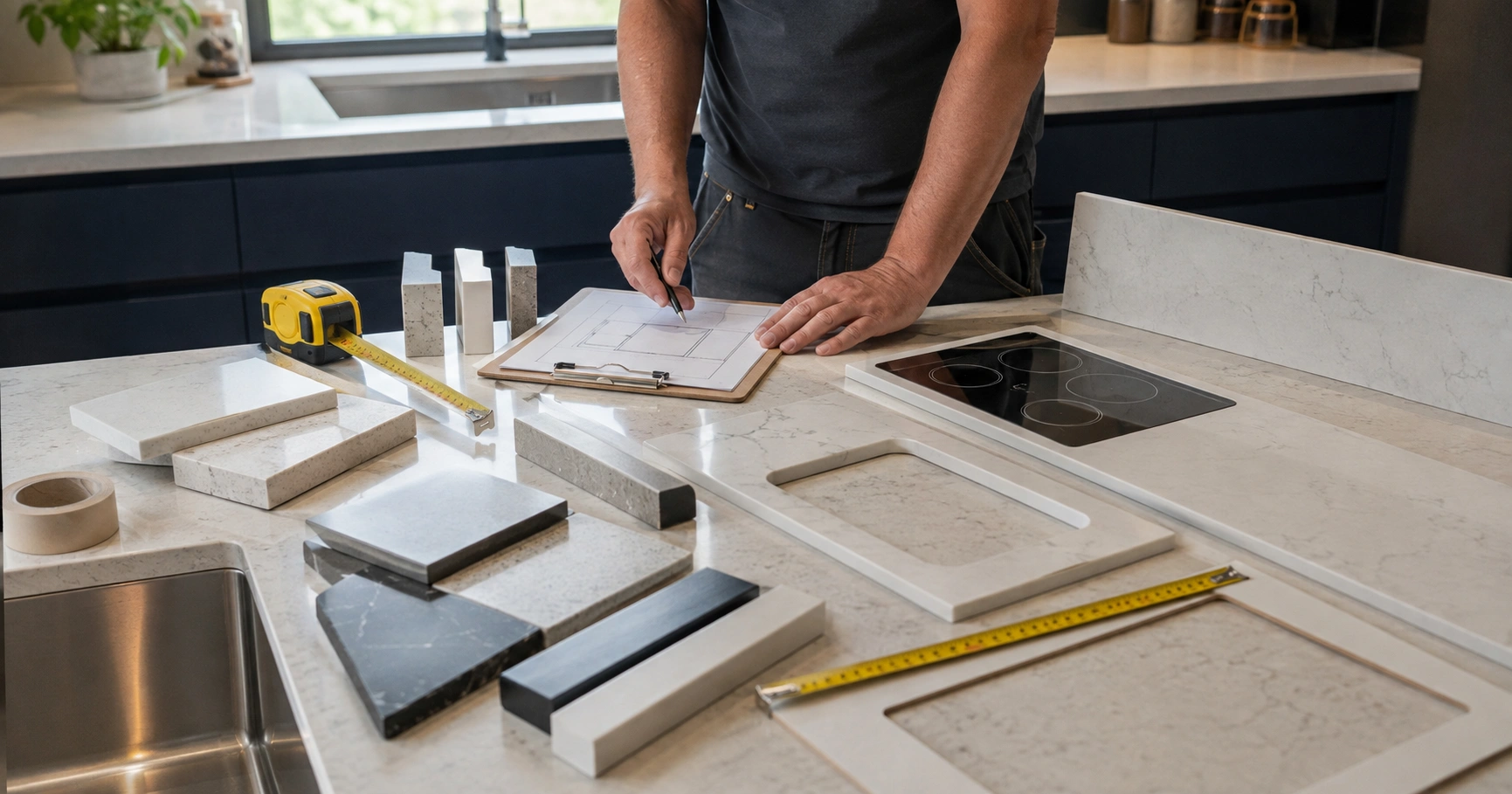
Compare the installed price: Ask suppliers for a complete quotation that includes templating, fabrication and installation.

This approach lets you control your budget without automatically choosing a lower-quality worktop.

Is Quartz a Good Investment for a UK Kitchen?
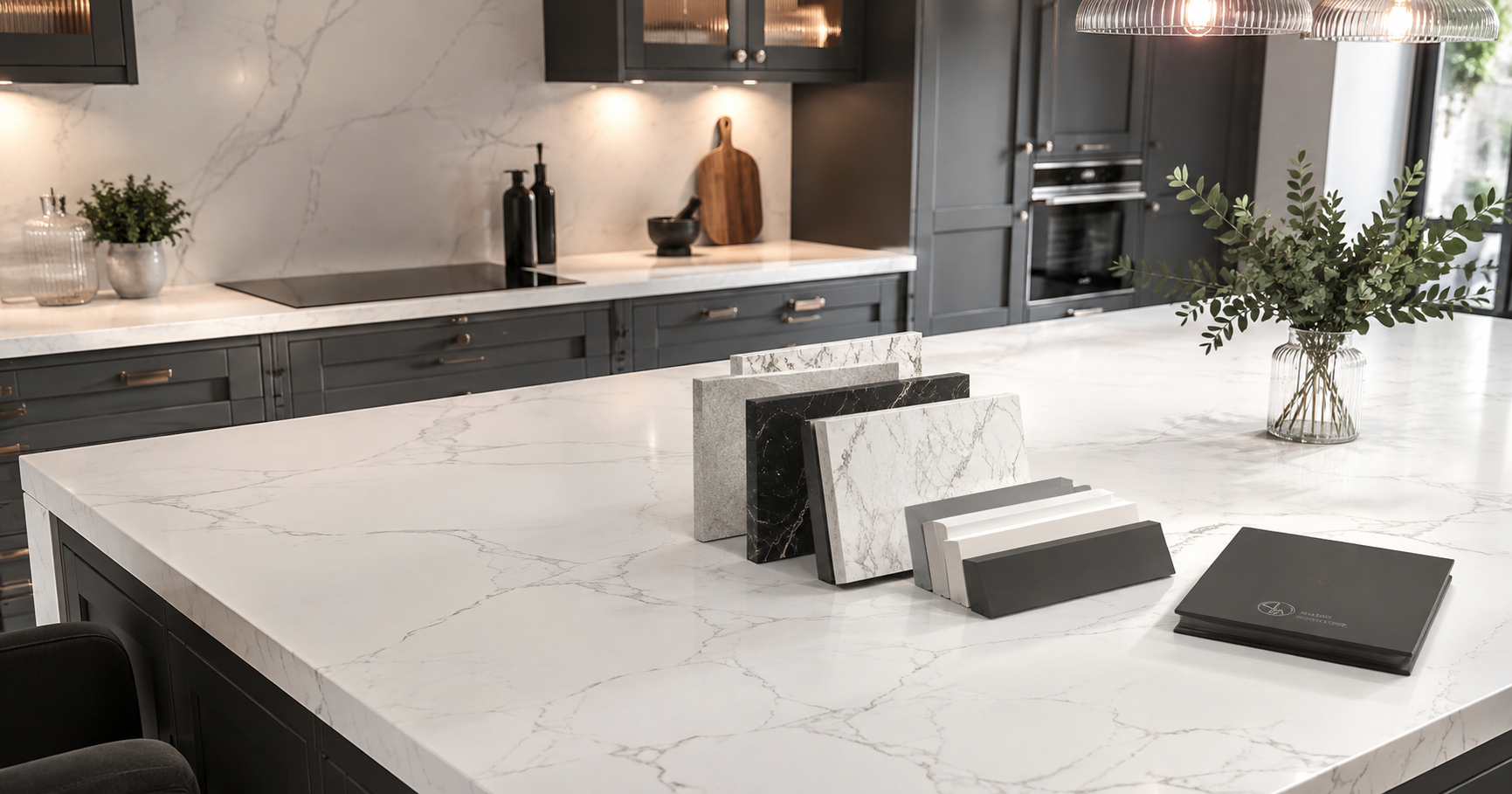
For homeowners who want a premium kitchen without choosing one of the most expensive materials available, quartz can offer an excellent middle ground.

You get a wide choice of colours and patterns, including designs inspired by natural marble and stone. You can also choose different thicknesses and edge styles to create the appearance you want.

The key is to select a quartz range that matches your budget rather than assuming that every quartz worktop costs the same.

Quartz Worktops: Pros and Cons

Pros

  • Premium appearance
  • Wide choice of colours and patterns
  • Marble-effect options are available
  • More affordable than some luxury natural stones
  • Suitable for modern and traditional kitchens
  • Available in different thicknesses and finishes
  • Can provide a high-end appearance without choosing the most expensive stone

Cons

  • More expensive than laminate
  • Premium designs can become costly
  • Complex fabrication can increase the final price
  • Installation adds to the overall cost
  • Some luxury quartz ranges can approach or exceed the price of other premium materials

Quartz Worktop FAQs

Are quartz worktops expensive in the UK?

Quartz worktops are generally considered a mid-to-high-range kitchen worktop option in the UK. They cost more than budget materials such as laminate but can cost less than premium marble, quartzite and other luxury surfaces.

What is the average price of a quartz worktop in the UK?

A fully installed quartz worktop can commonly fall within the region of £200–£550 per square metre, although actual prices vary by supplier, product, kitchen size, fabrication and installation.

Is quartz cheaper than granite?

Sometimes. Quartz and granite can have similar prices, but the exact cost depends on the particular products. Standard granite may be cheaper than premium quartz, while luxury granite can cost more than standard quartz.

Is quartz cheaper than marble?

Standard quartz is often cheaper than premium marble. If you want a marble appearance without paying for an expensive natural marble slab, marble-effect quartz can be worth considering.

Is quartz cheaper than quartzite?

Premium quartzite is often more expensive than standard quartz. Quartz can therefore provide a more affordable way to achieve a premium stone appearance.

What is the cheapest alternative to quartz worktops?

Laminate is usually one of the most affordable alternatives. Timber and some solid-surface options can also provide alternatives at different price points.

Can I get cheap quartz worktops?

Yes. Different quartz ranges have different prices. Choosing a simpler colour, standard thickness and straightforward layout can help you find a more affordable quartz option.

What makes quartz worktops expensive?

The quartz itself is only one part of the cost. Thickness, colour, pattern, fabrication, sink and hob cut-outs, edge profiles, waterfall ends, templating and installation can all affect your final quotation.

Are quartz worktops worth the money?

For many homeowners, yes. Quartz can give you a premium appearance while remaining more affordable than some high-end natural stones. Whether it represents good value for you depends on your budget, kitchen design and priorities.

Choose an Affordable Quartz Worktop with Solid Worktops

If you want the premium appearance of stone without moving straight into the highest-priced worktop materials, quartz is worth considering.

At Solid Worktops, we offer quartz worktops in a range of styles and designs to suit different kitchen projects and budgets. Whether you prefer a clean, modern colour or a marble-inspired finish, you can explore options that give your kitchen a premium look without automatically choosing the most expensive material available.

When comparing your options, look beyond the material price. Ask for a complete quotation covering the worktop, templating, fabrication, cut-outs and installation. This gives you a much clearer idea of what you will actually pay for your finished kitchen.

Solid Worktops can help you find a quartz worktop that matches your style, requirements and budget.
what is a quartz worktops

What Is a Quartz Worktop

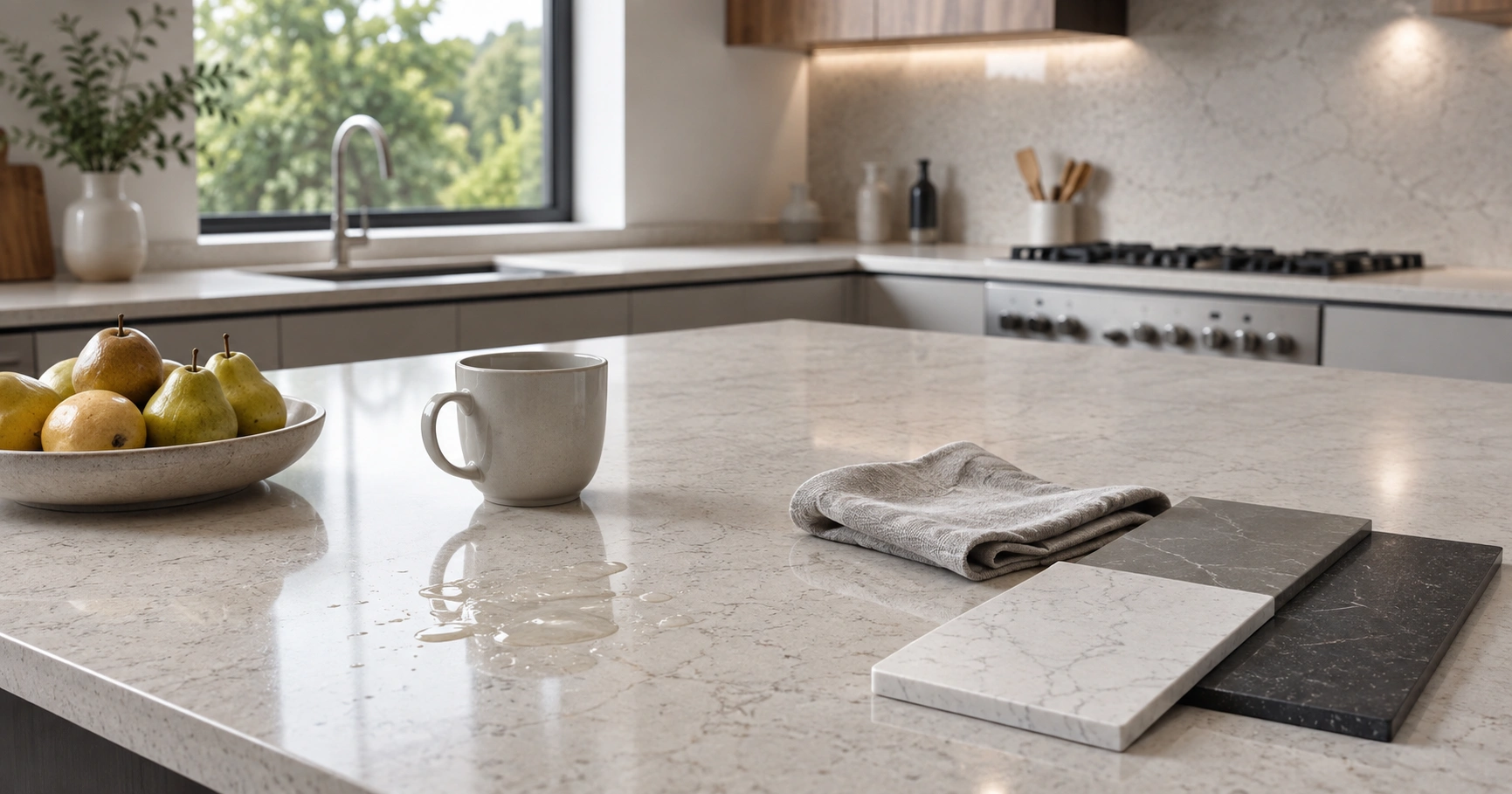
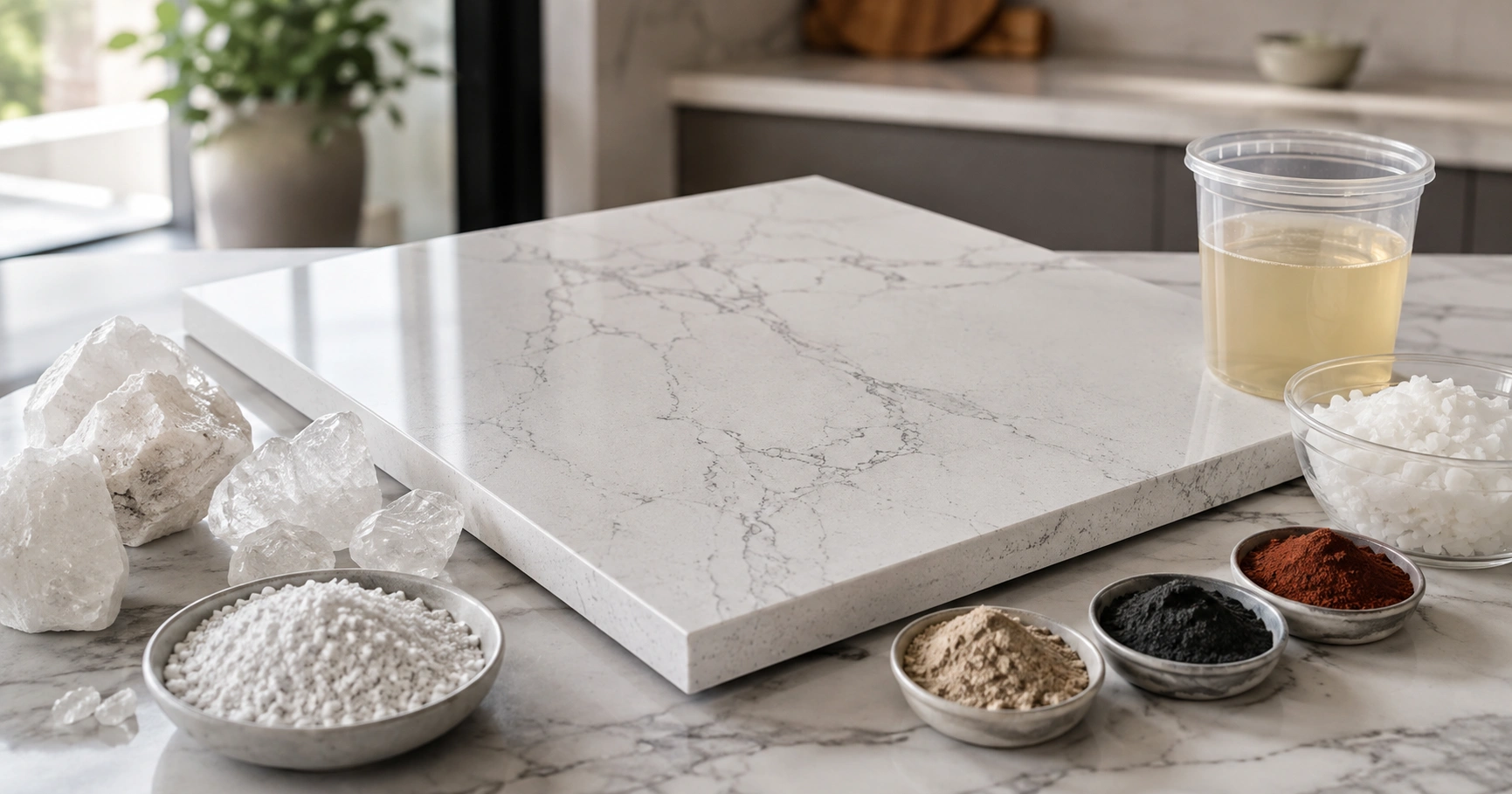
A quartz worktop is an engineered stone worktop made using natural quartz crystals, resins, binders and colour pigments. Manufacturers combine these materials and compact them into strong slabs, which they then cut and fabricate to fit kitchens and bathrooms.

Most quartz worktops contain around 90% to 93% crushed natural quartz, with the remaining percentage made up of polymer resins, binders and pigments. This combination gives quartz its hard-wearing surface while allowing manufacturers to create a wide range of colours, patterns and finishes.

If you want a worktop that combines a premium stone appearance with low maintenance, good stain resistance and plenty of design choices, quartz is one of the most popular options to consider for a UK kitchen.

How Is a Quartz Worktop Made?

Quartz worktops are different from natural stones such as granite and marble because manufacturers engineer them rather than cutting them directly from a natural stone block.

The manufacturing process generally involves combining crushed quartz with resins, binders and pigments. Manufacturers then compact the mixture under high pressure to create dense slabs.

These slabs can then be cut, polished and fabricated to suit individual kitchens.

This manufacturing process gives quartz an important advantage: you have much greater control over the appearance of the finished surface.

You can choose from plain colours, subtle patterns, bold designs and quartz worktops that imitate the appearance of natural marble.

What Is Quartz Made From?

Quartz worktops mainly contain natural quartz crystals. These crystals provide much of the hardness and durability associated with the material.

The remaining components typically include:

  • Polymer resins
  • Binders
  • Colour pigments
  • Other materials used during manufacturing

The exact composition can vary between manufacturers and product ranges, so you should always check the specification of the particular quartz worktop you are considering.

What Are the Main Features of Quartz Worktops?

Quartz has several characteristics that make it suitable for busy kitchens.

1. Quartz Is Non-Porous

One of the biggest benefits of quartz is its non-porous surface.

Unlike some natural stones, quartz does not readily absorb liquids. This makes it more resistant to common kitchen spills such as coffee, wine and cooking oil.

For you, this means less worry when preparing food and an easier surface to keep clean.

However, you should still clean spills promptly rather than allowing them to sit on the worktop for long periods.

2. Quartz Requires Low Maintenance

Quartz worktops are easy to look after during everyday use.

You normally do not need to seal or wax a quartz worktop in the same way that some natural stone surfaces require sealing.

For everyday cleaning, a soft cloth with warm water and a mild cleaning product is generally enough.

This makes quartz a convenient choice if you want a premium-looking kitchen without a demanding maintenance routine.

3. Quartz Offers Consistent Designs

Because manufacturers engineer quartz, you can achieve a more consistent appearance than you might get with some natural stones.

Natural granite, marble and quartzite can contain variations in colour, veining and pattern from one slab to another. Quartz can provide a more controlled and consistent design.

This can be particularly useful if you want your kitchen worktop to have a specific appearance.

4. Quartz Is Durable

Quartz worktops provide a hard and durable surface that can handle the demands of everyday kitchen use.

They are highly resistant to everyday scratches and can withstand normal food preparation when you use them correctly.

However, no worktop is completely scratch-proof or chip-proof. You should still use a chopping board and take care when handling heavy or sharp objects around the edges.

What Are the Benefits of Quartz Worktops?

Quartz has become a popular choice because it combines several features in one surface.

Easy to Clean

You can usually clean everyday marks with a soft cloth, warm water and a suitable mild cleaner.

Hygienic Surface

Its non-porous nature makes it difficult for liquids to penetrate the surface, helping you maintain a clean food-preparation area.

Wide Choice of Designs

You can choose from a large range of colours, patterns and finishes. This includes designs inspired by natural marble and other stones.

Low Maintenance

You do not normally need to reseal a quartz worktop as part of routine maintenance.

Premium Appearance

Quartz can give your kitchen a sophisticated, high-end appearance without requiring you to choose a natural stone slab.

What Are the Disadvantages of Quartz Worktops?

Although quartz offers many advantages, you should understand its limitations before choosing it for your kitchen.

Quartz Is Sensitive to Extreme Heat

Do not place extremely hot pans directly on a quartz worktop.

The quartz itself is heat-resistant, but the resin used in engineered quartz can be affected by very high temperatures. A hot pan or roasting tray can potentially cause scorching, discolouration or damage.

Always use a heat-resistant mat or trivet under hot cookware.

Quartz Can Be Affected by Direct Sunlight

Some quartz products can be affected by prolonged exposure to strong UV light. Over time, direct sunlight may cause certain colours to fade or change.

This is particularly important if you plan to install quartz in an area that receives strong, continuous sunlight.

Ask your supplier about the specific product’s UV resistance if your kitchen receives significant direct sunlight.

Quartz Can Still Chip

Quartz is highly durable, but the edges and corners can be more vulnerable to impact.

Avoid dropping heavy objects onto the worktop and take extra care around sink and hob cut-outs.

Quartz vs Granite: What Is the Difference?

Quartz and granite can both provide a premium kitchen worktop, but they have important differences.

Quartz is engineered, while granite is a natural stone.

Quartz gives you more consistency in colour and pattern, while granite provides the unique natural variation that comes from the stone itself.

Quartz also generally requires less routine maintenance because it does not need the same type of sealing that porous natural stone can require.

If you want a consistent modern design, quartz may suit you better. If you prefer completely natural stone with individual variations, granite may be the better choice.

Quartz vs Marble: Which Should You Choose?

Marble is well known for its luxurious appearance, but it requires more care than many homeowners expect.

Quartz can give you a similar marble-inspired appearance while offering a non-porous, lower-maintenance surface.

This makes marble-effect quartz particularly attractive if you want the look of luxury marble with the practicality of an engineered worktop.

However, if you specifically want genuine natural marble and appreciate its unique veining and character, natural marble remains a distinctive choice.

Is a Quartz Worktop Right for Your Kitchen?

Quartz can be an excellent choice if you want a worktop that combines:

  • A premium appearance
  • Low everyday maintenance
  • Good resistance to stains
  • A wide range of designs
  • A consistent colour and pattern
  • A durable surface for normal kitchen use

You should consider other materials if your main priority is the lowest possible price or if you need a worktop that can tolerate very high temperatures without the precautions required by quartz.

How Do You Clean a Quartz Worktop?

For everyday cleaning, keep things simple.

Use a soft cloth with warm water and a mild, suitable cleaning product. Wipe away spills as soon as practical, particularly strongly coloured liquids and food.

Avoid abrasive cleaning products and harsh scouring pads that could affect the surface finish.

Most importantly, do not use your quartz worktop as a chopping board and do not place hot cookware directly onto it.

Quartz Worktop FAQs

What is a quartz worktop?

A quartz worktop is an engineered stone surface made mainly from crushed natural quartz combined with resins, binders and colour pigments. Manufacturers compact these materials into slabs and fabricate them to fit kitchens and bathrooms.

Are quartz worktops made from real stone?

Yes. Quartz worktops contain a high percentage of natural quartz, but they are engineered rather than being made from a single piece of natural stone like granite or marble.

Is quartz better than granite for a kitchen worktop?

Neither material is automatically better. Quartz offers a consistent appearance, low maintenance and a wide choice of designs, while granite provides natural stone variation and character. Your choice should depend on your preferred appearance, maintenance requirements and budget.

Do quartz worktops need sealing?

Generally, quartz worktops do not require routine sealing. Their non-porous engineered surface provides good resistance to liquid absorption.

Can you put hot pans on quartz?

No. You should not place very hot pans, roasting trays or other hot cookware directly onto quartz. Use a heat-resistant mat or trivet to protect the surface.

Can quartz worktops stain?

Quartz is highly resistant to staining because its surface is non-porous. However, no surface is completely stain-proof. Clean spills promptly and follow the manufacturer’s care instructions.

Are quartz worktops easy to clean?

Yes. Quartz is generally easy to clean with a soft cloth, warm water and a suitable mild cleaner.

Can quartz worktops scratch?

Quartz is highly resistant to everyday scratches, but it is not completely scratch-proof. Use chopping boards and avoid dragging heavy or sharp objects across the surface.

Can quartz worktops fade in sunlight?

Some quartz products can experience colour changes after prolonged exposure to strong UV light. If your worktop will receive significant direct sunlight, check the specific product’s UV-resistance information before buying.

Are quartz worktops suitable for busy family kitchens?

Yes. Their durable, non-porous and low-maintenance characteristics make quartz a popular option for busy kitchens. You still need to follow basic care guidelines, particularly around heat and sharp objects.

Are quartz worktops expensive?

Quartz is generally considered a mid-to-high-range worktop option. It usually costs more than budget materials such as laminate but can be more affordable than some premium natural stones.

Choose Your Quartz Worktop with Solid Worktops

A quartz worktop can give you the premium appearance of stone with the convenience of a low-maintenance engineered surface. With a wide choice of colours, patterns and finishes, you can find a design that works with both modern and traditional UK kitchens.

At Solid Worktops, we offer quartz worktops in a range of designs to help you find the right surface for your kitchen. Whether you want a simple contemporary finish or a marble-inspired design, we can help you explore quartz options that match your style and project requirements.

Before choosing your worktop, consider the design, thickness, kitchen layout, cut-outs, installation requirements and overall budget. The right quartz worktop can give your kitchen a stylish, practical surface that you can enjoy for years.

How to Clean Quartz Worktops

How to Clean Quartz Worktops

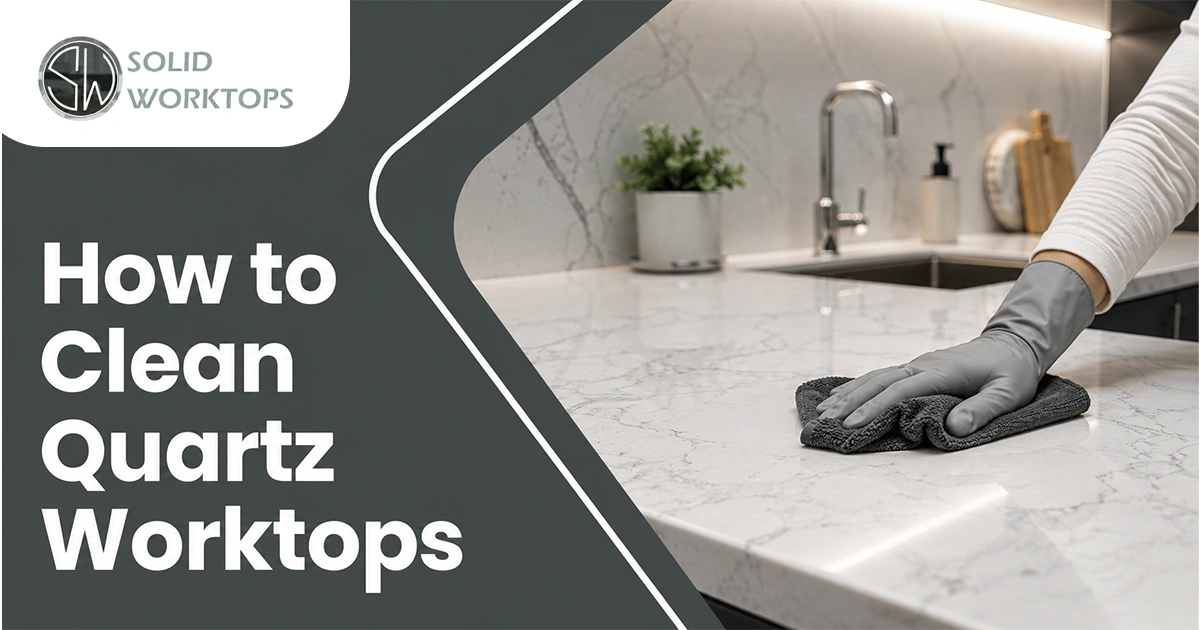
The best way to clean quartz worktops is simple: use warm water, a soft cloth and a small amount of mild washing-up liquid. Wipe spills as soon as they happen, rinse away any soap residue and dry the surface with a clean microfibre cloth.

Quartz worktops are non-porous and easy to maintain, so you do not need an aggressive cleaning routine. However, you should avoid harsh chemicals, abrasive scourers and excessive heat because they can damage the resin or affect the finish.

Whether you have a white, black, grey or marble-effect quartz worktop, regular gentle cleaning will help keep your kitchen surface looking clean and attractive.

How to Clean Quartz Worktops Every Day

You can keep your quartz worktop clean with a quick daily routine.

Step 1: Wipe the Surface

Start by removing crumbs and loose food from the worktop.

Dampen a soft microfibre cloth or non-abrasive sponge with warm water. Add a small amount of mild washing-up liquid and gently wipe the entire surface.

You do not need to scrub hard. Quartz does not require aggressive cleaning to remove normal food and drink marks.

Step 2: Rinse the Worktop

After cleaning, use a clean, damp cloth to wipe the surface again.

This removes any remaining washing-up liquid and prevents a layer of soap residue from building up.

Step 3: Dry the Surface

Finish by drying the worktop with a clean microfibre cloth.

Drying helps prevent water marks and streaks, particularly on darker quartz surfaces.

Clean Spills as Soon as Possible

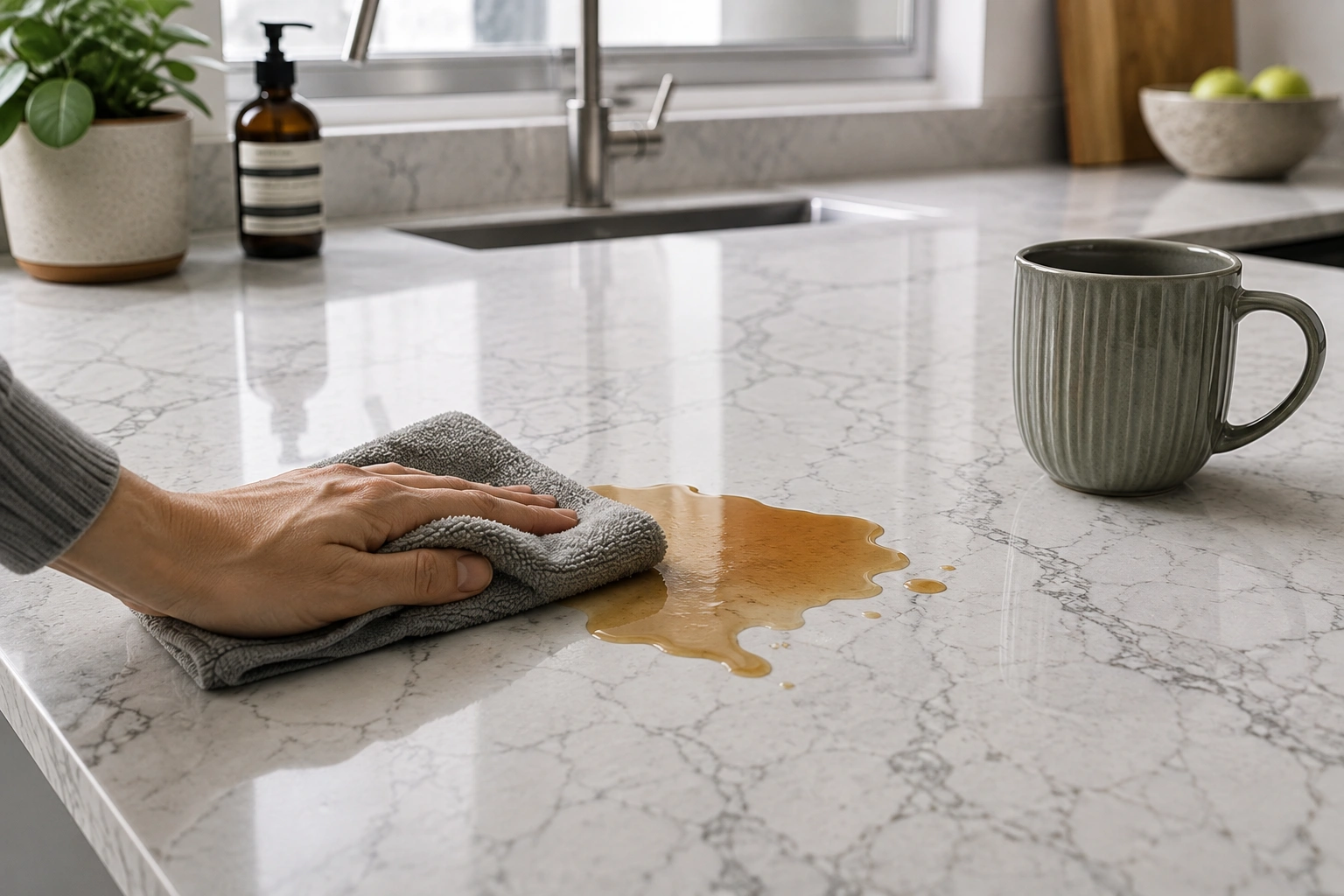
Although quartz has a non-porous surface and offers good stain resistance, you should still clean spills promptly.

Coffee, tea, wine, cooking oil, sauces and strongly coloured foods can leave marks if you allow them to sit on the surface for a long time.

If you spill something, simply:

  1. Wipe it up with a soft cloth.
  2. Clean the area with warm water and mild washing-up liquid.
  3. Rinse with a clean damp cloth.
  4. Dry with a microfibre cloth.

This simple habit can prevent most everyday marks.

How to Remove Stubborn Marks from Quartz

Sometimes warm water and washing-up liquid may not remove a dried or sticky mark. In that situation, use a gentle cleaning method rather than reaching immediately for a strong chemical.

Dried Food and Sticky Residue

If food has dried onto your quartz worktop, do not scrape it with a knife.

Instead, gently loosen it with a plastic scraper or spatula. You can then clean the remaining residue with a soft cloth and mild washing-up liquid.

Avoid metal scrapers because they can damage the surface.

Grease and Difficult Marks

For greasy marks, start with a quartz-safe surface cleaner or mild washing-up liquid.

Some quartz manufacturers may recommend products such as diluted isopropyl alcohol for particular marks. If you want to use 70% isopropyl alcohol, check your quartz manufacturer’s care instructions first and test it on an inconspicuous area if the manufacturer permits it.

Baking Soda for Tough Marks

You may find recommendations online for using baking soda and water to create a cleaning paste.

However, you should be careful with this method. Baking soda is mildly abrasive, and frequent or aggressive rubbing can affect some polished finishes.

If your quartz manufacturer approves its use, apply the paste gently, avoid vigorous scrubbing, and rinse the area thoroughly afterwards.

For a stubborn mark, a quartz-specific cleaner is usually the safer choice.

Can You Use Cif on Quartz Worktops?

Some cream cleaners, including certain Cif products, may be suitable for some quartz surfaces, but you should not assume that every Cif product is safe for every quartz worktop.

Always check the cleaner’s label and your quartz manufacturer’s care instructions before using it.

If the manufacturer approves the product, use a small amount with a non-abrasive sponge and avoid heavy scrubbing.

When in doubt, stick to warm water, mild washing-up liquid and a soft microfibre cloth.

What Should You Avoid When Cleaning Quartz Worktops?

Knowing what not to use is just as important as knowing how to clean quartz.

Avoid Bleach and Strong Chemicals

Do not routinely use strong bleach-based cleaners, oven cleaners, drain cleaners or other aggressive chemicals on your quartz worktop unless the manufacturer specifically states that they are suitable.

Harsh chemicals can affect the resin and may damage or dull the surface.

Be Careful with Vinegar

Vinegar is often promoted as a natural household cleaner, but it is not automatically suitable for quartz worktops.

Some manufacturers advise against acidic cleaners because they can affect the surface or finish with repeated use.

For this reason, use a quartz-approved cleaner instead of relying on vinegar.

Avoid Abrasive Scouring Pads

Never use steel wool, wire brushes or hard abrasive scourers on your quartz worktop.

They can create fine scratches and gradually reduce the appearance of a polished finish.

Use a soft microfibre cloth or non-abrasive sponge instead.

Avoid Harsh Ammonia-Based Cleaners

Strong ammonia-based products can also be unsuitable for quartz, depending on the product and manufacturer.

Always check the manufacturer’s care guide before using specialist cleaning chemicals.

How to Protect Your Quartz Worktop While Cleaning

Cleaning is only one part of looking after your quartz worktop. A few simple habits can help you protect it every day.

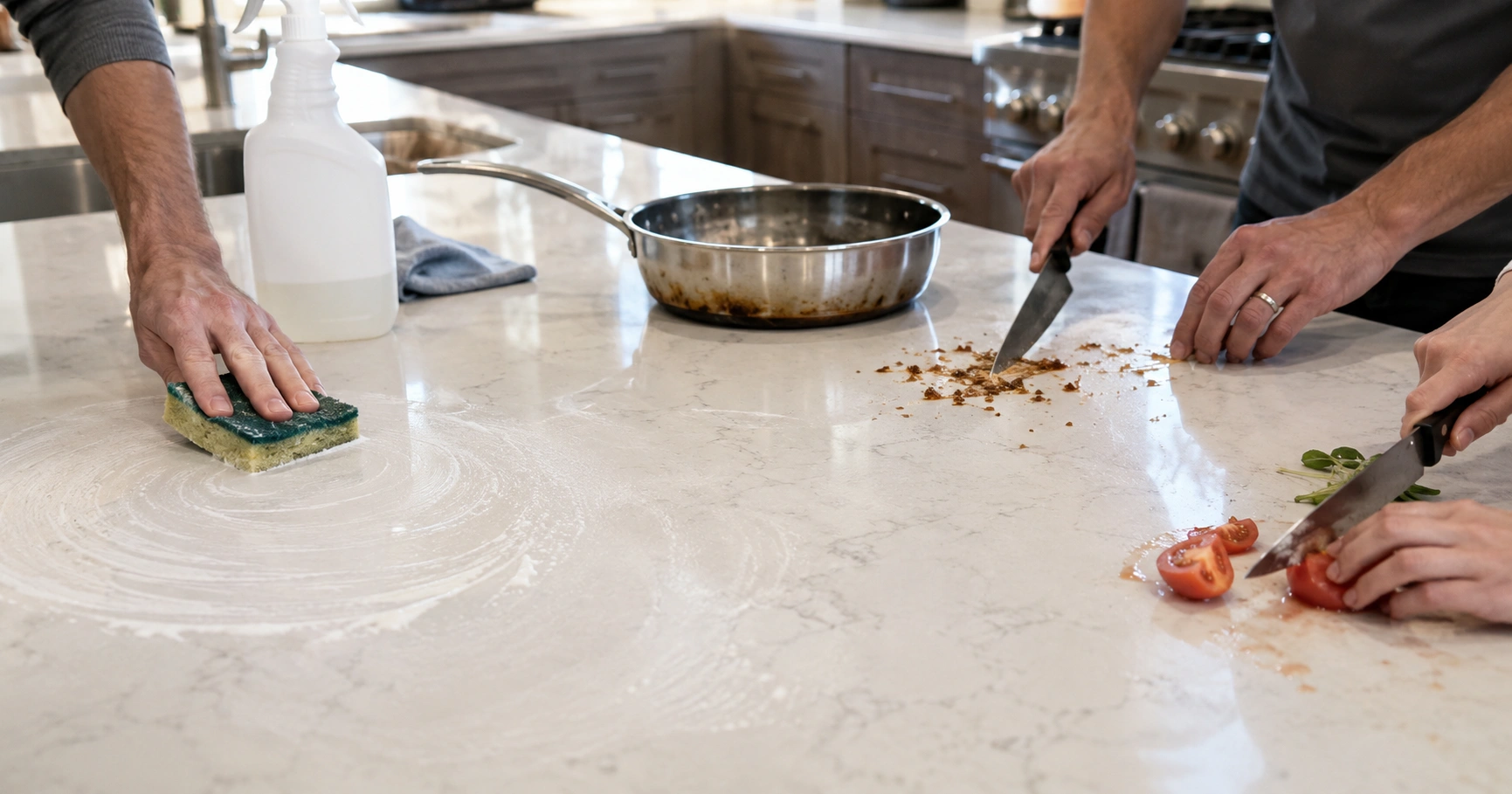
Always Use a Chopping Board

Do not cut food directly on your quartz worktop.

Although quartz is highly resistant to everyday scratches, sharp knives can still damage the surface or leave marks.

Use a chopping board for food preparation.

Use a Trivet for Hot Pans

Never place extremely hot pans, roasting trays or baking dishes directly on your quartz worktop.

Quartz contains resin, and excessive heat can damage or discolour the surface.

Always place hot cookware on a suitable heat-resistant mat or trivet.

Clean Around the Sink

Pay particular attention to the area around your sink.

Wipe away standing water and clean food residue around the sink edge. Regular cleaning helps keep this high-use area looking fresh.

How Often Should You Clean Quartz Worktops?

You should wipe your quartz worktop every day or whenever you use it, particularly after food preparation.

You do not need to carry out a deep clean every day. Your regular routine can remain simple:

Wipe → rinse → dry.

A deeper clean may be useful when you notice grease, dried food or other marks that your normal routine does not remove.

Can You Use Disinfectant on Quartz?

You can use a disinfectant only if it is approved as suitable for your particular quartz surface.

Do not assume that a strong disinfectant is better. Some chemicals can react with the resin or affect the finish.

If hygiene is your main concern, regular cleaning with a suitable mild cleaner is often enough for everyday kitchen use. For specialist disinfectants, follow your quartz manufacturer’s instructions.

How Do You Clean White Quartz Worktops?

White quartz worktops are easy to maintain, but they can make food marks and spills more noticeable.

Clean spills promptly and use warm water with mild washing-up liquid for everyday marks.

Avoid harsh bleaching products and abrasive scrubbing in an attempt to make the surface brighter. These can cause more problems than they solve.

For a stubborn stain, use a cleaner specifically approved for your quartz surface.

How Do You Clean Black Quartz Worktops?

Black quartz can show water marks, fingerprints and soap residue more easily than lighter colours.

After cleaning, always dry the surface with a clean microfibre cloth. This simple step can make a significant difference to the finished appearance.

If your black quartz has a polished finish, avoid abrasive products that could leave the surface looking dull.

How Do You Clean Marble-Effect Quartz?

Marble-effect quartz requires the same basic cleaning approach as other quartz worktops.

Use:

  • Warm water
  • Mild washing-up liquid
  • A soft microfibre cloth
  • A non-abrasive sponge when necessary

Avoid harsh chemicals and abrasive products, particularly if your quartz has a polished finish.

The detailed veining may make certain marks less noticeable, but you should still clean spills promptly.

Common Quartz Worktop Cleaning Mistakes

Avoid these common mistakes if you want to keep your worktop looking its best:

Using too much cleaning product: More cleaner does not mean a cleaner surface. Excess product can leave residue.

Scrubbing too hard: Aggressive scrubbing can affect the finish.

Using a knife to remove dried food: Use a plastic scraper instead.

Putting hot pans directly on the surface: Always use a trivet.

Cutting directly on the worktop: Always use a chopping board.

Using a cleaner without checking its suitability: Always follow the manufacturer’s care instructions.

Quartz Worktop Cleaning FAQs

What is the best way to clean a quartz worktop?

Use warm water, a small amount of mild washing-up liquid and a soft microfibre cloth. Wipe the surface, rinse with clean water and dry it afterwards.

Can I use washing-up liquid on quartz?

Yes. A small amount of mild washing-up liquid with warm water is suitable for everyday cleaning of many quartz worktops.

Can I use Cif on a quartz worktop?

Check the specific Cif product and your quartz manufacturer’s cleaning instructions first. Some products may be suitable, while abrasive or unsuitable formulations can damage the finish.

Can I use vinegar to clean quartz?

It is better to avoid vinegar unless your quartz manufacturer specifically approves it. Use a quartz-safe cleaner or mild washing-up liquid instead.

Can I use bleach on quartz worktops?

Avoid bleach unless the quartz manufacturer specifically recommends it for your particular surface. Strong chemicals can damage the resin or affect the finish.

Can I use baking soda on quartz?

Baking soda is mildly abrasive, so you should not use it aggressively. If your manufacturer approves it, use a small amount gently and rinse the surface thoroughly afterwards.

Can I use a magic eraser on quartz?

It is best to avoid abrasive cleaning products such as melamine sponges unless the manufacturer confirms that they are suitable. Repeated rubbing can affect the finish.

How do I remove dried food from a quartz worktop?

Soften the residue with warm water and gently lift it with a plastic scraper or spatula. Never use a knife or metal scraper.

How do I remove grease from quartz?

Start with warm water and mild washing-up liquid. For more difficult grease marks, use a cleaner approved for your quartz worktop and follow the manufacturer’s instructions.

How do I make my quartz worktop shine?

Clean the surface with a suitable mild cleaner, rinse it thoroughly and dry it with a clean microfibre cloth. Avoid waxes, polishes and abrasive products unless the manufacturer specifically recommends them.

Do quartz worktops need sealing?

No, quartz worktops generally do not need routine sealing because they have a non-porous engineered surface.

Can hot pans damage quartz?

Yes. Very high temperatures can damage the resin in quartz. Always use a heat-resistant trivet or mat under hot cookware.

Keep Your Quartz Worktop Looking Its Best with Solid Worktops

A quartz worktop does not need complicated maintenance. Clean spills promptly, use mild cleaning products, avoid abrasive materials and protect the surface from direct heat and sharp knives.

At Solid Worktops, we offer quartz worktops in a range of colours, patterns and finishes for UK kitchens. Whether you are looking for a modern plain surface or a marble-effect quartz worktop, we can help you find an option that suits your kitchen.

Always check the specific manufacturer’s care instructions for your chosen quartz because cleaning recommendations can vary between products.

With the right everyday care, your quartz worktop can continue to look clean, stylish and well maintained for years.

Unmasking the Truth About Quartz Overlay Worktops

Unmasking the Truth About Quartz Overlay Worktops

Thinking about updating your kitchen without removing your existing worktops? You may have heard about quartz overlay worktops.

A quartz overlay can give an old kitchen a fresh look without the mess and disruption of removing the existing worktop. It can sound like an easy and cheaper option.

But is it always the best choice?

Before you choose a quartz worktop overlay, it is worth understanding how it works, what it costs, what the benefits are and what problems you may face later.

At Solid Worktops, we want homeowners to understand their options before choosing a new kitchen worktop. So, here is what you need to know about quartz overlay worktops.

The Reality of Kitchen Worktop Replacement

When people renovate a kitchen, the worktop is often an important part of the project.

A new worktop can change the look of the whole kitchen. It can also give you the chance to change the layout, sink position, hob position and worktop style.

A worktop overlay takes a different approach. Instead of removing the existing surface, a new layer is fitted over it.

This can reduce the amount of work involved, but it also means you have to work with the existing worktop and kitchen layout.

So, before choosing an overlay, it is important to ask:

Is the existing worktop good enough to use as a base?

If it is damaged, uneven or affected by water, simply covering it may not solve the problem.

What Are Quartz Overlay Worktops?

Quartz overlay worktops are thin quartz or quartz-based surfaces that are fitted over an existing kitchen worktop.

They are usually thinner than standard quartz worktops. Some overlay products are around 6–8mm thick, although the exact thickness depends on the product.

The main idea is simple:

Existing worktop + thin overlay = new finished surface

This means the original worktop does not need to be removed in the same way as it would during a complete replacement.

Overlay worktops can also be made from other materials, including laminate. However, quartz overlays are popular with homeowners who want the appearance and properties associated with quartz.

Why Do Homeowners Consider Worktop Overlays?

There are several reasons why people search for worktop overlay solutions.

Lower Upfront Cost

An overlay can cost less than a complete worktop replacement in some kitchens.

However, the final price depends on the size and layout of the kitchen, cut-outs, joints, edges, fitting and other work.

So, do not compare only the price per square metre.

Always compare the complete installed cost.

Faster Installation

Because the existing worktop stays in place, an overlay can reduce the amount of removal and preparation required.

This can mean less disruption while the work takes place.

The actual fitting time depends on the kitchen and the overlay product.

Less Waste

Keeping the existing worktop means there may be less material to remove and dispose of.

For homeowners who want to reduce waste during a kitchen update, this can be an advantage.

A Quick Change of Appearance

A new surface can make an older kitchen look very different.

If you are happy with your cabinets and layout, a kitchen worktop overlay can provide a way to change the worktop appearance without carrying out a full kitchen renovation.

How Much Do Quartz Overlay Worktops Cost?

The cost of quartz overlay worktops can vary considerably.

The final price can depend on:

  • The size of the worktop.
  • The type of quartz overlay.
  • The number of sections and joints.
  • Sink cut-outs.
  • Hob cut-outs.
  • Edge finishing.
  • Upstands and splashbacks.
  • Installation requirements.
  • Plumbing adjustments.
  • Access to the kitchen.

Some suppliers quote quartz overlay worktops cost by square metre.

This can be useful for comparing materials, but it does not always tell you what the complete project will cost.

A small kitchen with a simple layout may be easier to fit than a large kitchen with several corners, joints, sinks and appliances.

If you are comparing an overlay with a new quartz worktop, ask for a full quotation for both options.

The Benefits of Quartz Overlay Worktops

A quartz overlay can offer some useful benefits when the existing kitchen is suitable.

Quick Kitchen Update

You can change the appearance of your kitchen without removing the whole worktop.

Less Disruption

Keeping the existing surface can reduce demolition and removal work.

Can Work With Existing Cabinets

If your cabinets are in good condition, an overlay may allow you to keep them.

Quartz Appearance

Quartz can give the kitchen a clean and modern appearance.

Low Maintenance

Quartz surfaces are generally easy to maintain. However, always follow the care instructions provided for the particular product.

The Problems You Need to Consider

A quartz overlay worktop is not suitable for every kitchen.

Before choosing one, you should understand the possible problems.

Water Can Get Into Joints

This is one of the most important things to consider.

Kitchen worktops are exposed to water every day, especially around:

  • Sinks
  • Taps
  • Dishwashers
  • Drainers
  • Joints

Overlay worktops are fitted in sections, which means joints may be present.

If water gets through an unprotected joint or edge, it can reach the original worktop underneath.

This can be a serious issue if the existing worktop contains materials that can swell when exposed to moisture.

Water damage can lead to swelling, movement and damage to the original surface.

Good fitting and proper protection around wet areas are therefore very important.

An Overlay Makes the Worktop Higher

When you add a new surface over an existing worktop, the finished worktop becomes higher.

This may seem like a small change, but it can affect other parts of the kitchen.

For example, it may affect:

  • Sink fitting
  • Tap position
  • Hob fitting
  • Appliance clearance
  • Splashbacks
  • Wall units

These measurements should be checked before the overlay is installed.

Existing Problems Stay Underneath

One of the biggest limitations of an overlay is simple:

It covers the existing worktop; it does not remove it.

If the original worktop has:

  • Water damage
  • Swelling
  • Movement
  • Uneven areas
  • Structural problems

an overlay may not be the right solution.

The installer should check the existing surface first.

Fewer Edge Options

A thin overlay can limit the edge styles you can use.

A standard full-depth quartz worktop gives you more freedom when choosing the edge finish.

If you want a thicker appearance or a particular edge profile, a full replacement may give you a better result.

The Cost Saving May Be Smaller Than Expected

Many people search for:

“How much do quartz overlay worktops cost?”

because they expect an overlay to be much cheaper.

Sometimes it can be.

But the total price can increase when you add:

  • Cut-outs
  • Joints
  • Edge work
  • Installation
  • Plumbing changes
  • Splashbacks
  • Upstands
  • Difficult access

This means the difference between an overlay and a full quartz worktop replacement may not always be as large as you expect.

What About Existing Laminate Worktops?

Some homeowners search for laminate worktop overlay or ask whether they can put quartz over an existing laminate worktop.

This may be possible with some overlay systems.

However, the existing laminate worktop needs to be in good condition and suitable for the installation.

If the laminate has swelling, loose areas or water damage, covering it may not be the best option.

Always have the existing surface checked before choosing an overlay.

Quartz Overlay vs Full Worktop Replacement

Both options can work, but they suit different situations.

Feature Full Worktop Replacement Overlay Worktops
Existing worktop Removed Usually stays
Installation More work involved Often quicker
Kitchen layout Can be changed Usually stays the same
Edge options More choice More limited
Existing damage Removed with old worktop Remains underneath
Finished height Can be planned from the start Increases
Design flexibility Greater More limited
Waste Old worktop needs removal Less removal
Best suited to Full renovation Suitable existing worktops

The best option depends on your kitchen.

If your existing worktop is strong and you simply want a new look, an overlay may work well.

If the existing worktop has problems or you want to make major changes, replacement may be the better choice.

When Does a Quartz Overlay Make Sense?

A quartz overlay worktop may be suitable if:

  • Your existing worktop is in good condition.
  • Your cabinets are stable.
  • You want to keep the current layout.
  • You want a new appearance.
  • You want less disruption.
  • You are happy with the available overlay thickness and edge options.
  • The additional height will not cause problems.

In this situation, an overlay can be a practical way to update the kitchen.

When Is Full Worktop Replacement Better?

A full replacement may make more sense if:

  • Your existing worktop has water damage.
  • The surface is swollen or unstable.
  • You want to change the layout.
  • You want new sink or hob positions.
  • You want more edge choices.
  • You want a standard full-depth quartz worktop.
  • You are already renovating other parts of the kitchen.
  • You want to start with a completely new surface.

Replacing the worktop also removes the old surface, rather than leaving it underneath the new one.

How Many People Choose Worktop Overlays?

There is no widely reported figure that shows exactly how many UK homeowners choose overlay worktops.

However, full worktop replacement remains a common choice during larger kitchen renovations.

Overlays are more likely to appeal to homeowners who:

  • Want a quick cosmetic update.
  • Are happy with their existing kitchen layout.
  • Have a sound existing worktop.
  • Want to reduce disruption.
  • Are looking for a lower-cost option where possible.

The important point is not how many people choose an overlay.

It is whether an overlay is suitable for your kitchen.

Are Quartz Overlay Worktops Worth It?

They can be.

A quartz overlay may be a good choice if your existing worktop is in good condition and your main aim is to refresh the kitchen without major work.

But if the existing surface has water damage, swelling or structural problems, an overlay may simply hide an issue rather than fix it.

You should also consider the finished height, available edge styles, joints, cut-outs and total installation cost.

For some kitchens, a full quartz worktop replacement will provide a better long-term solution.

Frequently Asked Questions

What are quartz overlay worktops?

Quartz overlay worktops are thin quartz or quartz-based surfaces fitted over an existing kitchen worktop instead of removing the original worktop.

How much do quartz overlay worktops cost?

The price depends on the material, kitchen size, joints, cut-outs, edges and installation. Get a complete quotation before comparing the cost with a new worktop.

Can you put quartz over an existing worktop?

Some quartz overlay systems can be installed over existing worktops. The original surface must be stable, level and suitable for the chosen system.

Are quartz overlay worktops cheaper?

They can be cheaper in some kitchens, but the final saving depends on the full installation cost.

Do overlay worktops increase the height?

Yes. An overlay adds another layer over the existing worktop, so the finished surface will be higher.

Can you put a quartz overlay over laminate?

Some systems may allow this, but the existing laminate worktop needs to be in good condition and suitable for the overlay.

Are quartz overlay worktops durable?

Quartz is a durable worktop material, but the condition of the surface underneath and the quality of installation also matter.

What is the difference between a quartz overlay and a quartz worktop?

A quartz overlay is fitted over an existing worktop. A standard quartz worktop replaces the existing surface and normally provides more freedom with thickness, layout and edge options.

Choosing the Right Worktop for Your Kitchen

A quartz overlay can be a useful way to refresh a kitchen when the existing worktop and cabinets are in good condition.

But it is important to look beyond the initial price.

Think about the condition of the existing worktop, the extra height, sink and hob positions, joints, edge options and the total installation cost.

At Solid Worktops, we can help you compare your options and find the right worktop solution for your kitchen.

Whether you are considering quartz overlay worktops, a new quartz worktop or another worktop material, speak to Solid Worktops about your project and find the option that works best for your kitchen.