
How to Choose Kitchen Designers for Your New Kitchen

How to Choose Kitchen Designers for Your New Kitchen

Choosing the right kitchen designers can help you create a kitchen that looks good, works well and makes the best use of your available space. Before committing to a design, check the designer’s experience, understand what their service includes, compare quotations and make sure they consider your cabinets, appliances, worktops, storage and installation requirements together.

The right kitchen design should suit how you cook, clean and use the room every day. It should also fit your budget and allow enough space for practical features such as worktop preparation areas, accessible cupboards and comfortable walkways.

What Is a Kitchen Designer? And what do kitchen designers do?

Kitchen designers plan the layout, appearance and functionality of a kitchen. They help homeowners decide where to position cabinets, appliances, sinks, worktops and storage to make the room practical and visually consistent.

Depending on the service offered, kitchen designers may provide:

  • Kitchen layout planning: They arrange cabinets, appliances and work areas to make efficient use of the available space.
  • Cabinet and storage selection: They help you choose cabinet styles, finishes, drawer systems and storage solutions.
  • Worktop selection: They help coordinate worktop materials, colours, thicknesses and edge profiles with the rest of the kitchen.
  • Lighting and colour planning: They consider how cabinet colours, wall finishes, flooring and lighting work together.
  • Project coordination: Some designers manage measurements, deliveries and installation, while others provide design plans only.

Always confirm which services are included before accepting a quotation. A kitchen designer may not supply or install every component, including the worktops.

How Kitchen Designers Help You Choose the Right Kitchen Worktops

Kitchen worktops affect the appearance and everyday use of your kitchen. A suitable worktop should complement the cabinets while meeting your requirements for cleaning, durability, maintenance and budget.

Kitchen designers can help narrow down the options, but it is worth understanding the main materials before making a decision.

  • Quartz worktops: Quartz offers a wide choice of colours and patterns, including marble-effect designs. It suits homeowners who want a consistent finish and a worktop that is straightforward to maintain.
  • Granite worktops: Granite provides a natural stone appearance, with variations in colour and pattern between slabs. Its maintenance requirements depend on the particular stone and finish.
  • Corian worktops: Corian is a solid-surface material that supports a range of designs. It can be suitable for kitchens where a clean, contemporary appearance is important.
  • Tristone worktops: Tristone is another solid-surface option available in different colours and finishes. Check the specific product’s care and performance requirements before choosing it.

How Kitchen Designers Match Worktops with Kitchen Cabinets

Cabinet and worktop colours should complement each other without making the kitchen feel too busy or too plain. Kitchen designers can help you compare combinations before you order the materials.

Consider these practical combinations:

  • White cabinets with quartz worktops: White, grey, beige and marble-effect quartz can create different looks, from bright and minimal to warmer and more traditional.
  • Grey cabinets with quartz worktops: White, pale grey and contrasting darker surfaces can work well, depending on the cabinet shade and the amount of natural light.
  • Dark cabinets with light worktops: A lighter worktop can provide contrast and help the kitchen feel less enclosed.
  • Wood-effect cabinets with stone worktops: Neutral quartz or granite can complement the warmth of wood-effect finishes without competing with the cabinet pattern.

How Kitchen Designers Plan a Practical Kitchen Layout

A kitchen can look attractive in a design drawing but still feel awkward to use if the layout does not suit your routine. Good kitchen designers consider how you move between the fridge, sink, hob and food preparation areas.

Before approving the design, check that:

  • You have enough clear worktop space for preparing food near the areas where you need it.
  • Cupboard doors, drawers, the oven and the dishwasher can open without obstructing one another.
  • The sink and hob positions leave suitable preparation space.
  • You have enough room to move safely around an island or breakfast bar.
  • The worktop layout accounts for corners, joints, sink cut-outs and appliance openings.
  • Storage meets your needs without taking away too much useful worktop space.

If you want a kitchen island, ask kitchen designers to check the available floor space and circulation routes. An island should improve how you use the kitchen rather than make it difficult to move around.

How Kitchen Designers Should Plan Worktop Measurements and Installation

Worktop measurements are an important part of a successful kitchen installation. Incorrect measurements or changes to the cabinet layout can lead to fitting problems, unnecessary adjustments and delays.

Kitchen designers should coordinate the planned worktop dimensions with the cabinet layout, sink position, hob opening, wall alignment and any joints required.

Before ordering your worktops, confirm:

  • Cabinet installation: The base units should be installed and checked before final worktop measurements are taken.
  • Worktop overhangs: Agree on the intended overhang and edge finish before fabrication.
  • Sink and hob cut-outs: Confirm the appliance models and cut-out requirements with the relevant suppliers.
  • Joints and corners: Discuss where joints may be needed and how they will affect the finished appearance.
  • Upstands and splashbacks: Decide whether these are required and confirm their dimensions and finish.
  • Installation responsibilities: Establish who will measure, fabricate, deliver and fit the worktop.

How Kitchen Designers Help You Control Your Kitchen Budget

A kitchen budget should include more than cabinets and appliances. Worktops, installation, plumbing, electrical work, flooring, splashbacks and finishing details can all affect the final cost.

Ask kitchen designers for a written breakdown so you can see what the quotation includes and identify potential additional charges.

When comparing quotations, check:

  • Whether the price covers design work, materials and installation.
  • Which worktop material, thickness, finish and edge profile the quotation specifies.
  • Whether sink and hob cut-outs are included.
  • Whether delivery, removal of the old kitchen and waste disposal are included.
  • Whether plumbing, electrical work and other trades are included or quoted separately.
  • How the supplier handles changes, unexpected issues and additional work.

How Kitchen Designers Differ from Worktop Suppliers and Installers

Kitchen designers and worktop specialists have different responsibilities, although their work often overlaps.

Kitchen designers generally focus on the overall layout, cabinets, storage, colours and coordination of the kitchen. Worktop suppliers and specialists focus on the selected surface, including material options, measurements, fabrication and fitting where offered.

Working with both can help you make better decisions. Your kitchen designer can plan the overall look and layout, while your worktop specialist can explain which materials, thicknesses, edge profiles and cut-outs are suitable for the proposed design.

If you are choosing quartz, granite, Corian or Tristone, speak to your worktop supplier before finalising details that affect fabrication. This helps you understand the available options and gives the relevant specialists an opportunity to check the practical requirements.

What Questions Should You Ask Kitchen Designers Before Hiring Them?

Before committing to a kitchen design service, ask questions that clarify the designer’s experience, responsibilities and approach.

  • Can you show me similar kitchen designs? Examples can help you assess whether the designer’s style and experience suit your project.
  • What does your quotation include? Confirm whether you are paying for design plans, product supply, installation or project management.
  • How will you work within my budget? Ask how the designer prioritises essential features and handles changes in cost.
  • Will you help me select worktop materials? Check whether the service includes advice on quartz, granite and solid-surface options.
  • Who takes the final worktop measurements? Establish whether this responsibility belongs to the cabinet installer or the worktop specialist.
  • How are changes handled? Find out what happens if you change a cabinet, sink, hob or worktop specification after approval.
  • Who coordinates the installation? Make sure you know who to contact if different trades or suppliers need to resolve an issue.

Clear answers at the start can prevent misunderstandings later.

What Mistakes Should Homeowners Avoid When Choosing Kitchen Designers?

Even an attractive kitchen design can create problems if important practical details are overlooked. Avoid these common mistakes when comparing kitchen designers.

  • Choosing on appearance alone: A design should work for your daily routine, not just look impressive in photographs.
  • Ignoring the worktop early in the process: Your preferred material, thickness and layout can affect the design, budget and finishing details.
  • Approving a layout without checking measurements: Confirm that appliances, cupboards, doors and walkways have enough space.
  • Assuming every service is included: Check the quotation for installation, plumbing, electrical work, delivery and finishing.
  • Selecting materials from small samples only: View samples alongside your actual cabinets and flooring before making a final decision.
  • Failing to confirm responsibilities: Make sure the designer, cabinet installer and worktop specialist understand who handles each stage.

Taking time to check these details can help you avoid preventable changes and achieve a kitchen that meets your expectations.

Frequently Asked Questions About Kitchen Designers

How Much Do Kitchen Designers Cost?

The cost depends on the designer’s experience, the size and complexity of the project and whether the service includes design plans only or full project management. Some retailers include design services within a kitchen purchase, while independent designers may charge a separate fee. Ask for a written quotation that explains what you will receive.

When Should I Contact Kitchen Designers?

Contact kitchen designers before ordering cabinets, appliances or worktops. Early planning gives you more opportunity to coordinate the layout, material choices, measurements and budget before committing to products.

Do Kitchen Designers Choose the Worktop for You?

Kitchen designers may recommend worktop materials and help coordinate colours with your cabinets. However, you should also speak to a worktop specialist about the material’s practical requirements, fabrication options, care and installation.

Should I Choose Quartz Worktops Before or After My Kitchen Design?

It is best to consider quartz worktops during the design stage rather than leaving the decision until the end. You do not necessarily need to select the exact colour immediately, but your preferred material, thickness, edge profile and sink arrangement can influence the final specification.

Can Kitchen Designers Help Me Make a Small Kitchen Look Bigger?

Yes. Kitchen designers can make a small kitchen feel more open by planning suitable storage, keeping walkways clear and coordinating cabinet and worktop colours. Light-coloured surfaces may help create a brighter appearance, although the result also depends on lighting, room proportions and the overall layout.
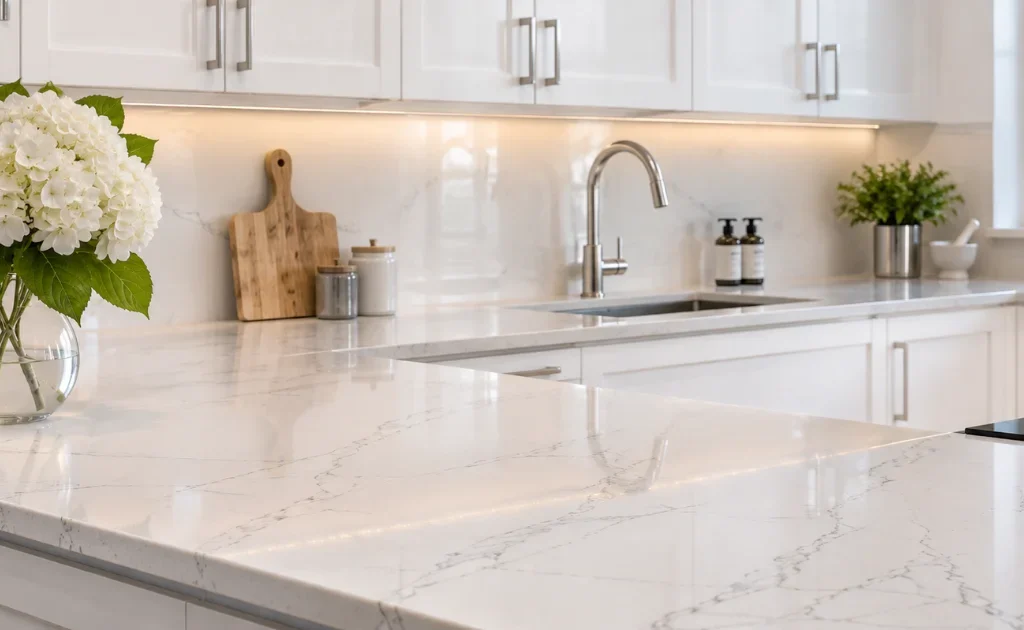
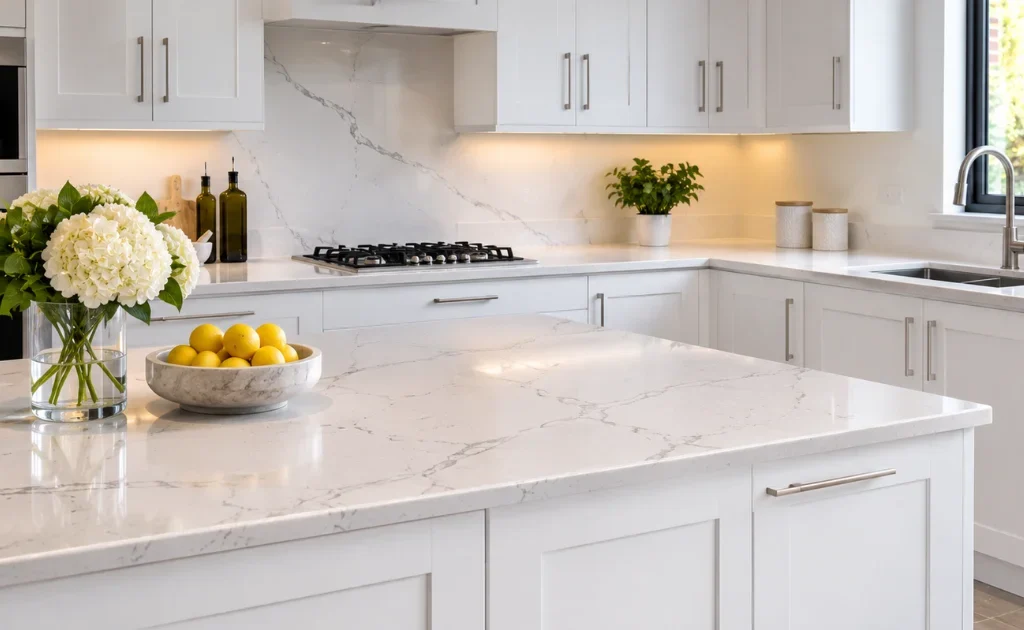
What Is the Best Worktop for a Kitchen with White Cabinets

What Is the Best Worktop for a Kitchen with White Cabinets?

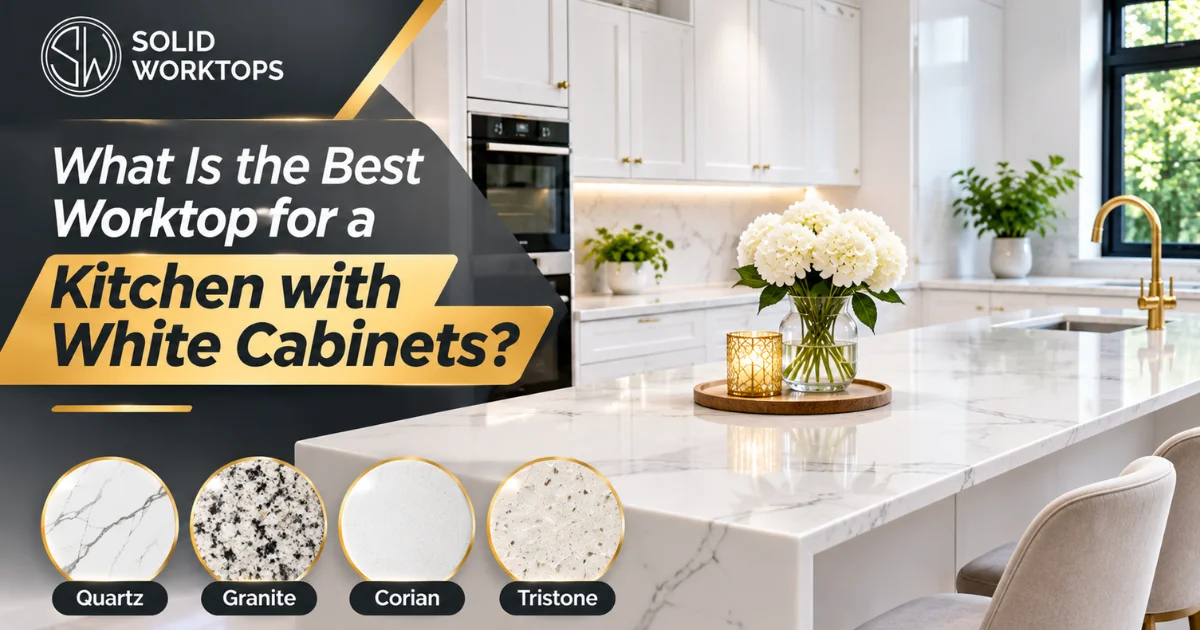
The best worktop for a kitchen with white cabinets depends on the style you want, how much contrast you prefer and how you use the kitchen. Grey or marble-effect quartz creates a contemporary look, black worktops add contrast, and beige or cream surfaces give the room a warmer appearance. Granite and solid-surface materials such as Corian and Tristone are also worth considering if their colours and finishes suit your design.

Before choosing a worktop, consider your cabinet shade, flooring, splashback, natural light and maintenance preferences. White cabinets provide a neutral starting point, but the worktop colour can change how warm, bright or contrasting the entire kitchen feels.

Which Worktop Colours Look Best with White Cabinets?

White cabinets work with a wide range of worktop colours. The best option depends on whether you want a bright, understated kitchen or a design with stronger contrast.

1. White Quartz Worktops for a Bright, Coordinated Kitchen

White quartz worktops create a clean, coordinated appearance with white cabinets. You can choose a similar white shade for a subtle, continuous look or introduce veining to add definition.

Marble-effect quartz can introduce grey or gold-style veining without using natural marble. This can work well when you want visual detail but prefer the consistent appearance available from an engineered quartz surface.

However, not all whites match. A cool white cabinet may look different beside a warmer cream-white worktop. Compare samples together in your kitchen’s lighting before making a final decision.

2. Grey Quartz Worktops for a Contemporary Kitchen

Grey quartz provides contrast without creating the strong difference you get with black. Light grey can keep the room feeling open, while darker grey creates a more noticeable outline around white cabinets.

Grey worktops can suit handleless kitchens, modern flat-fronted cabinets and many shaker designs. A concrete-effect finish can introduce a more understated, industrial appearance, while a marble-effect pattern can make the worktop a stronger design feature.

Consider the flooring and splashback before choosing the shade. If both are already dark or visually busy, a lighter grey may help keep the overall design balanced.

3. Black Worktops for Strong Contrast

Black worktops create a clear contrast against white cabinets and can give the kitchen a bold, defined appearance. They are particularly effective when you repeat black elsewhere through handles, taps, lighting or appliances.

Black quartz can work well with white cabinets in both modern and traditional kitchens. A patterned surface may soften the contrast, while a more uniform finish creates a simpler look.

Before choosing black, consider the lighting and size of the room. Dark worktops can make a small or poorly lit kitchen feel heavier, depending on the surrounding finishes. Fingerprints, water marks and dust may also be more noticeable on some dark finishes.

4. Beige and Cream Worktops for a Warmer Finish

Beige and cream worktops are useful when you want white cabinets without an overly cool or stark appearance. These colours can work particularly well with timber flooring, natural textures, brass-toned details and warm neutral walls.

A cream quartz worktop can complement warmer white cabinets, while beige introduces a slightly deeper tone. The result depends on the undertones of both surfaces, so compare physical samples rather than relying on colour names alone.

5. Marble-Effect Quartz for Added Pattern

Marble-effect quartz can introduce veining and movement to a kitchen with plain white cabinets. Depending on the pattern, the worktop can become a subtle background feature or the main visual focus.

If you choose a prominent pattern, keep nearby finishes relatively simple. Plain cabinet doors and a restrained splashback can help prevent the kitchen from looking overcrowded.

Check the actual slab or large sample where possible. Small samples do not always show the full pattern, and veining can vary between slabs.

Which Worktop Material Is Best for White Kitchen Cabinets?

Colour is only part of the decision. The material affects maintenance, appearance, fabrication and how the worktop suits your everyday needs.

Quartz Worktops

Quartz is a popular option for white kitchens because it comes in a wide range of colours, including plain whites, greys, dark shades and marble-effect designs.

  • Quartz offers a broad choice of patterns and finishes, making it easier to coordinate the worktop with different cabinet styles.
  • Its non-porous surface generally makes everyday cleaning straightforward when you follow the manufacturer’s care instructions.
  • Quartz is not completely heat-proof, so use trivets or heat-resistant mats rather than placing hot pans directly on the surface.
  • Edge profiles, thickness and the layout of joints can affect the finished appearance, so discuss these details with your fabricator.

Quartz is worth considering if you want a coordinated appearance and a worktop that is practical for regular kitchen use.

Granite Worktops

Granite is a natural stone, so its pattern and colour variation can give a kitchen a distinctive appearance. It is available in lighter and darker shades that can complement white cabinetry.

  • Granite can introduce natural patterning and variation that differs from the more controlled appearance of many engineered surfaces.
  • Each slab has its own characteristics, so inspect the actual slab where possible before approving the material.
  • Granite may require sealing and specific maintenance depending on the stone and its finish.
  • The final price depends on the selected stone, fabrication requirements, slab availability and installation.

Granite may suit you if you prefer natural stone and want the worktop’s individual pattern to contribute to the kitchen design.

Corian and Tristone Solid-Surface Worktops

Corian and Tristone are solid-surface options that can suit kitchens with white cabinets, particularly if you prefer a clean appearance or want to explore designs with integrated features.

  • Solid-surface materials are available in different colours and finishes, so you can compare them with your cabinet shade and splashback.
  • Depending on the product and design, solid-surface worktops can support neat joints and certain integrated sink or upstand arrangements.
  • Repair and refinishing options depend on the material, finish and type of damage, so check the manufacturer’s guidance.
  • Your supplier should confirm the fabrication methods and suitable care routine for the specific product you choose.

These materials are worth comparing with quartz and granite when you want to balance appearance, fabrication options and maintenance.

What Is the Best Worktop for White Shaker Cabinets?

White shaker cabinets have a framed door design that can suit both traditional and contemporary kitchens. The worktop helps determine which direction the overall design takes.

  • For a traditional kitchen, consider cream, beige or marble-effect worktops that complement the cabinet detailing and any timber flooring.
  • For a modern shaker kitchen, consider grey quartz or a restrained marble-effect surface to introduce contrast without overwhelming the doors.
  • For a bold design, consider black or dark grey worktops, particularly if you plan to repeat those tones in the handles, taps or lighting.
  • For a softer, natural look, compare warm neutral worktops with wood flooring and understated splashback colours.

There is no single best colour for every white shaker kitchen. The cabinet’s undertone, room lighting and other materials should guide your choice.

Frequently Asked Questions

What colour worktop looks best with white cabinets?

White, grey, black, beige and cream worktops can all complement white cabinets. White and light grey create a coordinated appearance, black provides strong contrast, and beige or cream can introduce warmth. The best option depends on the cabinet undertone, flooring, lighting and overall kitchen design.

Are quartz worktops a good choice for white kitchens?

Quartz is worth considering because it offers a broad choice of colours and patterns, and its surface is generally straightforward to clean. You should still follow the manufacturer’s care instructions and protect the surface from direct contact with hot pans.

Do white cabinets look better with light or dark worktops?

Neither option is universally better. Light worktops can create a brighter, more coordinated appearance, while dark worktops introduce contrast and definition. Compare samples with your kitchen finishes before deciding.

Should my kitchen island have a different worktop colour?

It can, but it does not have to. Matching worktops create a consistent look, while a contrasting island can become a focal point. Consider the cabinet colours, room size, lighting and the patterns of the selected materials.

Is granite better than quartz for white kitchen cabinets?

Both materials can work well. Quartz offers a wide choice of engineered colours and patterns, while granite provides natural variation. Compare the appearance, maintenance requirements, price and fabrication options for the specific products you are considering.

Find the Right Worktop for Your White Kitchen

White cabinets give you plenty of design flexibility, but the right worktop should complement the rest of the room and suit how you use your kitchen.

At Solid Worktops, you can explore quartz, granite, Corian and Tristone options for your project. Compare colours and finishes with your cabinets, discuss edge profiles and fabrication requirements, and request a quotation based on your kitchen layout.

The aim is to choose a worktop that looks right in your home and remains practical for everyday use.

Undermount vs Overmount Kitchen Sinks_ Which Works Best with Quartz

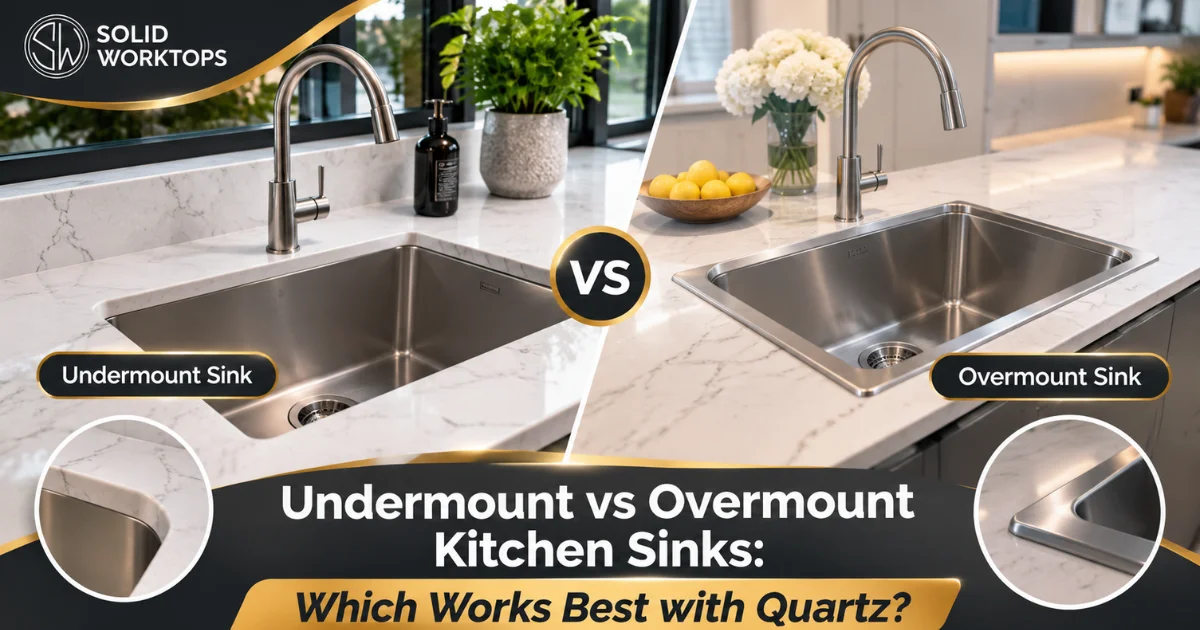
Undermount vs Overmount Kitchen Sinks: Which Works Best with Quartz?

An undermount sink is often chosen for quartz worktops because it creates a clean, uninterrupted surface and makes it easier to wipe crumbs and water directly into the sink. An overmount sink can also work well with quartz, particularly when the homeowner prefers a visible rim or needs a sink style suited to an existing kitchen layout.

The right choice depends on your kitchen design, cleaning preferences, budget and installation requirements. Quartz can accommodate different sink styles, but the cut-out, exposed edge finishing and support must suit the selected sink.

What Is the Difference Between Undermount and Overmount Kitchen Sinks?

The main difference is how the sink sits in relation to the worktop.

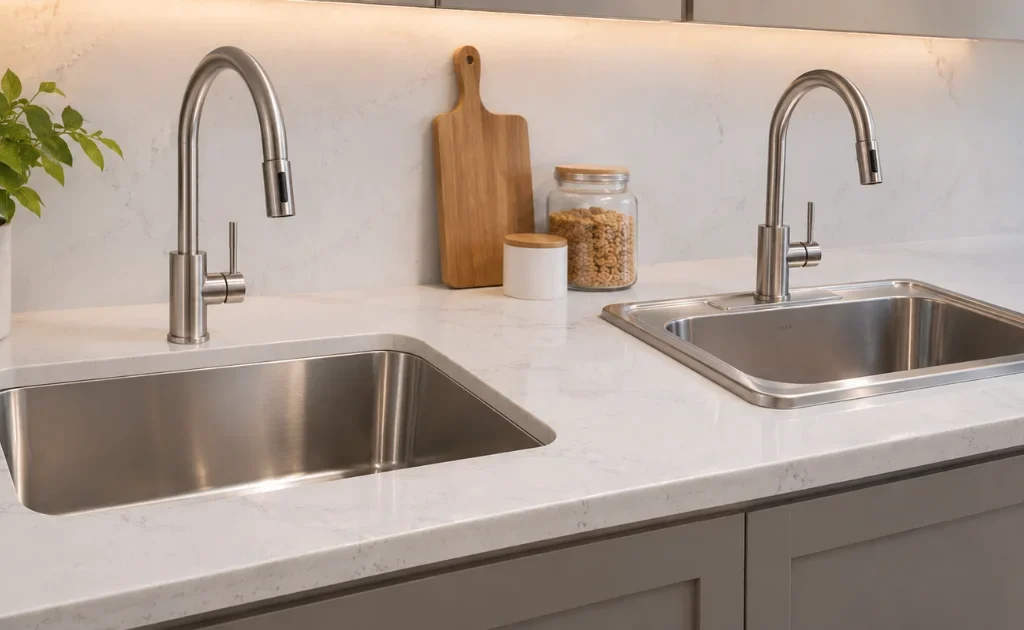
An undermount sink fits beneath the quartz surface, leaving the edge of the cut-out exposed. An overmount sink, also called a top-mount or inset sink, sits in a prepared opening with its rim resting on top of the worktop.

Both options can suit a quartz kitchen, but they create different appearances and require different installation details.

What Is an Undermount Sink for a Quartz Worktop?

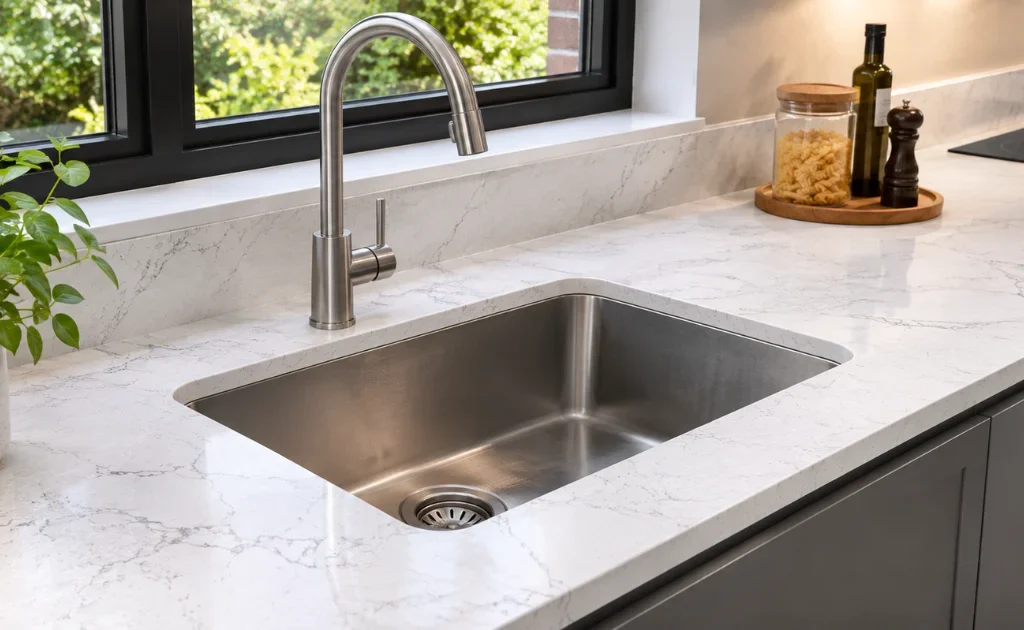
An undermount sink is installed below the worktop surface. The quartz cut-out remains visible around the opening, so the fabricator must finish the exposed edge neatly and accurately.

What Are the Benefits of an Undermount Sink?
  • A seamless appearance: The sink sits beneath the quartz, creating a clean transition between the worktop and bowl.
  • Straightforward surface cleaning: You can wipe crumbs and small spills from the worktop directly into the sink without having to work around a raised rim.
  • A contemporary finish: Undermount sinks complement modern kitchens, particularly when paired with quartz worktops and simple cabinet designs.
  • More visible worktop space around the sink: Without a rim resting on the surface, the surrounding quartz has a more continuous appearance.

What Should You Consider Before Choosing an Undermount Sink?

An undermount sink needs an accurately cut and properly finished opening. Because the quartz edge around the sink is exposed, poor fabrication or an unsuitable installation can affect the appearance and increase the risk of damage.

The sink also needs an appropriate support and fixing system. The installation method must suit the sink’s weight, the worktop specification and the manufacturer’s instructions.

Ask your worktop supplier how they will finish the cut-out, support the sink and seal the junction between the sink and quartz.

What Is an Overmount Sink for Quartz?

An overmount sink sits in an opening in the worktop, with a rim resting on the quartz surface. The rim covers the edge of the cut-out, making this style visually different from an undermount sink.

Overmount sinks come in a range of shapes, sizes and materials, including stainless steel. They can be suitable for new kitchens and some replacement projects, provided the sink dimensions and installation requirements match the worktop.

What Are the Benefits of an Overmount Sink?

  • The rim covers the cut-out: The visible sink rim sits over the edge of the opening, so the cut-out is not exposed in the same way as an undermount installation.
  • A wide choice of designs: Overmount sinks are available in different configurations, which can help when matching the sink to the kitchen layout.
  • Potential suitability for replacement projects: An inset sink may be practical when its dimensions fit an existing worktop opening, although compatibility must be checked.
  • A defined border around the sink: Some homeowners prefer the visible rim because it creates a clear separation between the sink and worktop.

What Are the Drawbacks of an Overmount Sink?

The raised rim can make it harder to wipe crumbs and water directly into the bowl. Dirt, water or residue may also accumulate around the rim or seal if the area is not cleaned regularly.

The seal around the sink needs proper installation and maintenance. A poorly maintained or damaged seal can allow water to reach areas where it should not.

An overmount sink is not automatically easier or cheaper to install in every situation. The total cost depends on the sink, the worktop cut-out, fitting requirements and any changes needed to the cabinets or plumbing.

Undermount vs Overmount Kitchen Sinks: Which Is Better for Quartz?

Use this comparison to decide which sink style better suits your kitchen.

FeatureUndermount sinkOvermount sink
AppearanceCreates a clean look with no rim sitting on top of the quartz.Leaves a visible rim around the sink.
Everyday cleaningMakes it easy to wipe crumbs and water into the bowl.The rim can interrupt wiping and may need extra attention.
Cut-out finishThe exposed quartz edge must be finished neatly.The rim covers the cut-out edge from above.
InstallationRequires suitable support, fixing and sealing.Requires a compatible opening and a correctly fitted rim and seal.
Design suitabilityOften suits contemporary kitchens and minimalist worktops.Can suit a wide range of kitchen styles and replacement layouts.
MaintenanceKeep the sink-to-worktop junction clean and check the seal as needed.Clean around the rim and check the seal for deterioration.
CostDepends on the sink, fabrication and installation requirements.Depends on the sink, fabrication and installation requirements.

Neither style is best for every kitchen. If you prioritise a clean surface and a modern appearance, an undermount sink may be the better option. If you prefer a visible rim or need a sink that fits an existing opening, an overmount sink may be more suitable.

Does an Undermount Sink Work Well with Quartz Worktops?

Yes. Quartz worktops can work well with undermount sinks when the fabricator and installer follow the appropriate specifications.

The main consideration is the exposed edge around the sink opening. The fabricator needs to create a suitable cut-out and finish the edge so it looks neat and is appropriate for the selected quartz product.

Before ordering, confirm the following:

  • The sink dimensions match the planned cut-out.
  • The fabricator can achieve the required edge finish.
  • The sink has an appropriate support and fixing arrangement.
  • The installation includes suitable sealing at the sink-to-worktop junction.
  • The sink manufacturer’s instructions and the quartz supplier’s requirements are compatible.

These details matter because quartz worktops cannot be treated like a flexible sheet that can simply be trimmed or adjusted without planning. Cutting and finishing should be carried out using appropriate equipment and methods.

How Does the Quartz Sink Cut-Out Affect Installation?

The quartz sink cut-out is the opening made in the worktop to accommodate the sink. Its shape and dimensions depend on the sink model, installation type and manufacturer’s requirements.

For an undermount sink, the cut-out edge remains visible. This makes accurate cutting and finishing especially important.

For an overmount sink, the rim covers the opening, but the cut-out still needs to be correctly sized and positioned. The rim must sit properly on the worktop without interfering with nearby taps, splashbacks or other fittings.

The fabricator will also need to consider the sink’s position in relation to cabinet supports, joints, worktop edges and nearby hob cut-outs. The space available can affect the final layout.

Choose the sink before the worktop is templated wherever possible. Confirm the exact sink model and provide its technical specifications to the worktop supplier. Changing the sink after fabrication may require alterations that are difficult, costly or unsuitable for the finished worktop.

What Should You Ask Your Worktop Supplier Before Choosing a Sink?

Before approving the final kitchen design, ask your supplier to confirm the sink and worktop details together.

  • Which undermount and overmount sink styles are suitable for your chosen quartz?
  • Will the quotation include the sink cut-out and required edge finishing?
  • How will the sink be supported and secured?
  • What sealing method will be used around the sink?
  • Does the sink position leave suitable space around joints, corners and other cut-outs?
  • Will changing the sink model affect the fabrication cost or installation schedule?
  • Who is responsible for supplying and fitting the sink, tap and plumbing connections?

Clear answers help you understand what the quotation covers and reduce the risk of unexpected work later in the project.

Frequently Asked Questions

Is an undermount sink better than an overmount sink for quartz?

An undermount sink is often preferred for its clean appearance and straightforward surface cleaning. An overmount sink can be a practical alternative when the homeowner prefers a visible rim or needs a style suited to an existing layout. The best choice depends on the design, budget and installation requirements.

Can you install an undermount sink in a quartz worktop?

Yes, provided the selected sink and quartz are compatible and the fabricator can produce a suitable cut-out and finish. The sink also needs the correct support, fixing and sealing arrangements.

Are overmount sinks easier to install?

Not necessarily in every situation. The installation requirements depend on the sink design, worktop opening, cabinet layout and plumbing. Ask your installer to compare the requirements for the exact models you are considering.

Does an undermount sink make a quartz worktop easier to clean?

It generally makes it easier to wipe crumbs and water directly into the bowl because there is no raised rim on the worktop surface. The sink-to-worktop junction still needs regular cleaning and suitable maintenance.

Can an undermount sink leak?

Leaks can occur if the sink, plumbing connections or sink-to-worktop seal are faulty or deteriorate. Correct installation, suitable support and routine checks help identify problems before they cause more damage.

Which Quartz Worktop Edge Is Best for Your Kitchen

Which Quartz Worktop Edge Is Best for Your Kitchen?

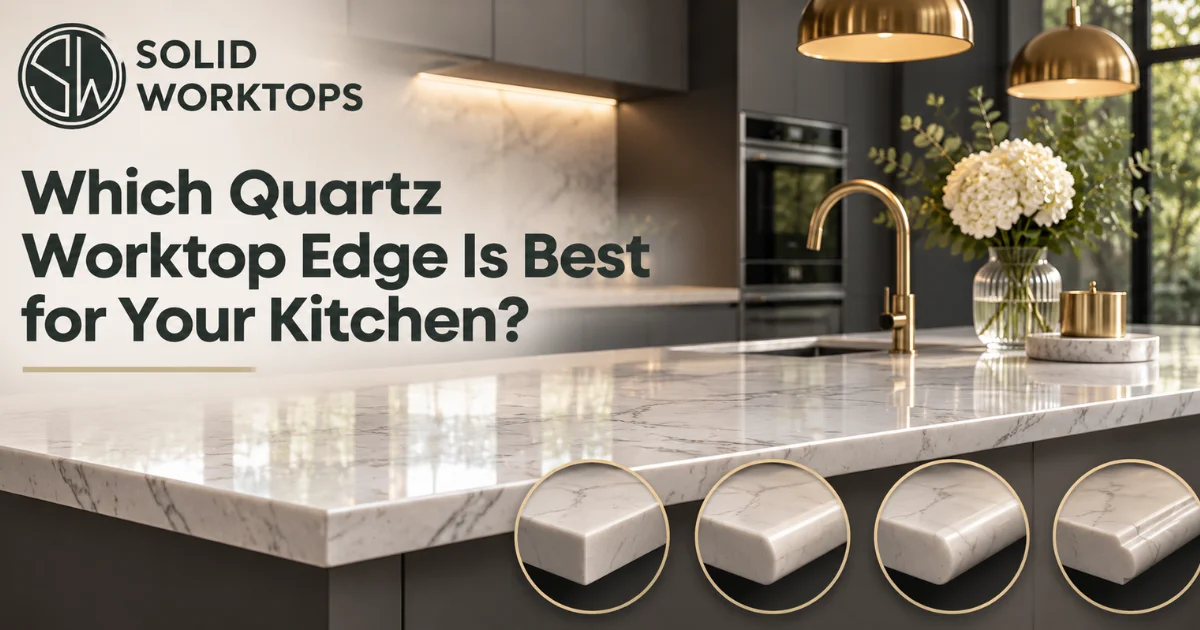
The best quartz worktop edge depends on your kitchen style, how you use the worktop and the finish you want. A square edge quartz worktop suits modern kitchens with clean lines, a rounded worktop edge softens the appearance of exposed corners, and a bevelled quartz edge adds a subtle decorative detail. An eased edge offers a similar straight appearance to a square edge but with its sharp aris slightly softened.

Before choosing, consider how the edge will look with your cabinets, whether children use the kitchen, how exposed the worktop corners are and whether your chosen profile affects the fabrication cost.

Different Quartz Worktop Edge Profiles

Quartz worktop edge profiles describe the shape and finish of the exposed edge of the worktop. Although the main surface may look similar across different kitchens, the edge profile can change the overall appearance considerably.

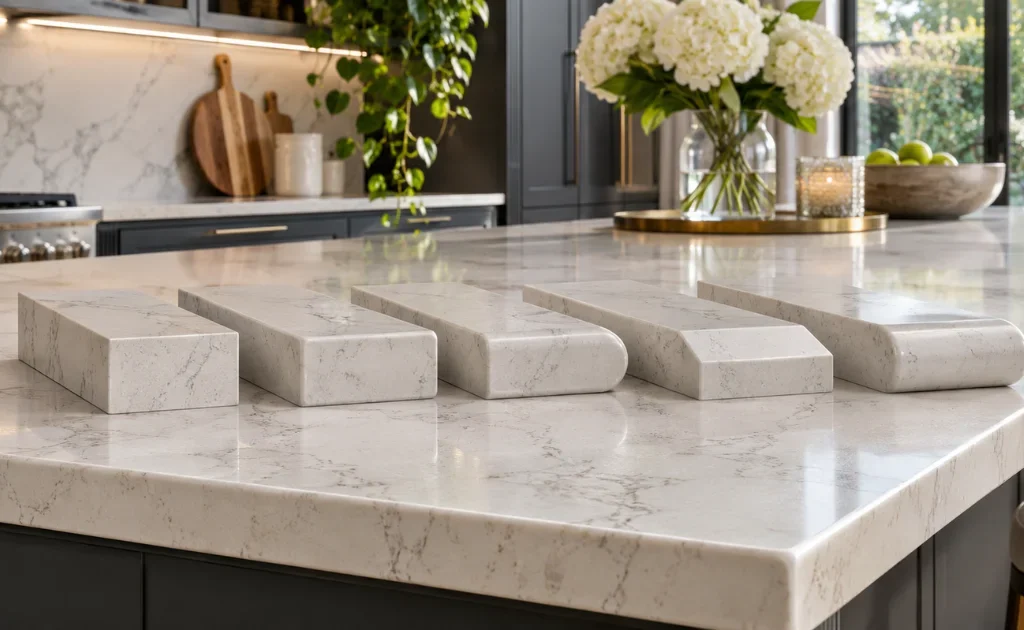
The most common options include square, eased, rounded, bullnose and bevelled edges. Each creates a different finish, so it is worth understanding the differences before ordering your worktop.

1. Square Edge Quartz Worktop

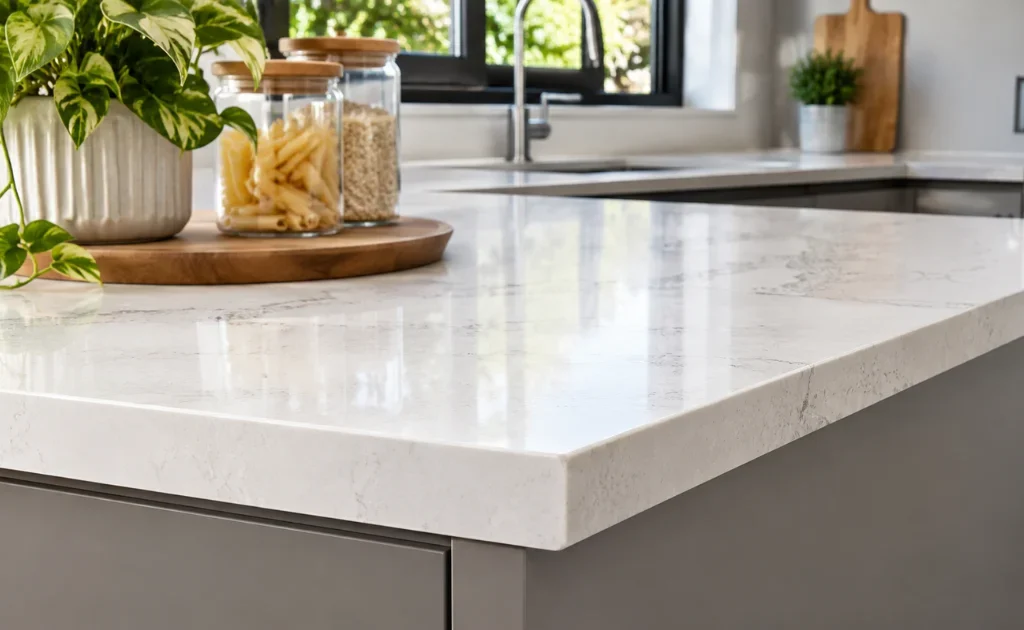
A square edge quartz worktop has a straight, angular appearance that suits contemporary kitchens. It creates a defined line along the front of the worktop and works particularly well with handleless cabinets, flat-fronted doors and minimalist interiors.

A square edge is a good choice if you want a clean, modern finish without an elaborate decorative profile.

What are the advantages of a square edge?

  • A square edge creates a simple, uninterrupted line that works well with modern kitchen cabinets and contemporary worktop colours.
  • It allows the quartz pattern to remain the main visual feature rather than drawing attention to a decorative edge.
  • It suits many kitchen layouts, including perimeter worktops, islands and breakfast bars.
  • Its relatively simple shape can be straightforward to specify, although fabrication requirements and pricing depend on the supplier and the exact finish.

Are square quartz worktop edges sharp?

Not necessarily. A square-profile worktop can have a slightly eased edge, meaning the fabricator softens the sharp arris while keeping the overall appearance straight.

This distinction matters because a perfectly sharp-looking edge in a photograph may not represent the precise finish supplied. Ask the fabricator whether the edge will be fully square or slightly eased.

Square edges can be vulnerable to impact at exposed corners, particularly if something heavy strikes them. This does not mean every square edge will chip easily, as the result also depends on the quartz product, fabrication, support and the force of the impact.

2. Rounded Worktop Edge

A rounded worktop edge has a curved finish rather than a sharply defined corner. The degree of curvature varies. A small pencil-round edge has a subtle curve, while a full bullnose profile has a more pronounced rounded shape.

Choose a rounded edge if you prefer a softer appearance or want to reduce the sharpness of exposed worktop corners.

What are the benefits of a rounded quartz edge?

  • A rounded edge softens the transition between the worktop surface and its front face, making it suitable for kitchens where you prefer less angular detailing.
  • A small rounded profile can complement traditional cabinets, shaker kitchens and many family kitchen designs.
  • A rounded outside corner can reduce the sharpness of the corner that people may bump into when moving around the kitchen.
  • A simple rounded profile is generally straightforward to wipe clean, although the precise shape and finish determine how easily you can reach every area.

Is a rounded worktop edge safer for families?

A rounded edge can reduce the sharpness of exposed corners, which may be useful in kitchens where children move around an island or breakfast bar. However, it does not eliminate the risk of injury.

If safety is a priority, consider the corner shape as well as the long front edge. A worktop may have a rounded profile along its front but still have projecting corners that need attention. Ask your fabricator whether the outside corners can also be rounded to suit your layout.

3. Bevelled Quartz Edge

A bevelled quartz edge has an angled section cut along the edge instead of a simple square or curved finish. Depending on the bevel’s size and angle, it can create a subtle detail or a more noticeable decorative line.

A bevelled edge is worth considering if you want something more distinctive than a plain square edge without choosing a fully rounded profile.

When does a bevelled edge work best?

  • A bevelled edge can complement kitchens that combine traditional detailing with a more contemporary worktop finish.
  • It can add definition to the front edge without requiring a large, rounded profile.
  • It may suit a kitchen island where the exposed edge is a noticeable part of the design.
  • It can work with different quartz colours, but the final effect depends on the bevel dimensions, slab thickness and pattern.

Before choosing this option, ask to see a close-up photograph or physical sample. A small bevel can look quite different from a deeper one, and the exact profile available depends on the fabricator’s equipment and the quartz product.

4. Eased Edge Quartz Worktop

An eased edge retains the straight appearance of a square profile but has its sharp arris slightly softened. This small adjustment creates a more comfortable finished edge without making the worktop look obviously rounded.

An eased edge is a useful option if you like the clean lines of a square quartz worktop but do not want the edge to remain perfectly sharp.

It can suit modern, traditional and transitional kitchens because it does not introduce a strong decorative detail. However, suppliers may use square edge and eased edge differently in their product descriptions, so confirm the exact finish rather than relying on the name alone.

5. Bullnose Quartz Worktop Edge

A bullnose edge has a more pronounced rounded profile than a small pencil-round edge. Depending on the design, the curve may extend across much of the edge’s depth, creating a softer overall appearance.

Bullnose edges can suit traditional kitchens and designs where the worktop is intended to have a more curved finish. They may also be considered for islands and breakfast bars where the front edge is highly visible.

However, a bullnose profile is not automatically more durable or easier to clean than every alternative. The suitability and cost depend on the exact profile, the quartz material and the fabrication required.

Square vs Rounded vs Bevelled Quartz Worktop Edges

Use this comparison to narrow down your options before asking a worktop supplier for samples or a quotation.

Edge profileAppearanceBest suited toMain consideration
SquareStraight and angular.Modern kitchens, handleless cabinets and minimalist designs.Exposed corners can be vulnerable to impact.
EasedStraight with a slightly softened edge.Homeowners who prefer a clean, simple finish without a perfectly sharp arris.Confirm how the supplier defines and finishes the profile.
RoundedSoftened and curved.Family kitchens, softer interiors and designs with rounded details.The degree of curvature varies between profiles.
BevelledAngled and subtly decorative.Kitchens that need a little more detail along the worktop edge.The bevel’s size and angle affect the final appearance.
BullnoseMore fully rounded.Traditional designs and kitchens with softer edge detailing.Check the profile’s dimensions, appearance and fabrication cost.

No single edge profile is best for every kitchen. If you prefer minimal detailing, start by comparing square and eased edges. If you want a softer finish, compare rounded and bullnose profiles. If you want a decorative detail without a fully curved edge, consider a bevelled profile.

Does a Quartz Worktop Edge Profile Cost Extra?

The price depends on the supplier’s standard fabrication options and the complexity of the requested finish. Some profiles may be included in the worktop price, while custom or more elaborate detailing may incur an additional charge.

Before accepting a quotation, ask the supplier to confirm:

  • Which edge profiles are included in the quoted price.
  • Whether the price covers all exposed edges and outside corners.
  • Whether custom rounding, bevels or fabricated build-ups cost extra.
  • Whether any special fabrication around the island, sink or other shaped sections affects the total.
  • Whether the quotation includes templating, fabrication, delivery and installation.

Do not assume that every rounded or bevelled edge costs more than a square edge. Ask for the actual price for your chosen quartz and kitchen layout so you can compare like-for-like quotations.

How to Choose the Right Quartz Worktop Edge

Before making your final decision, consider the style you want, the way your household uses the kitchen and the fabrication options available for your chosen quartz. Choose a square edge if you:

  • Prefer a defined, contemporary finish with minimal decoration.
  • Want a straight appearance with the sharp arris slightly softened.
  • Prefer softer lines or want to reduce the sharpness of exposed corners.
  • Want a defined angled detail along the front of the worktop.
  • Prefer a more pronounced curved profile.

Where possible, compare physical samples or close-up photographs of the actual edge finish. Ask the fabricator to confirm the profile dimensions, the treatment of outside corners and any extra costs before the worktop goes into production.

The right choice is the one that fits your kitchen design, practical requirements and budget, while also giving you a finish you will be happy to live with.

Frequently Asked Questions

Which quartz worktop edge is most popular?

Square and eased profiles are common choices for kitchens with clean, contemporary lines, while rounded, bullnose and bevelled profiles suit different design preferences. Availability and popularity vary between suppliers and projects, so compare the options available for your chosen quartz.

Is a square edge better than a rounded edge?

Neither is universally better. A square edge gives a more angular appearance, while a rounded edge creates a softer finish. Consider your kitchen style, exposed corners, household needs and the fabricator’s recommendations.

Are bevelled quartz worktop edges difficult to clean?

A straightforward bevelled edge is generally easy to wipe down. Cleaning depends on the exact shape and finish, so inspect a sample if the profile includes more elaborate detailing.

Can I change the edge profile after installation?

Changing an existing quartz edge may be possible in some circumstances, but it depends on the worktop’s condition, available access, the desired profile and the fabricator’s assessment. Do not assume that every profile can be created safely on an installed worktop.

Can I choose different edge profiles for my kitchen island and main worktops?

This may be possible if the selected material and fabrication requirements allow it. Different profiles can create visual contrast, but they can also make the design feel less consistent if they are not planned carefully. Ask your supplier to review the full kitchen layout before confirming the choice.

Choose the Right Finish for Your Quartz Worktop

The edge profile is a small detail that can make a noticeable difference to the finished kitchen. Compare the shapes, check how they look with your chosen quartz and confirm the fabrication details before making your decision.

At Solid Worktops, you can discuss your kitchen layout, preferred quartz finish and edge-profile options before deciding what suits your project. Contact the team to ask about available finishes, fabrication requirements and a quotation for your kitchen.