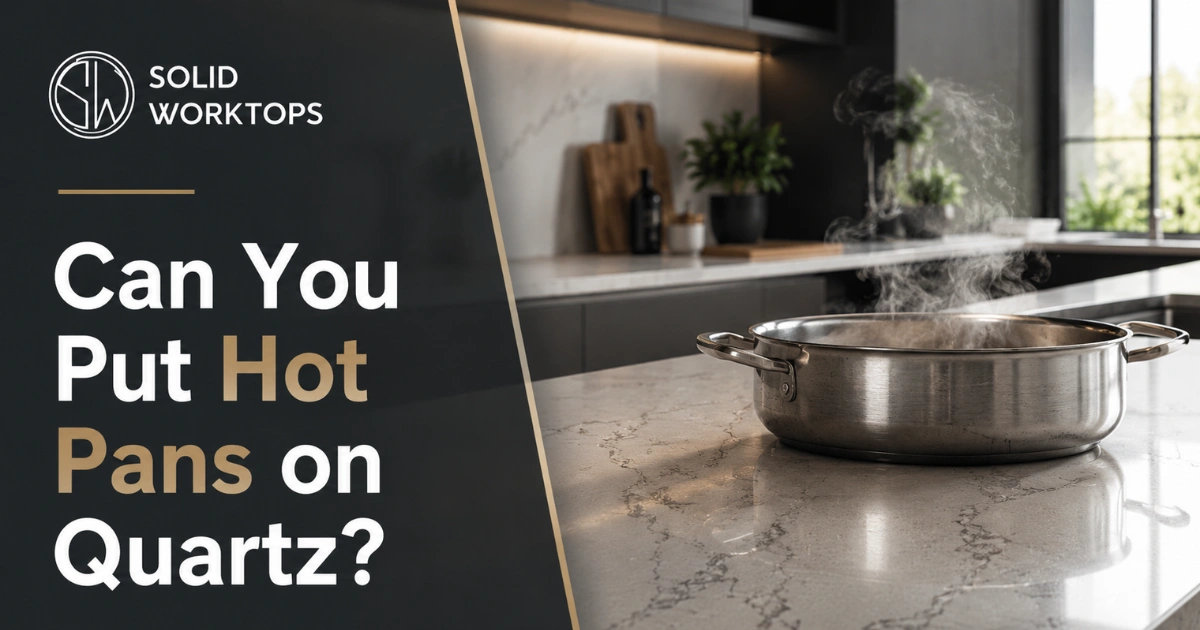
Quartz worktops are one of the most durable choices for modern kitchens, but many homeowners ask the same question before using them every day: Can you put a hot pan directly on a quartz worktop?
The short answer is no. Although quartz is highly heat-resistant, it is not completely heat-proof. Placing hot pans, baking trays, or cookware straight from the oven or hob onto the surface can damage the resin that binds the quartz together, leading to permanent marks or cracks.
Fortunately, preventing heat damage is simple with the right care.
Is Quartz Heat-Resistant?
Yes, quartz is heat-resistant, but every worktop has its limits.
Engineered quartz is made from around 90–95% natural quartz combined with resins and pigments. While the quartz itself can withstand high temperatures, the resin is more sensitive to extreme heat.
This means your worktop can cope with normal kitchen use but should not be treated as a surface for placing extremely hot cookware.
Can You Put Hot Pans Directly on Quartz?
No.
You should never place a hot pan, roasting tray, casserole dish, or baking tray directly onto a quartz worktop.
Cookware taken straight from:
- An oven
- A hob
- An air fryer
- A barbecue
- A microwave with a hot dish
can be much hotter than the worktop is designed to handle.
Using a trivet or heat-resistant mat is the safest option.
What Happens If You Put a Hot Pan on Quartz?
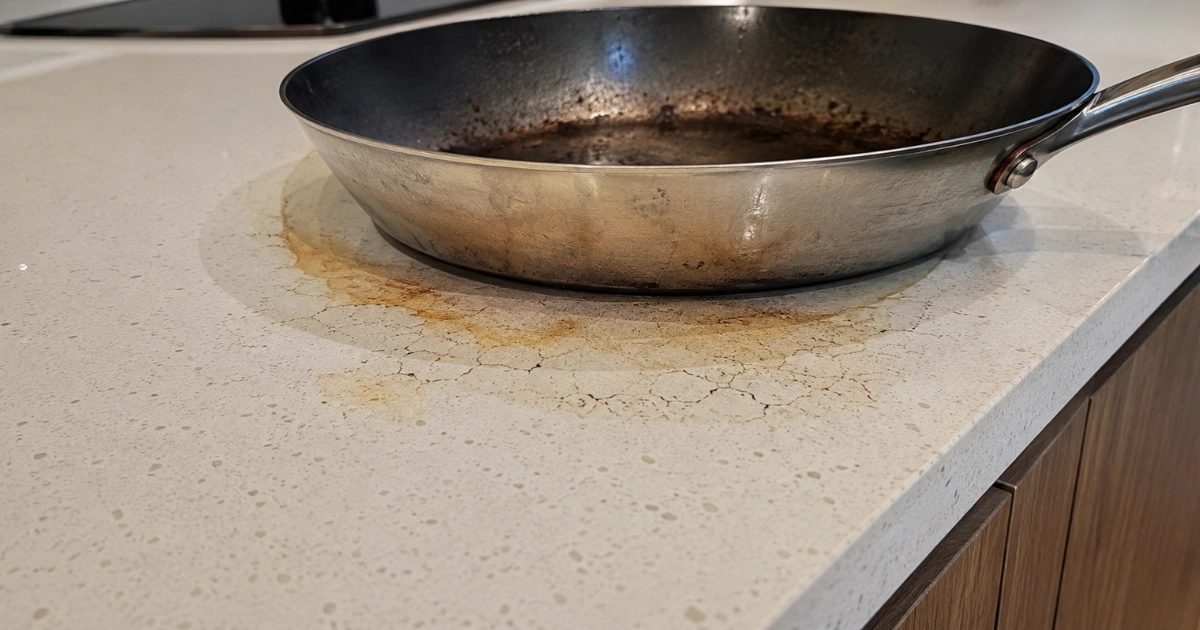
Excessive heat can cause permanent damage.
Possible problems include:
- Discolouration.
- Dull or faded patches.
- Burn marks.
- Resin damage.
- Surface cracking.
- Thermal shock.
- Loss of the original finish.
In many cases, the damage cannot be reversed completely.
Why Does Heat Damage Quartz?
Unlike natural granite, quartz contains polymer resins that hold the material together.
When exposed to very high temperatures, these resins may:
- Expand.
- Soften.
- Discolour.
- Crack.
- Separate from the quartz particles.
Sudden temperature changes can also place stress on the surface, increasing the risk of damage.
What Is Thermal Shock?
Thermal shock happens when the worktop experiences a sudden and extreme change in temperature.
For example:
- Placing a red-hot pan onto a cool worktop.
- Putting an extremely hot roasting tray onto the surface immediately after removing it from the oven.
Although quartz is very strong, repeated thermal shock can weaken the surface over time.
Are Some Quartz Worktops More Heat-Resistant Than Others?
Different manufacturers use different resin formulas and production methods.
While some premium quartz brands may perform better than others, no quartz manufacturer recommends placing hot cookware directly on the surface.
Following the manufacturer’s care instructions helps protect both your worktop and its warranty.
How Can You Protect Your Quartz Worktop?
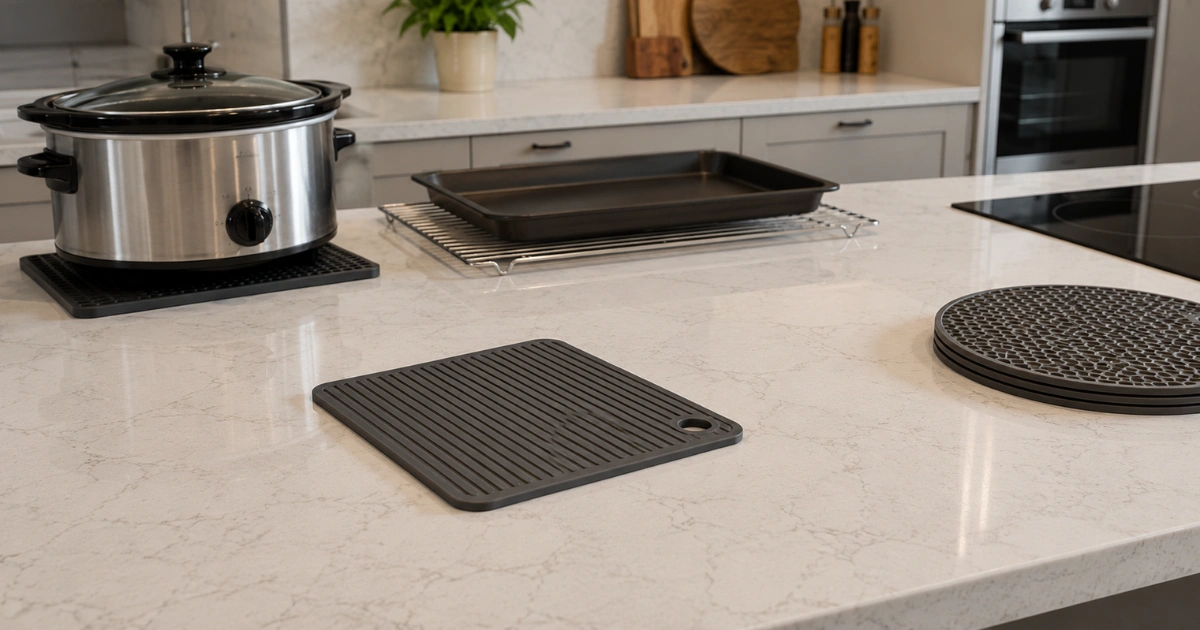
Preventing heat damage is quick and easy.
Follow these simple habits:
- Always use a heat-resistant trivet.
- Place hot baking trays on a cooling rack.
- Keep heat mats close to the hob.
- Never rest slow cookers directly on the surface if they generate significant heat underneath.
- Avoid placing portable appliances on the worktop without adequate ventilation.
These small precautions can help your worktop stay in excellent condition for many years.
Can Heat Damage Be Repaired?
It depends on the extent of the damage.
Minor marks may sometimes be improved by a professional, but severe heat damage is often permanent.
If the resin has discoloured or cracked, repairing the affected area can be difficult. In some cases, replacing the damaged section may be the only practical solution.
Early assessment by a quartz specialist gives you the best chance of a successful repair.
Is Quartz Still a Good Choice for Busy Kitchens?
Absolutely.
Quartz remains one of the most popular kitchen worktop materials because it offers:
- Excellent durability.
- High scratch resistance.
- Low maintenance.
- Stain resistance.
- Hygienic, non-porous surfaces.
- A wide choice of colours and finishes.
As long as you avoid placing hot cookware directly on the surface, quartz performs exceptionally well in everyday family kitchens.
Quartz vs Granite for Heat Resistance
Granite generally tolerates higher temperatures because it is a natural stone without resin binders.
Quartz offers other advantages, including:
- More consistent colours.
- Lower maintenance.
- Better stain resistance.
- No sealing requirements.
If heat resistance is your highest priority, discuss your cooking habits with a worktop specialist before choosing a material.
Frequently Asked Questions
Can I put a pan straight from the hob onto quartz?
No. Always place it on a trivet or heat-resistant mat.
Can quartz crack from heat?
Yes. Extreme temperatures or thermal shock can sometimes cause cracking or damage to the resin.
Will one hot pan ruin my quartz worktop?
Not always, but a single very hot pan can cause permanent discolouration or surface damage.
Can I put an air fryer on a quartz worktop?
Yes, provided the appliance has adequate ventilation and the manufacturer’s instructions allow it. Using a protective mat underneath is also a sensible precaution.
Does heat damage void the warranty?
It can. Many manufacturers exclude damage caused by excessive heat or misuse, so always follow the care guidelines provided with your worktop.