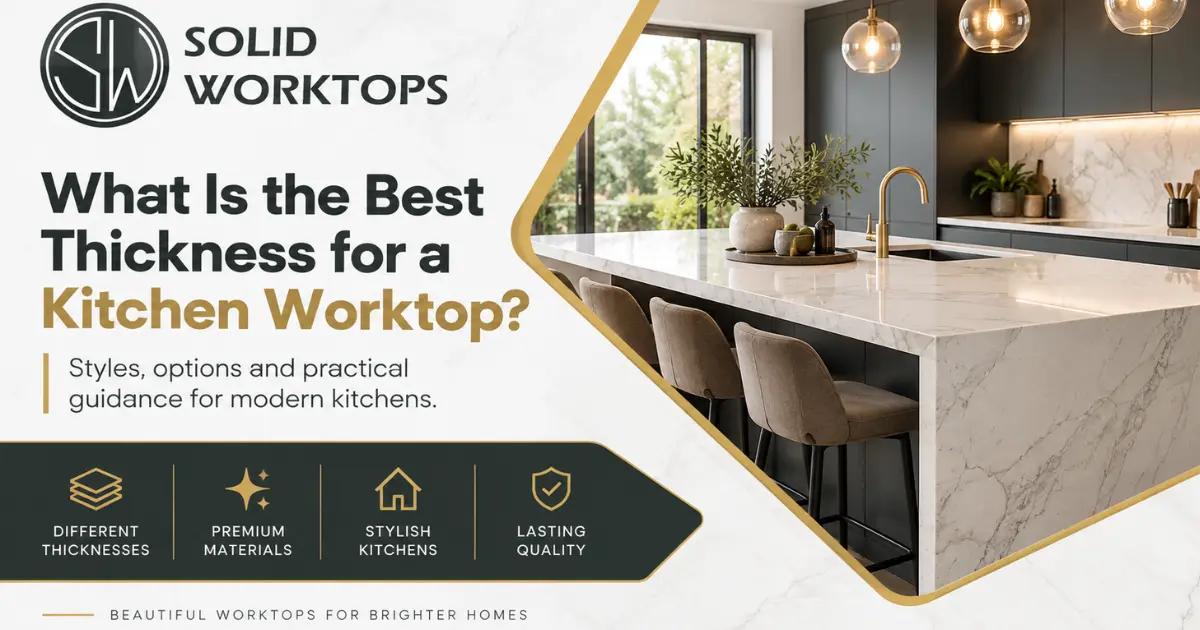
When choosing a new kitchen worktop, thickness is easy to overlook. Most homeowners spend more time choosing the colour and pattern, but the thickness can change the kitchen’s overall appearance.
For quartz worktops, the main choice is often 20mm or 30mm.
Neither is automatically better. The right option depends on the look you want, the kitchen design and how the worktop will be supported and installed.
20mm vs 30mm Quartz Worktops
The basic difference is simple:
- 20mm quartz gives a slimmer, cleaner and more contemporary appearance.
- 30mm quartz gives a thicker, more substantial and traditional worktop appearance.
Both can work very well in a kitchen when the installation is properly planned.
20mm Quartz Worktops
A 20mm quartz worktop is a popular choice for modern kitchens where a thinner profile looks better with the cabinets.
It can work particularly well with:
- Handleless kitchen cabinets.
- Modern kitchen islands.
- Minimalist designs.
- Contemporary flat-panel doors.
- Kitchens where you want a lighter-looking worktop.
One thing I always consider with 20mm quartz is the edge detail. A thinner slab gives a very different visual effect from a 30mm worktop, so it is worth looking at an actual sample rather than judging thickness from photographs.
30mm Quartz Worktops
30mm quartz worktops have a more substantial appearance and remain a popular choice for traditional and contemporary kitchens.
The extra thickness can make an island or long run of cabinets feel more solid and visually prominent.
30mm can be a good choice when you want:
- A more traditional worktop profile.
- A stronger visual presence around a kitchen island.
- The worktop to look substantial against the cabinets.
- A classic appearance rather than an ultra-modern finish.
For many homeowners, 30mm simply feels like the more familiar kitchen worktop thickness.
Is 20mm Quartz Strong Enough?
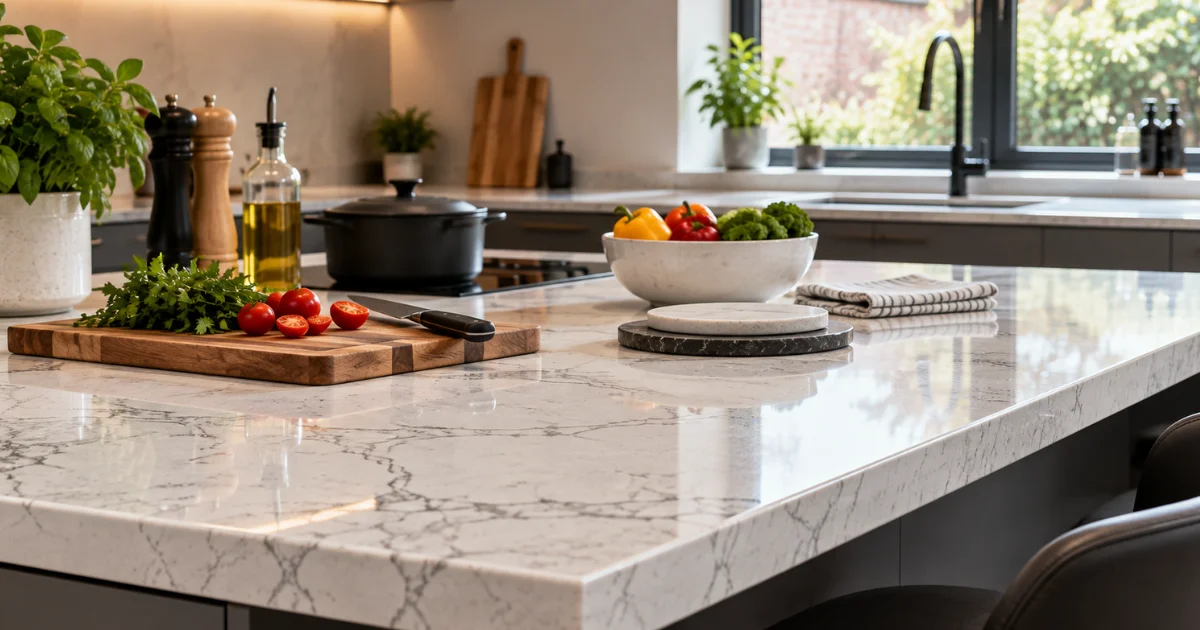
Yes, 20mm quartz can be perfectly suitable for a kitchen, but thickness should not be considered on its own.
The way the worktop is supported, the size of any overhang, cut-outs for sinks and hobs, and the manufacturer’s requirements all matter.
This is particularly important around islands and breakfast bars, where unsupported overhangs can put additional stress on the material.
A professional installer should check the support requirements before fabrication rather than assuming that thicker automatically means stronger.
Is 30mm Better Than 20mm?
Not necessarily.
A 30mm worktop is thicker, but that does not mean you will always get a better kitchen. 20mm quartz can look excellent and perform well when it has the correct support and installation.
The choice is often more about appearance and kitchen design than simply choosing the thickest available slab.
Which Looks Better: 20mm or 30mm?
This is mainly down to the style of your kitchen.
Choose 20mm if you want a sleek, modern appearance.
The thinner profile can make cabinets and islands look more streamlined and works particularly well in contemporary kitchens.
Choose 30mm if you prefer a thicker, more substantial appearance.
It can give the kitchen a traditional feel and makes the worktop more visually prominent.
Neither option is wrong. I would normally look at the cabinet style, island design, worktop overhang and overall proportions before making the decision.
What About Other Kitchen Worktop Thicknesses?
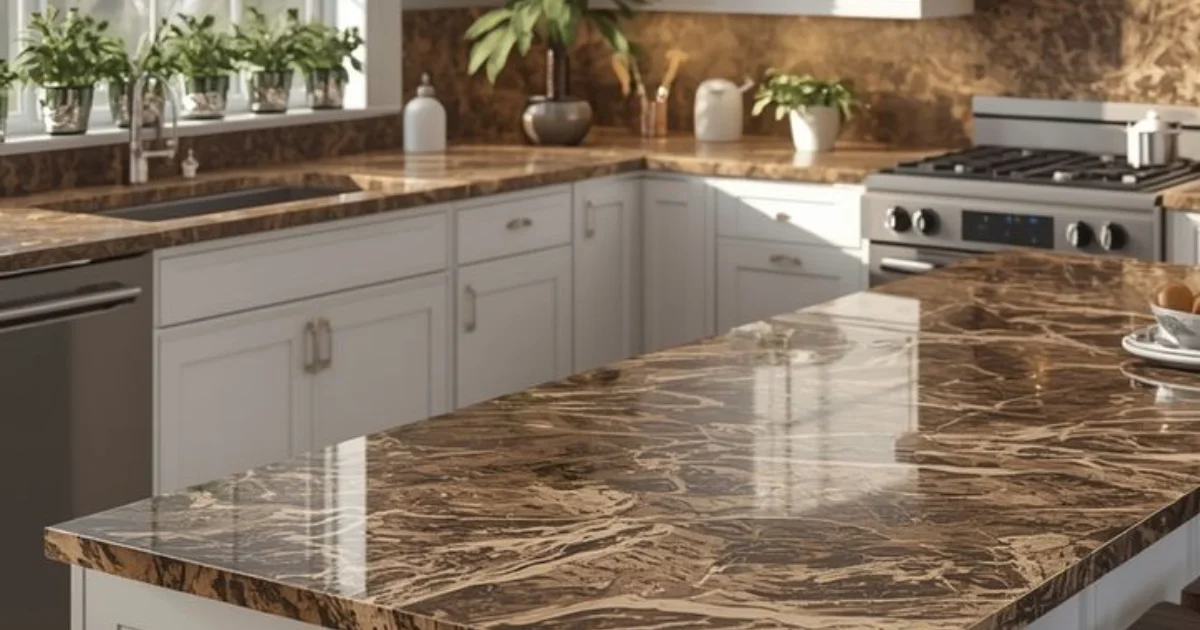
Quartz is not the only worktop material where thickness matters. Laminate worktops, for example, are available in different thicknesses, while solid surface and natural stone products can have their own standard and fabrication options.
That is why you should not compare thickness across materials as though 20mm of one material will perform exactly like 20mm of another.
The material, construction and installation method all make a difference.
What Is the Best Thickness for a Kitchen Worktop?
For quartz worktops, both 20mm and 30mm are good options.
If you are creating a modern, minimalist kitchen, I would lean towards 20mm quartz for its slimmer appearance.
If you want a more traditional or substantial look, 30mm quartz is often the better visual choice.
The important thing is not simply choosing the thicker worktop. Your installer needs to check the support, cut-outs, joints and overhangs to make sure the chosen thickness is suitable for your particular kitchen.
Final Words
When deciding between 20mm vs 30mm quartz, think about the finished look rather than assuming thicker is better.
20mm gives a sleek contemporary profile, while 30mm gives a more substantial traditional appearance. Both can be excellent kitchen worktops when correctly specified, supported and installed.
If you are unsure, compare both thicknesses against your cabinet doors and island design before ordering. It is much easier to make the right decision at the planning stage than change the worktop later.