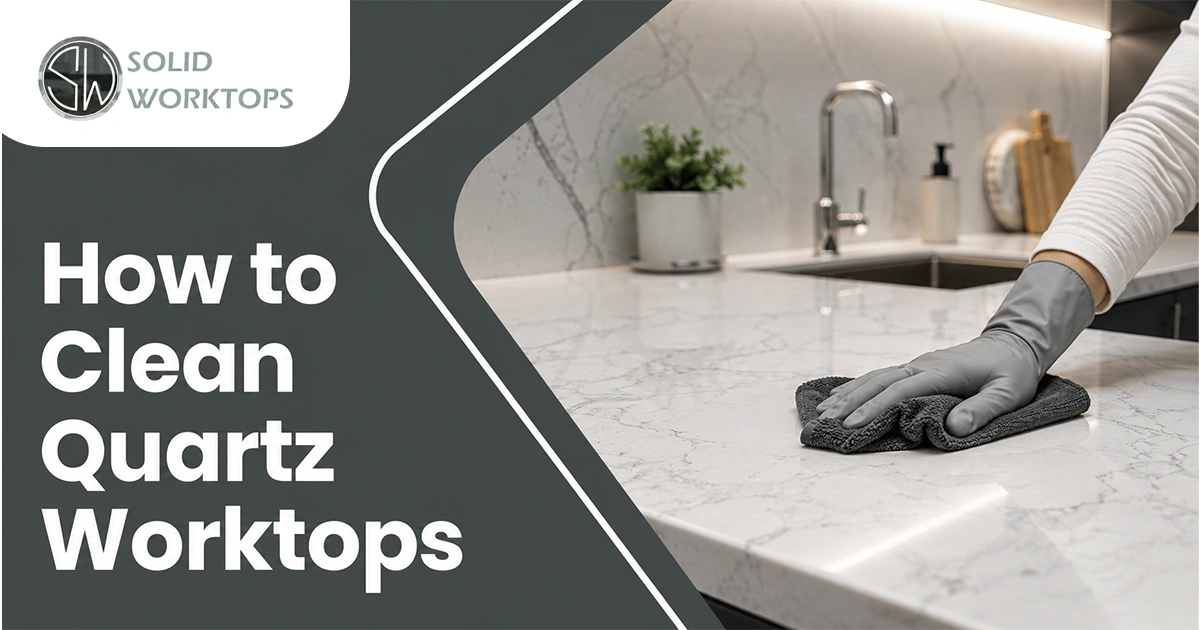
The best way to clean quartz worktops is simple: use warm water, a soft cloth and a small amount of mild washing-up liquid. Wipe spills as soon as they happen, rinse away any soap residue and dry the surface with a clean microfibre cloth.
Quartz worktops are non-porous and easy to maintain, so you do not need an aggressive cleaning routine. However, you should avoid harsh chemicals, abrasive scourers and excessive heat because they can damage the resin or affect the finish.
Whether you have a white, black, grey or marble-effect quartz worktop, regular gentle cleaning will help keep your kitchen surface looking clean and attractive.
How to Clean Quartz Worktops Every Day
You can keep your quartz worktop clean with a quick daily routine.
Step 1: Wipe the Surface
Start by removing crumbs and loose food from the worktop.
Dampen a soft microfibre cloth or non-abrasive sponge with warm water. Add a small amount of mild washing-up liquid and gently wipe the entire surface.
You do not need to scrub hard. Quartz does not require aggressive cleaning to remove normal food and drink marks.
Step 2: Rinse the Worktop
After cleaning, use a clean, damp cloth to wipe the surface again.
This removes any remaining washing-up liquid and prevents a layer of soap residue from building up.
Step 3: Dry the Surface
Finish by drying the worktop with a clean microfibre cloth.
Drying helps prevent water marks and streaks, particularly on darker quartz surfaces.
Clean Spills as Soon as Possible
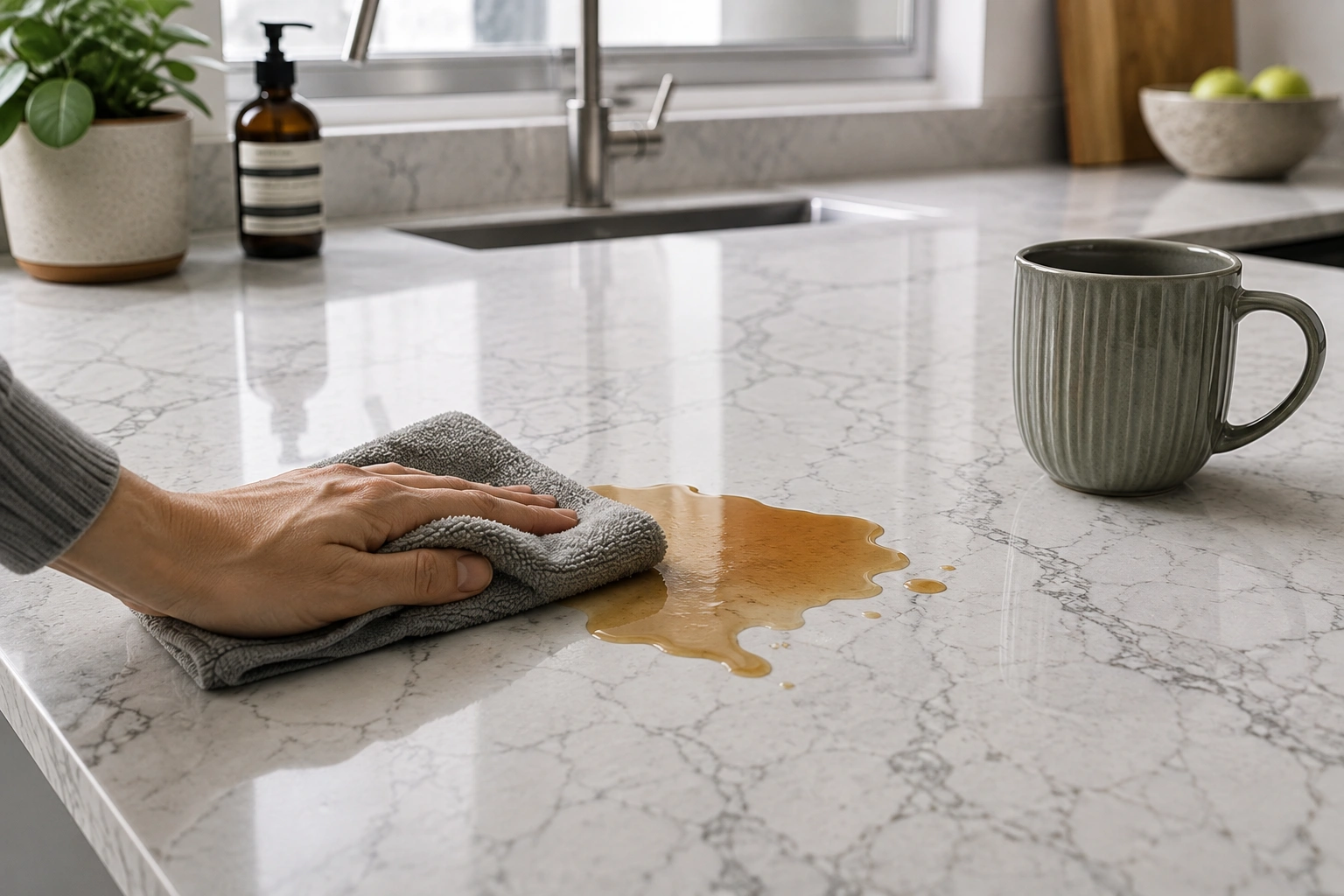
Although quartz has a non-porous surface and offers good stain resistance, you should still clean spills promptly.
Coffee, tea, wine, cooking oil, sauces and strongly coloured foods can leave marks if you allow them to sit on the surface for a long time.
If you spill something, simply:
- Wipe it up with a soft cloth.
- Clean the area with warm water and mild washing-up liquid.
- Rinse with a clean damp cloth.
- Dry with a microfibre cloth.
This simple habit can prevent most everyday marks.
How to Remove Stubborn Marks from Quartz
Sometimes warm water and washing-up liquid may not remove a dried or sticky mark. In that situation, use a gentle cleaning method rather than reaching immediately for a strong chemical.
Dried Food and Sticky Residue
If food has dried onto your quartz worktop, do not scrape it with a knife.
Instead, gently loosen it with a plastic scraper or spatula. You can then clean the remaining residue with a soft cloth and mild washing-up liquid.
Avoid metal scrapers because they can damage the surface.
Grease and Difficult Marks
For greasy marks, start with a quartz-safe surface cleaner or mild washing-up liquid.
Some quartz manufacturers may recommend products such as diluted isopropyl alcohol for particular marks. If you want to use 70% isopropyl alcohol, check your quartz manufacturer’s care instructions first and test it on an inconspicuous area if the manufacturer permits it.
Baking Soda for Tough Marks
You may find recommendations online for using baking soda and water to create a cleaning paste.
However, you should be careful with this method. Baking soda is mildly abrasive, and frequent or aggressive rubbing can affect some polished finishes.
If your quartz manufacturer approves its use, apply the paste gently, avoid vigorous scrubbing, and rinse the area thoroughly afterwards.
For a stubborn mark, a quartz-specific cleaner is usually the safer choice.
Can You Use Cif on Quartz Worktops?
Some cream cleaners, including certain Cif products, may be suitable for some quartz surfaces, but you should not assume that every Cif product is safe for every quartz worktop.
Always check the cleaner’s label and your quartz manufacturer’s care instructions before using it.
If the manufacturer approves the product, use a small amount with a non-abrasive sponge and avoid heavy scrubbing.
When in doubt, stick to warm water, mild washing-up liquid and a soft microfibre cloth.
What Should You Avoid When Cleaning Quartz Worktops?
Knowing what not to use is just as important as knowing how to clean quartz.
Avoid Bleach and Strong Chemicals
Do not routinely use strong bleach-based cleaners, oven cleaners, drain cleaners or other aggressive chemicals on your quartz worktop unless the manufacturer specifically states that they are suitable.
Harsh chemicals can affect the resin and may damage or dull the surface.
Be Careful with Vinegar
Vinegar is often promoted as a natural household cleaner, but it is not automatically suitable for quartz worktops.
Some manufacturers advise against acidic cleaners because they can affect the surface or finish with repeated use.
For this reason, use a quartz-approved cleaner instead of relying on vinegar.
Avoid Abrasive Scouring Pads
Never use steel wool, wire brushes or hard abrasive scourers on your quartz worktop.
They can create fine scratches and gradually reduce the appearance of a polished finish.
Use a soft microfibre cloth or non-abrasive sponge instead.
Avoid Harsh Ammonia-Based Cleaners
Strong ammonia-based products can also be unsuitable for quartz, depending on the product and manufacturer.
Always check the manufacturer’s care guide before using specialist cleaning chemicals.
How to Protect Your Quartz Worktop While Cleaning
Cleaning is only one part of looking after your quartz worktop. A few simple habits can help you protect it every day.
Always Use a Chopping Board
Do not cut food directly on your quartz worktop.
Although quartz is highly resistant to everyday scratches, sharp knives can still damage the surface or leave marks.
Use a chopping board for food preparation.
Use a Trivet for Hot Pans
Never place extremely hot pans, roasting trays or baking dishes directly on your quartz worktop.
Quartz contains resin, and excessive heat can damage or discolour the surface.
Always place hot cookware on a suitable heat-resistant mat or trivet.
Clean Around the Sink
Pay particular attention to the area around your sink.
Wipe away standing water and clean food residue around the sink edge. Regular cleaning helps keep this high-use area looking fresh.
How Often Should You Clean Quartz Worktops?
You should wipe your quartz worktop every day or whenever you use it, particularly after food preparation.
You do not need to carry out a deep clean every day. Your regular routine can remain simple:
Wipe → rinse → dry.
A deeper clean may be useful when you notice grease, dried food or other marks that your normal routine does not remove.
Can You Use Disinfectant on Quartz?
You can use a disinfectant only if it is approved as suitable for your particular quartz surface.
Do not assume that a strong disinfectant is better. Some chemicals can react with the resin or affect the finish.
If hygiene is your main concern, regular cleaning with a suitable mild cleaner is often enough for everyday kitchen use. For specialist disinfectants, follow your quartz manufacturer’s instructions.
How Do You Clean White Quartz Worktops?
White quartz worktops are easy to maintain, but they can make food marks and spills more noticeable.
Clean spills promptly and use warm water with mild washing-up liquid for everyday marks.
Avoid harsh bleaching products and abrasive scrubbing in an attempt to make the surface brighter. These can cause more problems than they solve.
For a stubborn stain, use a cleaner specifically approved for your quartz surface.
How Do You Clean Black Quartz Worktops?
Black quartz can show water marks, fingerprints and soap residue more easily than lighter colours.
After cleaning, always dry the surface with a clean microfibre cloth. This simple step can make a significant difference to the finished appearance.
If your black quartz has a polished finish, avoid abrasive products that could leave the surface looking dull.
How Do You Clean Marble-Effect Quartz?
Marble-effect quartz requires the same basic cleaning approach as other quartz worktops.
Use:
- Warm water
- Mild washing-up liquid
- A soft microfibre cloth
- A non-abrasive sponge when necessary
Avoid harsh chemicals and abrasive products, particularly if your quartz has a polished finish.
The detailed veining may make certain marks less noticeable, but you should still clean spills promptly.
Common Quartz Worktop Cleaning Mistakes
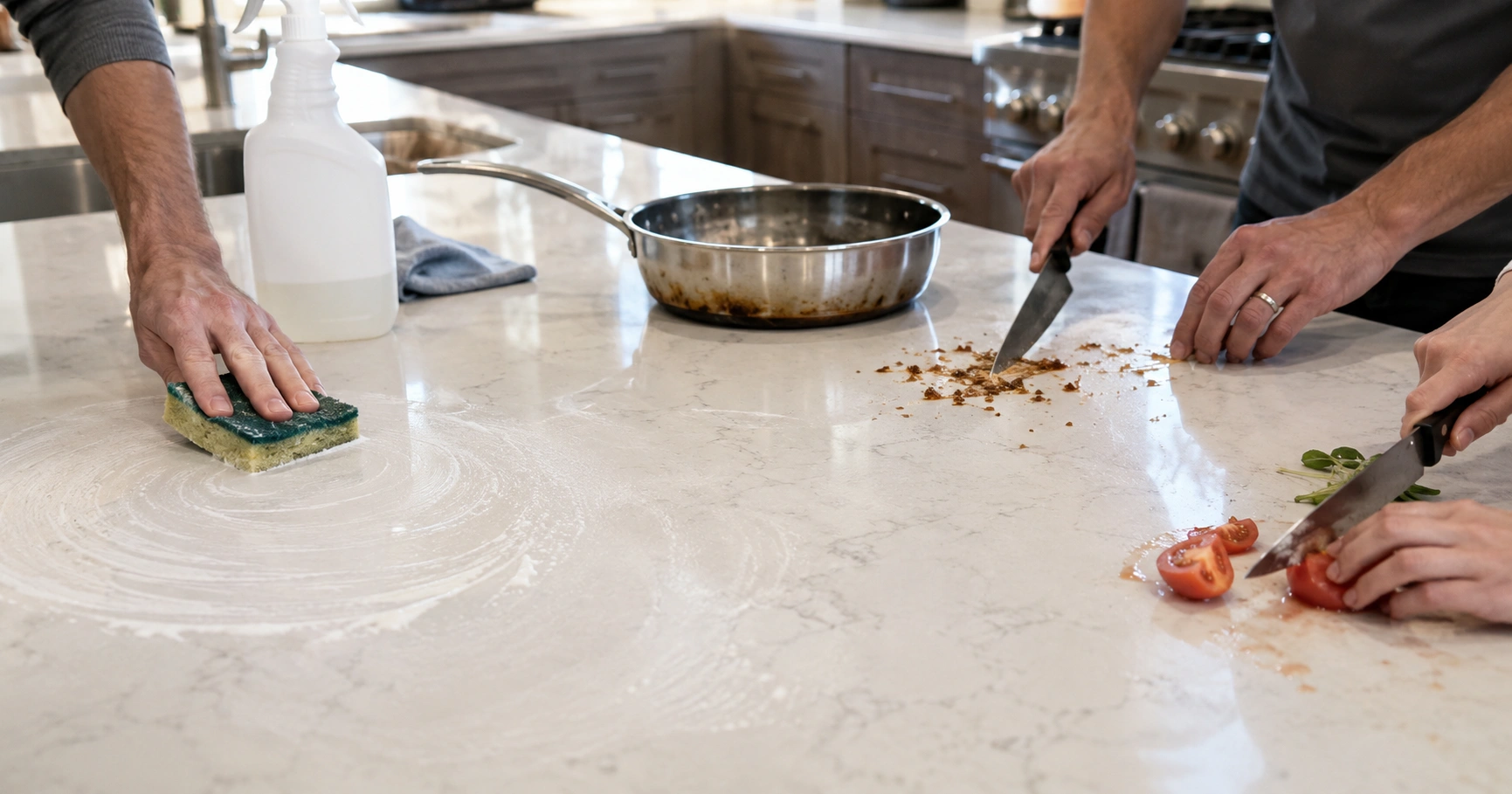
Avoid these common mistakes if you want to keep your worktop looking its best:
Using too much cleaning product: More cleaner does not mean a cleaner surface. Excess product can leave residue.
Scrubbing too hard: Aggressive scrubbing can affect the finish.
Using a knife to remove dried food: Use a plastic scraper instead.
Putting hot pans directly on the surface: Always use a trivet.
Cutting directly on the worktop: Always use a chopping board.
Using a cleaner without checking its suitability: Always follow the manufacturer’s care instructions.
Quartz Worktop Cleaning FAQs
What is the best way to clean a quartz worktop?
Use warm water, a small amount of mild washing-up liquid and a soft microfibre cloth. Wipe the surface, rinse with clean water and dry it afterwards.
Can I use washing-up liquid on quartz?
Yes. A small amount of mild washing-up liquid with warm water is suitable for everyday cleaning of many quartz worktops.
Can I use Cif on a quartz worktop?
Check the specific Cif product and your quartz manufacturer’s cleaning instructions first. Some products may be suitable, while abrasive or unsuitable formulations can damage the finish.
Can I use vinegar to clean quartz?
It is better to avoid vinegar unless your quartz manufacturer specifically approves it. Use a quartz-safe cleaner or mild washing-up liquid instead.
Can I use bleach on quartz worktops?
Avoid bleach unless the quartz manufacturer specifically recommends it for your particular surface. Strong chemicals can damage the resin or affect the finish.
Can I use baking soda on quartz?
Baking soda is mildly abrasive, so you should not use it aggressively. If your manufacturer approves it, use a small amount gently and rinse the surface thoroughly afterwards.
Can I use a magic eraser on quartz?
It is best to avoid abrasive cleaning products such as melamine sponges unless the manufacturer confirms that they are suitable. Repeated rubbing can affect the finish.
How do I remove dried food from a quartz worktop?
Soften the residue with warm water and gently lift it with a plastic scraper or spatula. Never use a knife or metal scraper.
How do I remove grease from quartz?
Start with warm water and mild washing-up liquid. For more difficult grease marks, use a cleaner approved for your quartz worktop and follow the manufacturer’s instructions.
How do I make my quartz worktop shine?
Clean the surface with a suitable mild cleaner, rinse it thoroughly and dry it with a clean microfibre cloth. Avoid waxes, polishes and abrasive products unless the manufacturer specifically recommends them.
Do quartz worktops need sealing?
No, quartz worktops generally do not need routine sealing because they have a non-porous engineered surface.
Can hot pans damage quartz?
Yes. Very high temperatures can damage the resin in quartz. Always use a heat-resistant trivet or mat under hot cookware.
Keep Your Quartz Worktop Looking Its Best with Solid Worktops
A quartz worktop does not need complicated maintenance. Clean spills promptly, use mild cleaning products, avoid abrasive materials and protect the surface from direct heat and sharp knives.
At Solid Worktops, we offer quartz worktops in a range of colours, patterns and finishes for UK kitchens. Whether you are looking for a modern plain surface or a marble-effect quartz worktop, we can help you find an option that suits your kitchen.
Always check the specific manufacturer’s care instructions for your chosen quartz because cleaning recommendations can vary between products.
With the right everyday care, your quartz worktop can continue to look clean, stylish and well maintained for years.